
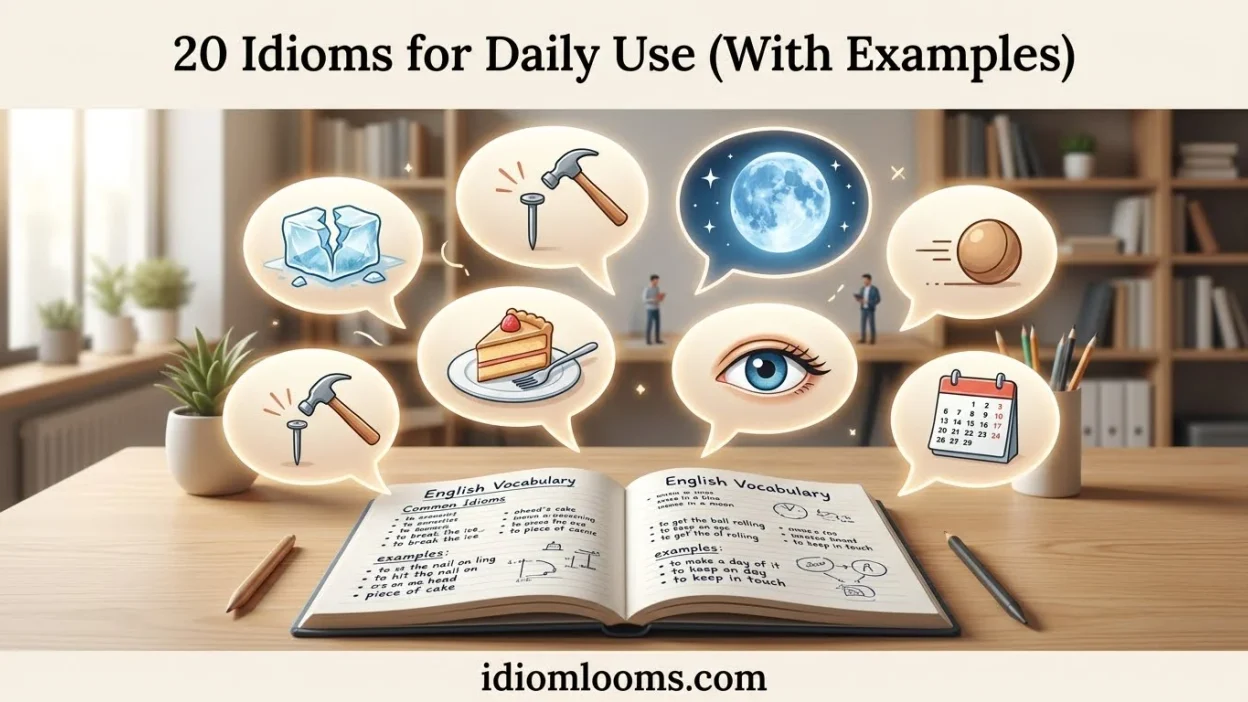
Have you ever noticed how a simple phrase can make everyday English sound more natural? 20 Idioms for Daily Use With Real Examples introduces practical expressions that fit naturally into conversations, messages, and everyday situations. These idioms can add personality, clarity, and color to ordinary communication without making your language feel forced.
You will discover useful expressions for English usage, grammar, conversations, meetings, and business communication. The examples also show how idioms can appear in formal writing, scheduling, time management, calendar planning, online booking, broadcasting, and project management. Each example focuses on meaning, context, and natural usage.
Learning common idioms also builds consistency and confidence when communicating in English. Instead of memorizing isolated phrases, you will see how each expression works in realistic contexts. Whether you are improving daily conversation, workplace communication, or writing skills, these practical examples make idiomatic English easier to understand and use.
What Is an Idiom?
An idiom is a fixed expression whose meaning is different from the literal meaning of the individual words.
For example, “spill the beans” does not usually mean dropping actual beans. It means revealing a secret.
Another example is “hit the books,” which means to start studying seriously, not physically strike books.
This is what makes idioms different from literal statements. Literal language says something directly, while figurative language uses an image or comparison to communicate another meaning.
Why Use Idioms for Daily Use?
Idioms are valuable in everyday communication because they help people express ideas in a way that feels natural and engaging.
They can help you:
- Express emotions without using a long explanation.
- Make ordinary conversations more vivid and memorable.
- Explain difficult or abstract situations through familiar images.
- Give personal writing more personality.
- Make stories, speeches, and messages more expressive.
- Understand native and fluent English speakers more easily.
- Communicate complicated feelings in a short phrase.
- Sound more relaxed and conversational when the context is appropriate.
For daily use, the key is context. Some idioms are common in casual conversation, while others sound more poetic, dramatic, or informal.
Quick List of 20 Idioms
- Break the ice
- Hit the nail on the head
- A piece of cake
- Under the weather
- Spill the beans
- Once in a blue moon
- Bite the bullet
- Cost an arm and a leg
- Let the cat out of the bag
- On the same page
- Go the extra mile
- Get the ball rolling
- See eye to eye
- Pull someone’s leg
- Back to square one
- Keep an eye on
- Call it a day
- Hang in there
- Cut corners
- The last straw
Break the Ice
Read more:20 Idioms for Beginners With Real Examples
Meaning
Break the ice means to make people feel more comfortable when they are meeting for the first time or when a situation initially feels awkward or tense.
In a Sentence
A quick joke helped break the ice before the team meeting began.
Other Ways to Say It
- Start a friendly conversation.
- Make everyone feel comfortable.
- Ease the tension.
- Get people talking.
Explanation
The expression creates the image of breaking through a layer of ice that keeps people distant. It works well when a conversation needs a friendly beginning or when strangers need help relaxing around one another.
It is generally warm, casual, and conversational, making it useful in everyday speech.
Best Use
Use this idiom in conversations, workplace discussions, social situations, presentations, and storytelling.
Hit the Nail on the Head
Meaning
Hit the nail on the head means to identify something exactly or describe a situation with great accuracy.
In a Sentence
When you said the problem was poor communication, you hit the nail on the head.
Other Ways to Say It
- Get it exactly right.
- Identify the real problem.
- Be exactly correct.
- Put your finger on it.
Explanation
The image comes from striking a nail directly on its head instead of missing it. In everyday communication, it suggests precision and accuracy.
This expression can sound confident and approving, especially when someone has correctly understood an issue.
Best Use
It works especially well in conversations, discussions, workplace communication, essays, and feedback.
A Piece of Cake
Meaning
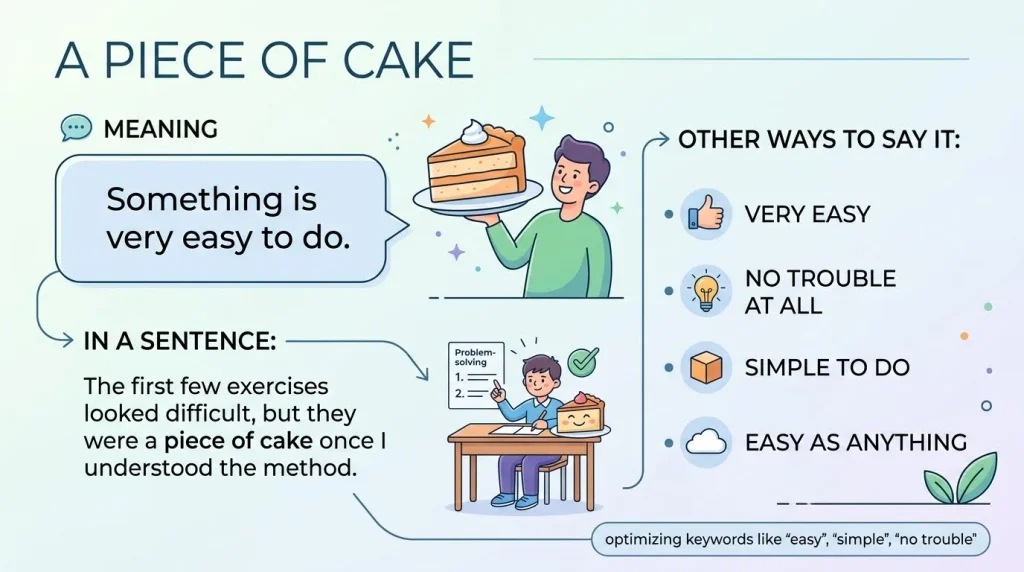
A piece of cake means that something is very easy to do.
In a Sentence
The first few exercises looked difficult, but they were a piece of cake once I understood the method.
Other Ways to Say It
- Very easy.
- No trouble at all.
- Simple to do.
- Easy as anything.
Explanation
The expression compares an easy task to something as effortless as enjoying a slice of cake. It has a light and playful tone.
Because it is informal, it may sound more natural in friendly conversation than in formal academic writing.
Best Use
Use it in casual conversations, personal messages, social media posts, and informal storytelling.
Under the Weather
Meaning
Under the weather means feeling slightly ill, tired, or physically unwell.
In a Sentence
I’m feeling a little under the weather, so I think I’ll stay home tonight.
Other Ways to Say It
- Feel a little sick.
- Not feel well.
- Be slightly unwell.
- Feel off.
Explanation
The phrase creates a picture of someone being affected by unpleasant weather. It usually suggests minor or temporary illness, rather than a serious medical condition.
Its tone is gentle and conversational, so it can make a simple statement about feeling unwell sound less blunt.
Best Use
It is best for casual conversations, text messages, friendly emails, and everyday speech.
Spill the Beans
Meaning
Spill the beans means to reveal information or a secret, especially when it was supposed to remain private.
In a Sentence
We planned a surprise party, but my brother spilled the beans before the weekend.
Other Ways to Say It
- Reveal the secret.
- Give away the surprise.
- Tell someone the truth.
- Let the secret out.
Explanation
The expression creates a humorous mental image of accidentally scattering something that cannot easily be gathered back up. Once information is revealed, it can be difficult to take it back.
The idiom is informal and playful, although the situation itself may be serious.
Best Use
Use it in casual conversation, storytelling, social media, and friendly messages.
Once in a Blue Moon
Meaning
Once in a blue moon means something happens very rarely.
In a Sentence
I only eat fast food once in a blue moon.
Other Ways to Say It
- Very rarely.
- Almost never.
- On rare occasions.
- Hardly ever.
Explanation
The expression gives rarity a memorable image by connecting an unusual event with a blue moon. It is useful when you want to emphasize that something happens only occasionally.
The tone is usually casual and slightly colorful, rather than formal.
Best Use
It fits everyday conversations, personal writing, storytelling, and informal posts.
Bite the Bullet
Meaning
Bite the bullet means to face something difficult, unpleasant, or frightening with courage and determination.
In a Sentence
I was nervous about making the phone call, but I decided to bite the bullet and do it.
Other Ways to Say It
- Face the problem.
- Do what needs to be done.
- Push through the difficulty.
- Face it bravely.
Explanation
The phrase creates a dramatic image of someone enduring pain by biting down on a bullet. Today, it usually communicates acceptance, courage, and determination rather than literal danger.
It can be motivating, but it may sound too dramatic for very minor situations.
Best Use
Use it in conversations, motivational writing, personal messages, and storytelling when someone must confront an unpleasant task.
Cost an Arm and a Leg
Meaning
Cost an arm and a leg means something is extremely expensive.
In a Sentence
That designer sofa looks beautiful, but it cost an arm and a leg.
Other Ways to Say It
- Be extremely expensive.
- Cost a fortune.
- Be very costly.
- Have a huge price tag.
Explanation
This idiom uses an exaggerated image to emphasize a very high price. The exaggeration makes the complaint about cost more expressive than simply saying something is expensive.
It is strongly informal, so it works best when discussing prices casually.
Best Use
Use it in conversations, reviews with a casual tone, personal messages, and social media posts.
Let the Cat Out of the Bag
Meaning
Let the cat out of the bag means to accidentally reveal a secret or information that was supposed to remain hidden.
In a Sentence
I wasn’t supposed to know about the promotion, but Tom let the cat out of the bag.
Other Ways to Say It
- Reveal the secret.
- Give away the information.
- Disclose the surprise.
- Reveal something accidentally.
Explanation
The phrase creates a memorable image of opening a bag and unexpectedly releasing something that was hidden inside. It is similar to “spill the beans,” but its hidden-object image gives it a slightly different flavor.
It is informal and often used when the revelation was accidental.
Best Use
It works well in casual conversations, stories, messages, and light workplace situations.
On the Same Page
Meaning
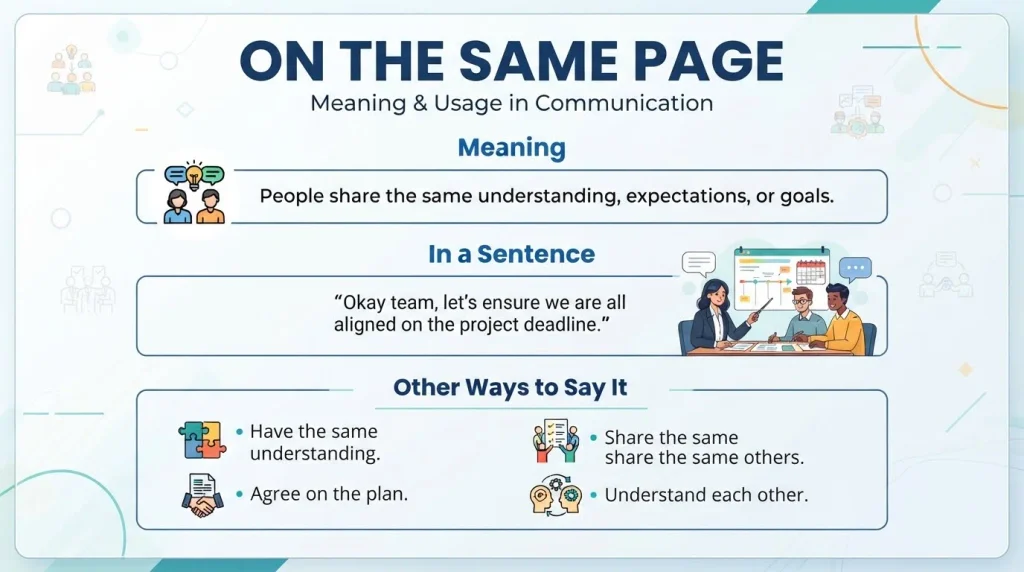
On the same page means that people share the same understanding, expectations, or goals.
In a Sentence
Before we start the project, let’s make sure we’re on the same page about the deadline.
Other Ways to Say It
- Have the same understanding.
- Agree on the plan.
- Share the same expectations.
- Understand each other.
Explanation
The expression creates the image of several people looking at the same page of information. It is particularly useful when teamwork depends on everyone understanding the same plan.
Unlike many informal idioms, it can also work comfortably in professional communication.
Best Use
Use it in workplace conversations, meetings, group projects, emails, and everyday discussions.
Go the Extra Mile
Meaning
Go the extra mile means to make an additional effort beyond what is normally expected.
In a Sentence
Our teacher went the extra mile to help us understand the difficult topic.
Other Ways to Say It
- Make an extra effort.
- Do more than expected.
- Put in additional work.
- Give extra support.
Explanation
The expression presents effort as a journey in which someone chooses to travel farther than necessary. It communicates generosity, dedication, and willingness to help.
It often carries a positive and appreciative feeling.
Best Use
It is effective in professional writing, recommendations, speeches, appreciation messages, conversations, and personal stories.
See Eye to Eye
Meaning
See eye to eye means to completely agree with someone about an idea, decision, or situation.
In a Sentence
My brother and I don’t always see eye to eye, but we respect each other’s opinions.
Other Ways to Say It
- Agree completely.
- Share the same opinion.
- Be in agreement.
- Have similar views.
Explanation
The expression creates the image of two people looking directly at each other at the same level. It suggests that their perspectives are aligned.
It is especially useful when discussing opinions or disagreements, and it can be used without suggesting that the relationship itself is negative.
Best Use
Use it in conversations, essays, workplace discussions, personal writing, and storytelling.
Pull Someone’s Leg
Meaning
Pull someone’s leg means to tease or joke with someone by pretending that something untrue is real.
In a Sentence
Don’t worry—I was just pulling your leg when I said the meeting had been canceled.
Other Ways to Say It
- Tease someone.
- Joke with someone.
- Play a harmless trick.
- Kid someone.
Explanation
The phrase is a playful way to describe lighthearted teasing. It normally depends on a friendly relationship and a shared understanding that nobody is being seriously deceived.
Because the expression is informal, it may sound out of place in serious or formal communication.
Best Use
It is best for friendly conversations, jokes, casual messages, and storytelling.
Back to Square One
Meaning
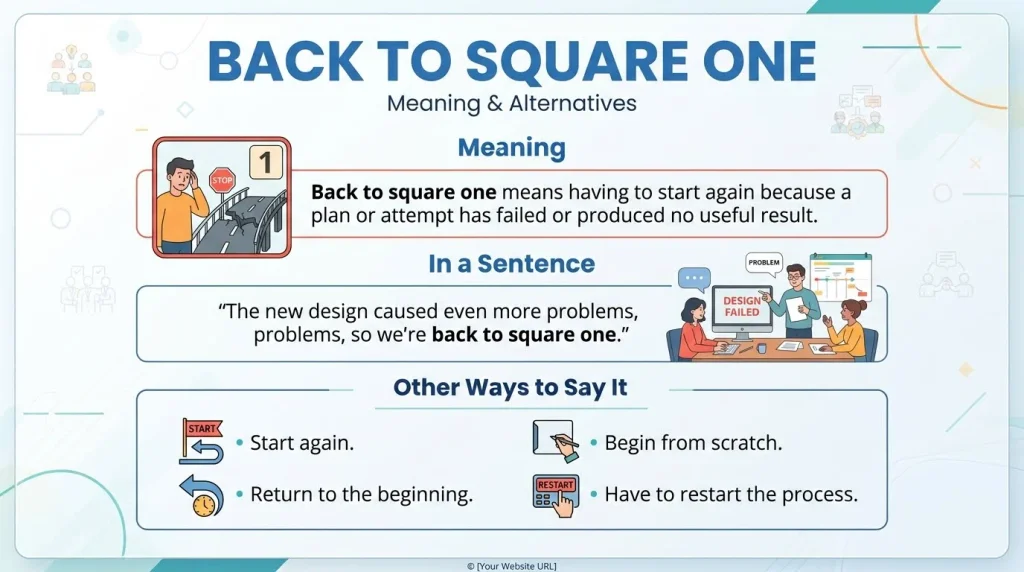
Back to square one means having to start again because a plan or attempt has failed or produced no useful result.
In a Sentence
The new design caused even more problems, so we’re back to square one.
Other Ways to Say It
- Start again.
- Return to the beginning.
- Begin from scratch.
- Have to restart the process.
Explanation
The expression suggests returning to the starting point of a game or process. It captures the frustration of losing progress and needing a fresh beginning.
Its emotional effect can range from mildly humorous to genuinely frustrated, depending on the situation.
Best Use
It works well in conversations, project discussions, workplace communication, storytelling, and informal writing.
Keep an Eye On
Meaning
Keep an eye on means to watch, monitor, or take care of someone or something.
In a Sentence
Could you keep an eye on my bag while I get some water?
Other Ways to Say It
- Watch carefully.
- Keep watch over.
- Monitor something.
- Look after something.
Explanation
The expression uses the image of keeping one’s eye focused on something to represent attention and observation.
It is one of the most practical idioms for daily use because it can describe watching a child, monitoring a task, protecting belongings, or simply paying attention to a developing situation.
Best Use
Use it in everyday conversations, workplace situations, instructions, messages, and informal writing.
Call It a Day
Meaning
Call it a day means to stop working or finish an activity for the day.
In a Sentence
We’ve completed the important tasks, so let’s call it a day.
Other Ways to Say It
- Finish for today.
- Stop working.
- Wrap things up.
- End the day’s work.
Explanation
The idiom treats the working period as something that can be officially declared finished. It often suggests that enough has been accomplished and it is time to stop.
Its tone is usually relaxed and practical rather than formal.
Best Use
It fits naturally in workplace conversations, casual discussions, group activities, and messages.
Hang in There
Meaning
Hang in there is an encouraging expression used to tell someone to remain patient, strong, or hopeful during a difficult situation.
In a Sentence
The exam week is stressful, but hang in there—you’re almost finished.
Other Ways to Say It
- Stay strong.
- Keep going.
- Don’t give up.
- Be patient.
Explanation
The phrase creates the image of someone holding on despite difficulty. It offers emotional support without requiring a long explanation.
It is warm and encouraging, although it is quite informal.
Best Use
Use it in personal messages, conversations, supportive notes, social media, and informal encouragement.
Cut Corners
Meaning
Cut corners means to do something in the easiest, quickest, or cheapest way, often by skipping important steps or reducing quality.
In a Sentence
We shouldn’t cut corners when checking the safety of the equipment.
Other Ways to Say It
- Take shortcuts.
- Skip important steps.
- Reduce quality to save time.
- Do something carelessly.
Explanation
The phrase creates a visual image of taking a shortcut across a corner instead of following the full route. Figuratively, it often carries a negative meaning because the shortcut may compromise quality or standards.
It is particularly useful when discussing responsibility and proper procedures.
Best Use
It works well in workplace discussions, advice, essays, conversations, and practical writing.
The Last Straw
Meaning
The last straw is the final problem or unpleasant event that makes someone unable or unwilling to tolerate a situation any longer.
In a Sentence
The broken promise was the last straw, and I decided it was time to leave.
Other Ways to Say It
- The final problem.
- The breaking point.
- The final annoyance.
- The thing that went too far.
Explanation
The expression comes from the idea of a load becoming too heavy because one final small addition pushes it beyond its limit. It communicates accumulated frustration rather than a reaction to one isolated event.
It can sound emotional or dramatic, so it is best used when the situation genuinely involves a breaking point.
Best Use
Use it in personal stories, conversations, essays, dramatic writing, and emotional messages.
Exercise: Practice Using Idioms
Choose the best answer for each question.
What does “break the ice” mean?
A. Bring a discussion to a close
B. Ease the tension and make an uncomfortable moment feel more natural
C. Express an opposing viewpoint
D. Depart from a gathering before it ends
Which idiom means “identify something exactly”?
A. Hit the nail on the head
B. Call it a day
C. Hang in there
D. Cut corners
If a task is “a piece of cake,” what does that suggest?
A. It is expensive.
B. It is dangerous.
C. It is very easy.
D. It is unfinished.
Someone who is “under the weather” is usually:
A. Traveling somewhere
B. Feeling slightly unwell
C. Feeling extremely excited
D. Working outside
What does “spill the beans” mean?
A. Make a mistake while cooking
B. Waste something valuable
C. Reveal a secret
D. Change your plans
If something happens “once in a blue moon,” how often does it happen?
A. Every day
B. Very rarely
C. Every weekend
D. Several times a day
What does “bite the bullet” suggest?
A. Avoiding responsibility
B. Celebrating success
C. Facing something difficult
D. Changing an opinion
Which situation best fits “cost an arm and a leg”?
A. A meal that was free
B. A very expensive vacation
C. A short conversation
D. An easy assignment
If someone “lets the cat out of the bag,” what have they probably done?
A. Lost something important
B. Told a secret
C. Started an argument
D. Finished a difficult task
What does being “on the same page” mean?
A. Having the same understanding
B. Reading the same book
C. Working in different places
D. Avoiding a decision
Someone who “goes the extra mile” usually:
A. Refuses to help
B. Makes an additional effort
C. Arrives late
D. Changes the subject
If two people “see eye to eye,” they:
A. Avoid each other
B. Compete with each other
C. Completely agree
D. Tell jokes together
What does “back to square one” mean?
A. Reaching the final stage
B. Starting again from the beginning
C. Taking a short break
D. Solving a problem quickly
If you ask someone to “keep an eye on” your luggage, what are you asking them to do?
A. Move it somewhere else
B. Buy another bag
C. Watch it for you
D. Clean it carefully
What does “the last straw” describe?
A. The first sign of success
B. A minor improvement
C. The final problem that causes someone to reach a breaking point
D. A simple way to solve a problem
Answers
- B — “Break the ice” means making an uncomfortable or unfamiliar situation more relaxed.
- A — “Hit the nail on the head” means being exactly right about something.
- C — “A piece of cake” describes something that is very easy.
- B — “Under the weather” means feeling slightly ill or unwell.
- C — “Spill the beans” means revealing information or a secret.
- B — “Once in a blue moon” describes something that happens very rarely.
- C — “Bite the bullet” means facing something difficult or unpleasant with determination.
- B — “Cost an arm and a leg” means something is extremely expensive.
- B — “Let the cat out of the bag” means accidentally or deliberately revealing a secret.
- A — Being “on the same page” means having the same understanding, expectations, or goals.
- B — To “go the extra mile” means making more effort than normally expected.
- C — People who “see eye to eye” agree about an issue or viewpoint.
- B — “Back to square one” means returning to the beginning after an unsuccessful attempt.
- C — To “keep an eye on” something means to watch or monitor it.
- C — “The last straw” is the final problem that causes someone to reach their limit.
FAQs
What is an idiom for Daily Use?
An idiom for daily use is a familiar expression that people can naturally use in ordinary conversations, messages, workplace situations, or informal writing. Examples include “break the ice,” “call it a day,” and “keep an eye on.”
How do I create my own idiom?
Creating a completely new idiom is possible, but it is usually better to begin with a clear image or comparison. Think about the feeling or idea you want to express, then connect it to something concrete and memorable. A good figurative expression should communicate more than a simple synonym.
What makes an idiom effective?
An effective idiom has a clear figurative meaning, memorable imagery, and a natural context. It should help the reader or listener understand an idea rather than make the message unnecessarily confusing.
Can I use these idioms in everyday conversation?
Yes. Many of these expressions are particularly natural in casual spoken English. However, context matters. Expressions such as “a piece of cake” and “pull someone’s leg” are informal, while “on the same page” can also fit professional conversations.
What is the difference between an idiom and a simile?
An idiom is a conventional expression with a figurative meaning, such as “spill the beans” for revealing a secret. A simile directly compares two things using words such as “like” or “as,” such as “as quiet as a mouse.” Both use figurative language, but they work differently.
Conclusion
Idioms make everyday English more expressive by turning ordinary ideas into memorable images and familiar expressions. The 20 examples in this guide cover situations involving communication, emotions, effort, disagreement, difficulty, cost, health, and everyday activities. Some, such as “keep an eye on” and “on the same page,” fit naturally into practical conversations, while others, such as “the last straw,” add stronger emotional weight.
The best choice depends on the situation, your audience, and the feeling you want to communicate. As you become more comfortable with these expressions, try noticing how native speakers use them in context rather than memorizing meanings alone. The strongest idiom is not necessarily the most colorful one it is the one that makes your intended meaning clear and natural.

Oliver Whitcombe is a British writer and language enthusiast who has been fascinated by English expressions since childhood, when his grandmother told him he was “born with a silver spoon” and he spent a week trying to find it.
He created Idiom Looms to help learners and native speakers alike make sense of English idioms. Their origins, their meanings, and the moments they’re best used. His writing mixes plain explanations with a good dose of British wit.
Oliver lives in England, where he divides his time between writing, walking, and correcting everyone’s grammar (politely).



[…] Read more:20 Idioms for Daily Use With Real Examples […]