
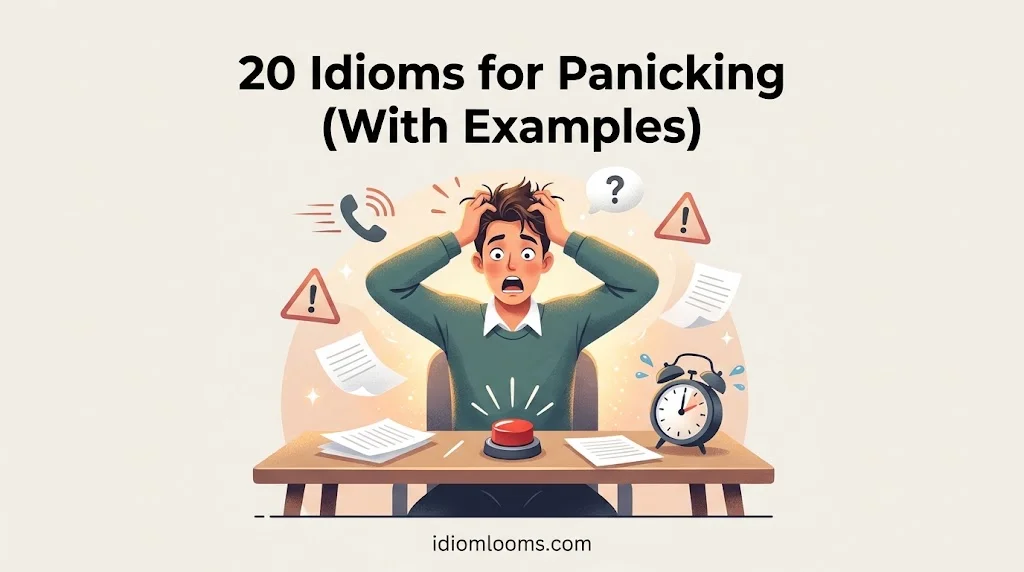
Have you ever felt your thoughts race when panic suddenly takes over? The 20 Idioms for Panicking With Real Examples guide explores natural expressions that describe fear, anxiety, confusion, and overwhelming reactions. These idioms can make everyday English usage more vivid while helping readers express emotional situations with greater precision. Each expression includes a clear meaning and realistic example, making figurative language easier to understand and remember.
Understanding idioms for panicking can also improve communication across different settings. Whether you are discussing scheduling problems, time management, business communication, or unexpected changes during meetings, the right expression adds clarity and personality. These phrases can even appear in conversations about online booking, broadcasting, a busy calendar, or project management when pressure suddenly rises.
This article focuses on practical meanings, natural contexts, and correct grammar so you can use each idiom confidently. You will discover expressions suitable for conversations, storytelling, formal writing, and creative descriptions of stressful moments. With attention to consistency, context, and tone, these examples will help you recognize when an idiom sounds natural and when a simpler expression works better.
What Is an Idiom?
An idiom is a word or phrase whose meaning is different from the literal meaning of the individual words.
For example, “break the ice” does not mean physically breaking ice. It means to make people feel more comfortable in a new or awkward situation.
Another example is “spill the beans.” Literally, it sounds like dropping beans, but figuratively it means to reveal a secret.
Idioms make language more expressive and memorable. They often rely on familiar images, comparisons, or situations to communicate an idea quickly.
Why Use Idioms for Panicking?
Panicking can involve many different emotions. Someone may be frightened, confused, overwhelmed, impatient, or convinced that something terrible is about to happen. A single word such as “nervous” may not capture those differences.
Idioms give you more precise ways to describe the experience. For example, “be on pins and needles” emphasizes anxious waiting, while “lose your head” suggests that fear has affected your ability to think calmly.
These expressions can help you:
- Express strong emotions without lengthy explanations.
- Make descriptions more vivid and memorable.
- Turn an abstract feeling into a clear mental image.
- Add personality to everyday conversations.
- Make creative writing and storytelling more engaging.
- Show whether a situation feels serious, humorous, dramatic, or exaggerated.
- Communicate complicated emotional reactions in a familiar way.
Quick List of 20 Idioms for Panicking
- Hit the panic button
- Lose your head
- Freak out
- Have a meltdown
- Go to pieces
- Be on pins and needles
- Have your heart in your mouth
- Jump out of your skin
- Shake like a leaf
- Sweat bullets
- Break into a cold sweat
- Run around like a headless chicken
- Be in a flap
- Be in a tizzy
- Be in a tailspin
- Panic stations
- The sky is falling
- Make a mountain out of a molehill
- Run for the hills
- Be at your wit’s end
Hit the Panic Button
Read more:20 Idioms for Giving With Real Examples
Meaning
“Hit the panic button” means to react with alarm or take urgent action because a situation seems dangerous, difficult, or out of control. It does not necessarily mean literally pressing a button.
The image is of someone responding to an emergency before calmly considering all the facts.
In a Sentence
When the computer system suddenly stopped working, the team hit the panic button before realizing the problem was only a temporary outage.
Other Ways to Say It
- Start to panic
- React in alarm
- Go into emergency mode
- Become seriously worried
Explanation
This expression works because a panic button represents an immediate response to danger. It can describe an individual or an entire group reacting suddenly.
It is often useful when the reaction feels somewhat exaggerated or premature, especially when people discover later that the situation was not as bad as they thought.
Best Use
It works especially well in conversations, workplace writing, news-style descriptions, and storytelling. It can sound slightly humorous when used for a situation that only feels like an emergency.
Lose Your Head
Meaning
“Lose your head” means to become so frightened, angry, or excited that you stop thinking clearly.
When someone panics and loses their ability to make sensible decisions, this expression fits naturally.
In a Sentence
Try not to lose your head if the presentation equipment fails; we can find another solution.
Other Ways to Say It
- Lose your composure
- Stop thinking clearly
- Become overwhelmed
- Panic and act impulsively
Explanation
The phrase creates the image of someone figuratively losing control of their mind. It emphasizes poor judgment under pressure, rather than fear alone.
Someone can be nervous without losing their head, so this idiom is strongest when panic begins to affect behavior or decisions.
Best Use
Use it in everyday conversation, advice, storytelling, and dramatic scenes. It is less suitable for highly formal writing.
Freak Out
Meaning
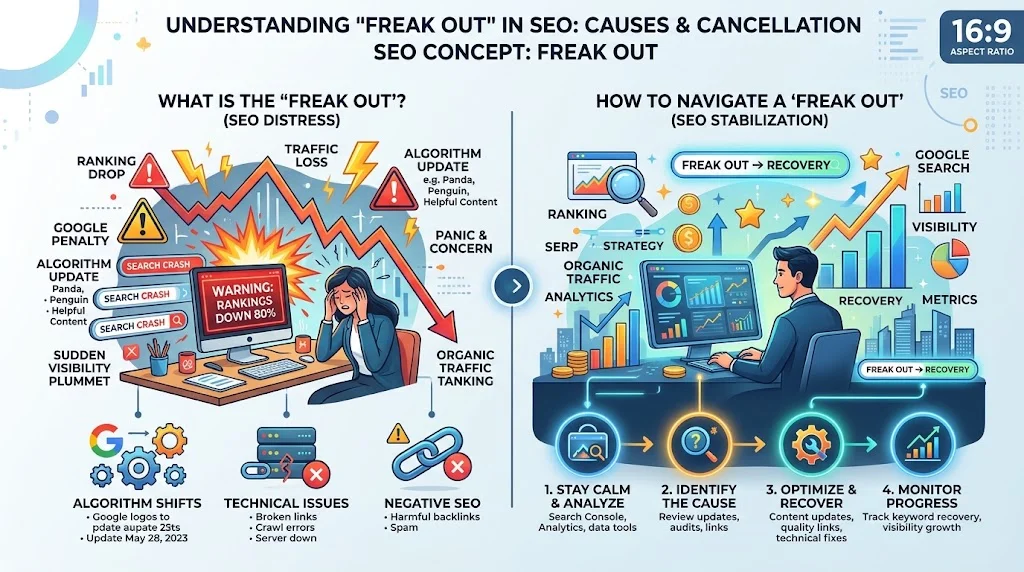
“Freak out” means to become extremely frightened, worried, upset, or excited. In the context of panicking, it usually describes a strong emotional reaction.
It is informal and often suggests that the reaction is sudden or intense.
In a Sentence
I freaked out when I realized I had left my passport in the hotel room.
Other Ways to Say It
- Panic
- Become frantic
- Get extremely worried
- Lose control emotionally
Explanation
“Freak out” is short, energetic, and conversational. It communicates a feeling that suddenly takes over your attention and emotions.
Because it is informal, it may sound too casual for a serious academic report, but it is perfectly natural in everyday speech.
Best Use
This expression is especially effective in conversations, text messages, social media, casual storytelling, and informal creative writing.
Have a Meltdown
Meaning
“Have a meltdown” means to become extremely upset or overwhelmed and struggle to control your emotions.
It can describe panic, frustration, fear, or a mixture of several intense emotions.
In a Sentence
After three things went wrong at once, he had a meltdown and needed a few minutes away from the crowd.
Other Ways to Say It
- Become overwhelmed
- Break down emotionally
- Lose emotional control
- Become extremely upset
Explanation
The word “meltdown” creates the image of something becoming too hot and breaking down under pressure. That makes it useful for describing emotional overload.
It is stronger than simply saying someone felt nervous. It suggests that the pressure became difficult to manage.
Best Use
It works well in casual conversation, personal stories, social media, and character descriptions. Use it carefully in professional settings because it can sound blunt.
Go to Pieces
Meaning
“Go to pieces” means to become emotionally overwhelmed and unable to cope calmly with a difficult or frightening situation.
It often suggests that a person who normally seems composed has suddenly struggled under pressure.
In a Sentence
She went to pieces when she could not reach her brother after the storm.
Other Ways to Say It
- Fall apart
- Become overwhelmed
- Lose emotional control
- Break down
Explanation
The expression creates a strong image of something coming apart piece by piece. Emotionally, it suggests that a person’s usual sense of control has temporarily collapsed.
It can carry a serious or sympathetic tone, particularly when the cause of the panic is genuinely frightening.
Best Use
Use it in storytelling, personal writing, emotional conversations, and serious creative scenes.
Be on Pins and Needles
Meaning
“Be on pins and needles” means to feel very anxious, nervous, or restless while waiting for something uncertain to happen.
The emphasis is usually on anxious anticipation, rather than sudden panic.
In a Sentence
We were on pins and needles waiting for the doctor to call with the test results.
Other Ways to Say It
- Be extremely anxious
- Wait nervously
- Be on edge
- Feel tense with anticipation
Explanation
The image is deliberately uncomfortable: sitting on pins and needles would make it difficult to relax. Figuratively, it describes the mental discomfort of uncertainty.
This makes the expression particularly useful when someone is panicking while waiting for news.
Best Use
It fits conversations, personal messages, essays, stories, and suspenseful writing. It is generally natural in everyday English.
Have Your Heart in Your Mouth
Meaning
“Have your heart in your mouth” describes a moment of intense fear, anxiety, or suspense when you feel physically shaken by what is happening.
It suggests that your fear is so strong that you can almost feel it in your body.
In a Sentence
My heart was in my mouth when the car suddenly swerved on the icy road.
Other Ways to Say It
- Be terrified
- Feel a surge of fear
- Be extremely anxious
- Have your heart pounding
Explanation
This idiom uses a vivid physical image to express intense fear. It works particularly well for sudden moments when something goes unexpectedly wrong.
It is more dramatic than simply saying “I was worried,” so it can add emotional force to a story.
Best Use
It is effective in storytelling, personal narratives, suspenseful scenes, and emotional conversations. It has a somewhat dramatic or literary feel.
Jump Out of Your Skin
Meaning
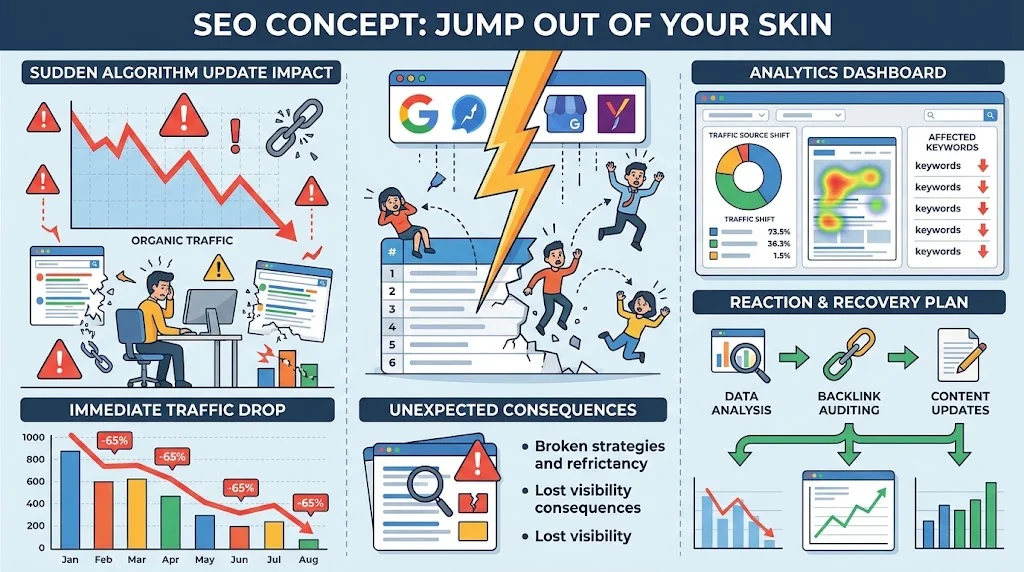
“Jump out of your skin” means to react with sudden shock or fright.
It is commonly used when something unexpected makes a person jump, but it can also describe a moment of intense nervousness.
In a Sentence
I nearly jumped out of my skin when the alarm suddenly went off.
Other Ways to Say It
- Jump in fright
- Be startled
- Get a terrible shock
- Be frightened suddenly
Explanation
The expression creates an exaggerated but memorable picture of someone being so startled that they seem ready to leap out of their own body.
It is usually about sudden fear rather than prolonged anxiety, making it distinct from expressions such as “on pins and needles.”
Best Use
Use it in casual conversation, humorous stories, personal anecdotes, and suspenseful writing.
Shake Like a Leaf
Meaning
“Shake like a leaf” means to tremble visibly because of fear, nervousness, cold, or shock.
When panic causes noticeable physical shaking, this comparison can make the scene much more vivid.
In a Sentence
After hearing the loud crash downstairs, the child was shaking like a leaf.
Other Ways to Say It
- Tremble with fear
- Shake with nerves
- Quiver with fright
- Be visibly frightened
Explanation
A leaf can tremble in the wind, so the expression gives the reader an immediate picture of small, uncontrollable movements.
It focuses on the physical signs of panic rather than the thoughts causing the fear.
Best Use
This phrase works especially well in fiction, descriptive writing, storytelling, and emotional scenes. It can sound more poetic than everyday alternatives.
Sweat Bullets
Meaning
“Sweat bullets” means to be extremely nervous, frightened, or anxious.
It is a vivid exaggeration that suggests a person is sweating heavily because of intense pressure.
In a Sentence
I was sweating bullets while waiting for my turn to speak in front of the entire class.
Other Ways to Say It
- Be extremely nervous
- Sweat with anxiety
- Feel terrified
- Be under intense pressure
Explanation
The phrase uses exaggeration to make nervousness feel almost physical. “Bullets” makes ordinary sweating sound much more dramatic.
It is usually informal and can even add a little humor to a tense situation.
Best Use
It works best in casual speech, storytelling, humorous writing, and personal anecdotes.
Break Into a Cold Sweat
Meaning
“Break into a cold sweat” means to suddenly become very nervous, frightened, or anxious, often because of a shocking thought or realization.
In a Sentence
I broke into a cold sweat when I realized I had sent the confidential file to the wrong person.
Other Ways to Say It
- Suddenly become terrified
- Feel a wave of fear
- Become intensely anxious
- Be overcome with dread
Explanation
Unlike “sweat bullets,” this expression emphasizes the sudden physical reaction that can accompany fear.
The word “cold” makes the image especially striking: the person is sweating, yet the sensation is associated with fear rather than heat.
Best Use
Use it in serious storytelling, suspense, personal narratives, and descriptions of shocking realizations.
Run Around Like a Headless Chicken
Meaning
“Run around like a headless chicken” describes someone who is moving around frantically without a clear plan.
It often suggests that panic has made the person busy but ineffective.
In a Sentence
Everyone ran around like headless chickens when the event schedule suddenly disappeared.
Other Ways to Say It
- Act frantically
- Rush around without a plan
- Become disorganized
- Panic and lose direction
Explanation
The image is intentionally exaggerated and often humorous. It captures the strange way panic can make people move quickly without thinking strategically.
It is not simply about being scared; it highlights confused, uncontrolled activity.
Best Use
This idiom is useful in casual conversation, humorous writing, workplace stories, and storytelling. Avoid it when a very respectful or serious tone is required.

Be in a Flap
Meaning
“Be in a flap” means to be nervous, upset, or agitated about something.
It is particularly common in British English and can suggest fussing over a problem.
In a Sentence
Dad was in a flap because the guests were arriving and the kitchen was still a mess.
Other Ways to Say It
- Be agitated
- Be in a panic
- Fuss over something
- Become very anxious
Explanation
This phrase gives panic a slightly lighter, more informal character. It often describes someone who is fussing and worrying rather than facing a truly dangerous emergency.
That makes it useful when the situation is stressful but not necessarily catastrophic.
Best Use
Use it in British English conversations, light storytelling, humorous writing, and informal descriptions.
Be in a Tizzy
Meaning
“Be in a tizzy” means to be confused, excited, worried, or upset about something.
It usually describes a relatively light or exaggerated state of agitation.
In a Sentence
She was in a tizzy after discovering that the invitations had been printed with the wrong date.
Other Ways to Say It
- Be flustered
- Be worked up
- Be agitated
- Be in a muddle
Explanation
“Tizzy” has a playful sound, which gives the expression a lighter emotional tone than phrases such as “go to pieces.”
It is useful when someone is clearly stressed but the situation can still be described with a touch of humor.
Best Use
It works best in casual conversation, humorous stories, light articles, and informal writing.
Be in a Tailspin
Meaning
“Be in a tailspin” means to be in a state of confusion, emotional distress, or loss of control.
When panic causes someone to feel as though everything is rapidly getting worse, this expression can be effective.
In a Sentence
After the unexpected announcement, the whole department was in a tailspin trying to understand what would happen next.
Other Ways to Say It
- Be in turmoil
- Feel out of control
- Be deeply unsettled
- Spiral into confusion
Explanation
The expression comes from the image of an aircraft spinning downward. Figuratively, it suggests that a person or situation is losing stability and becoming harder to control.
It can describe an individual or a group, which makes it more flexible than some panic expressions.
Best Use
It fits journalistic writing, workplace situations, storytelling, and serious descriptions of emotional or organizational confusion.
Panic Stations
Meaning
“Panic stations” describes a situation in which everyone suddenly becomes extremely busy, worried, or frantic because something has gone wrong.
It is especially associated with British English.
In a Sentence
When the fire alarm sounded during the rehearsal, it was panic stations backstage.
Other Ways to Say It
- Emergency mode
- Total panic
- A frantic situation
- Everyone scrambling
Explanation
The phrase makes panic sound like a place people have suddenly been sent to. That gives the expression a memorable sense of collective urgency.
It is especially useful when several people are reacting at the same time.
Best Use
Use it in British English, storytelling, workplace descriptions, and informal reports of chaotic situations.
The Sky Is Falling
Meaning
“The sky is falling” describes a reaction in which someone believes a problem is far worse or more catastrophic than it really is.
It is often used to criticize excessive pessimism or panic.
In a Sentence
One delayed shipment had everyone acting as if the sky were falling, even though the order could still arrive the next morning.
Other Ways to Say It
- Expect the worst
- Panic over everything
- Act as if disaster is coming
- Overreact to a problem
Explanation
The expression creates an exaggerated image of the entire sky collapsing. That makes it ideal for describing catastrophic thinking.
It is usually playful or critical rather than sympathetic, so it should not be used carelessly when someone is genuinely suffering.
Best Use
It works well in conversation, opinion writing, humorous commentary, and situations where someone is clearly overreacting.
Make a Mountain Out of a Molehill
Meaning
“Make a mountain out of a molehill” means to treat a small problem as though it were a huge one.
It can describe panic when a person allows a minor issue to become emotionally enormous.
In a Sentence
You forgot one comma in the draft; don’t make a mountain out of a molehill and assume the entire project is ruined.
Other Ways to Say It
- Overreact to a small problem
- Blow something out of proportion
- Make too much of an issue
- Turn a minor problem into a crisis
Explanation
The contrast between a tiny molehill and a huge mountain makes the meaning immediately clear. It describes the gap between reality and the size of someone’s reaction.
This expression is particularly useful when panic is being caused by exaggeration rather than genuine danger.
Best Use
Use it in advice, conversations, essays, workplace communication, and reflective writing. Be mindful that it can sound dismissive if someone is genuinely distressed.
Run for the Hills
Meaning
“Run for the hills” is an exaggerated way of saying that something seems so dangerous or alarming that people should escape immediately.
It is often used humorously rather than as literal emergency advice.
In a Sentence
When the old printer started smoking again, everyone joked that it was time to run for the hills.
Other Ways to Say It
- Get out quickly
- Escape
- Make a quick exit
- Flee from danger
Explanation
The image is dramatic: people are abandoning a dangerous place and heading toward safety in the hills. Because it is so exaggerated, the phrase often carries a playful or theatrical tone.
It can describe panic without making the situation sound entirely serious.
Best Use
It works especially well in humorous conversations, social media, storytelling, and playful descriptions.
Be at Your Wit’s End
Meaning
“Be at your wit’s end” means to feel that you have run out of ideas, patience, or ways to solve a difficult problem.
It can accompany panic when a person feels completely overwhelmed and unable to see a solution.
In a Sentence
After trying every possible way to fix the broken system, I was at my wit’s end.
Other Ways to Say It
- Be completely frustrated
- Run out of ideas
- Feel helpless
- Have no idea what to do next
Explanation
This idiom is less about sudden fear and more about the mental exhaustion that can follow prolonged stress. Someone at their wit’s end may be anxious because they cannot find a way forward.
It therefore adds an important shade of meaning to the language of panicking: sometimes panic grows from feeling trapped rather than simply frightened.
Best Use
It works well in conversations, essays, personal writing, problem-solving discussions, and serious storytelling.
Exercise: Practice Using Idioms
Choose the best answer for each question.
What does “lose your head” mean?
A. Misplacing an item and forgetting its location
B. Losing the ability to think clearly under stress
C. Feeling exhausted after physical activity
D. Exiting a room full of people
Which idiom describes anxious waiting?
A. Run for the hills
B. Have a meltdown
C. Hit the panic button
D. Be on pins and needles
Which expression suggests that someone is moving frantically without a clear plan?
A. Run around like a headless chicken
B. Be at your wit’s end
C. Break into a cold sweat
D. Have your heart in your mouth
If someone suddenly becomes frightened and starts sweating, which expression fits best?
A. Make a mountain out of a molehill
B. Be in a tizzy
C. Break into a cold sweat
D. Run for the hills
Which expression is commonly used to describe a sudden reaction to shock?
A. Be in a tailspin
B. Jump out of your skin
C. Be on pins and needles
D. Be at your wit’s end
What does “make a mountain out of a molehill” suggest?
A. Solving a difficult problem
B. Becoming calm after panic
C. Leaving a dangerous situation
D. Treating a small problem as a huge one
Which expression is particularly associated with British English?
A. Be in a flap
B. Freak out
C. Sweat bullets
D. Lose your head
Someone is overwhelmed and unable to control their emotions. Which idiom is most suitable?
A. Have your heart in your mouth
B. Run for the hills
C. Have a meltdown
D. Be on pins and needles
Which idiom suggests that a situation or person is losing stability and control?
A. Be in a tailspin
B. Sweat bullets
C. Jump out of your skin
D. The sky is falling
Which expression is often used humorously to suggest that people should escape?
A. Go to pieces
B. Run for the hills
C. Be at your wit’s end
D. Be in a tizzy
What does “sweat bullets” mean?
A. Engaging in a strenuous workout
B. Falling sick physically
C. Performing outdoor tasks under intense heat
D. Experiencing intense fear or anxiety
Which expression focuses most strongly on emotional collapse?
A. Have a meltdown
B. Hit the panic button
C. Be in a flap
D. Run for the hills
If a team suddenly becomes frantic after discovering a serious problem, which phrase could describe the situation?
A. The sky is falling
B. Panic stations
C. Shake like a leaf
D. Be on pins and needles
Which expression means that you have run out of ideas or patience?
A. Be at your wit’s end
B. Freak out
C. Jump out of your skin
D. Have your heart in your mouth
Which phrase is most clearly about overreacting to a problem?
A. Break into a cold sweat
B. Go to pieces
C. Make a mountain out of a molehill
D. Be in a tailspin
Answers
- B — “Lose your head” means to stop thinking clearly because of strong emotion or pressure.
- D — “Be on pins and needles” describes nervous or anxious waiting.
- A — “Run around like a headless chicken” describes frantic activity without a clear plan.
- C — “Break into a cold sweat” describes a sudden physical reaction to fear, anxiety, or shock.
- B — “Jump out of your skin” refers to being suddenly startled or frightened.
- D — “Make a mountain out of a molehill” means exaggerating a small problem.
- A — “Be in a flap” is especially associated with British English and means being agitated or worried.
- C — “Have a meltdown” describes becoming extremely overwhelmed or emotionally uncontrolled.
- A — “Be in a tailspin” suggests losing stability or becoming deeply confused or distressed.
- B — “Run for the hills” is an exaggerated way of saying to escape quickly.
- D — “Sweat bullets” means to be extremely nervous or frightened.
- A — “Have a meltdown” focuses on emotional overload and loss of control.
- B — “Panic stations” describes a situation where people become frantic because of a problem.
- A — “Be at your wit’s end” means having run out of ideas, patience, or solutions.
- C — “Make a mountain out of a molehill” specifically describes making a minor issue seem much more serious.
FAQs
What is an idiom for panicking?
An idiom for panicking is a figurative expression that describes fear, anxiety, confusion, or emotional overwhelm in a vivid way. Examples include “lose your head,” “freak out,” “hit the panic button,” and “sweat bullets.”
How do I create my own idiom?
Start with the feeling you want to describe, then connect it to a strong, familiar image. For example, instead of simply saying someone is overwhelmed, imagine an object becoming overloaded, spinning out of control, or falling apart. A good figurative expression should communicate an idea without needing a long explanation.
What makes an idiom effective?
An effective idiom creates a clear mental picture while communicating an emotion or idea naturally. It should fit the context and add something that a plain statement does not. The strongest expressions feel understandable rather than forced.
Can I use these idioms in everyday conversation?
Yes. Expressions such as “freak out,” “lose your head,” “hit the panic button,” and “on pins and needles” can sound natural in everyday English. Others, such as “shake like a leaf,” may feel more descriptive or dramatic depending on the context.
What is the difference between an idiom and a simile?
An idiom is a familiar expression whose figurative meaning is understood as a whole, such as “lose your head.” A simile directly compares two things using words such as “like” or “as,” as in “he shook like a leaf.” Some expressions can contain comparisons while still functioning as established idiomatic phrases.
Conclusion
Panicking can look different from one situation to another. Sometimes it means losing your ability to think clearly; sometimes it is anxious waiting, physical fear, emotional overload, or frantic action. That is why idiomatic expressions are so useful. They allow you to describe these different reactions with memorable images instead of relying on the same word repeatedly.
Expressions such as “be on pins and needles,” “go to pieces,” “sweat bullets,” and “be in a tailspin” each capture a different shade of anxiety or panic. Choose the expression that matches the situation and the tone you want. A playful idiom may suit a casual conversation, while a more dramatic one can strengthen a story. The best expression is always the one that makes the feeling clear without overwhelming the message.

Margaret Saywell is an English author and editor who has spent more than fifteen years working with words teaching, proofreading, and writing about the quirks of the English language.
At Idiom Looms, Margaret gathers idioms from across the English-speaking world and weaves them into clear, practical guides. She loves digging into the history of a phrase and showing readers how a few well-chosen words can say far more than a long explanation.
She believes language should be enjoyed, not feared and that the best way to learn an idiom is to see it in action.



[…] Read more:20 Idioms for Panicking With Real Examples […]