
What makes giving feel more meaningful, thoughtful, or memorable? The right words can turn a simple act of generosity into a powerful expression of kindness. In this guide to 20 Idioms for Giving With Real Examples, you’ll discover natural expressions that describe generosity, sharing, kindness, support, and offering in vivid English. These idioms can help you communicate ideas more naturally while improving your everyday English usage and grammar.
From personal conversations to business communication, idioms can add warmth and personality without making your writing feel forced. You’ll explore expressions that can fit formal writing, friendly messages, workplace meetings, and professional discussions. Some examples also connect naturally with scheduling, time management, calendar planning, online booking, project management, and even broadcasting, where clear communication and consistency matter.
Each idiom is explained with a clear meaning, a realistic example, alternative expressions, and practical usage guidance. Whether you are improving vocabulary, writing an essay, preparing professional content, or becoming more confident in conversations, these examples make figurative language easier to understand. By the end, you’ll have useful expressions for describing giving and generosity with greater clarity, accuracy, and confidence..
What Is an Idiom?
An idiom is a familiar expression whose meaning is different from the literal meaning of the individual words.
For example, “break the ice” does not usually mean physically breaking ice. It means to make people feel more comfortable in a new or awkward situation.
Similarly, “hit the nail on the head” does not mean striking a nail. It means getting something exactly right.
Idioms are a form of figurative language. They use familiar images, actions, or situations to communicate a larger idea. Because their meanings are often symbolic rather than literal, they can make speech and writing more expressive.
Why Use Idioms for Giving?
Giving can take many forms. You can give money, time, attention, encouragement, help, forgiveness, opportunities, or emotional support. Idioms allow us to describe these different kinds of giving without sounding repetitive.
They can make an expression:
- More vivid: “She gave him a leg up” creates a picture of helping someone move forward.
- More emotional: “He would give the shirt off his back” emphasizes extraordinary generosity.
- More memorable: Figurative language tends to create an image that ordinary wording may lack.
- More conversational: Expressions such as “chip in” and “give someone a break” sound natural in everyday speech.
- More expressive in writing: Idioms can add personality to stories, essays, speeches, and personal messages.
The key is to choose an expression that matches the kind of giving you mean. Generosity, support, sacrifice, forgiveness, and effort are not exactly the same thing, so the best idiom depends on the context.
Quick List of 20 Idioms for Giving
- Give someone a hand
- Give the shirt off your back
- Give until it hurts
- Pay it forward
- Go the extra mile
- Put your money where your mouth is
- Chip in
- Give someone a leg up
- Give someone a break
- Give someone the benefit of the doubt
- Give someone a shoulder to cry on
- Give someone a second chance
- Give someone a boost
- Give someone a lift
- Give credit where credit is due
- Give your all
- Give and take
- Give someone a shot
- Give someone free rein
- Give someone a voice
Give Someone a Hand
Read more:20 Idioms for Frustration With Real Examples
Meaning
“Give someone a hand” means to help someone with a task, problem, or difficult situation. The “hand” represents practical help or support, rather than a literal hand.
In a Sentence
Could you give me a hand with these boxes before the guests arrive?
Other Ways to Say It
- Help someone out
- Lend a hand
- Offer some help
- Give someone some assistance
Explanation
This is one of the most natural ways to talk about giving help in everyday English. The image is simple: someone reaches out a hand to make another person’s task easier.
It is usually friendly and informal, making it especially useful when asking for or offering practical assistance.
Best Use
Best for conversations, messages, workplace communication, storytelling, and informal writing.
Give the Shirt Off Your Back
Meaning
“Give the shirt off your back” describes someone who is extremely generous and willing to give something valuable, even when doing so may inconvenience them.
In a Sentence
My uncle would give the shirt off his back if a friend genuinely needed help.
Other Ways to Say It
- Be extremely generous
- Give generously
- Go out of your way to help
- Be willing to sacrifice for someone
Explanation
The expression creates a strong image of someone giving away even the clothes they are wearing. It emphasizes selfless generosity, not ordinary giving.
It can sound warm and affectionate when describing a kind person, although it is often an exaggeration rather than a literal statement.
Best Use
Works especially well in personal stories, conversations, character descriptions, and heartfelt writing.
Give Until It Hurts
Meaning
“Give until it hurts” means to give so much—usually money, time, effort, or resources—that the sacrifice becomes personally difficult.
In a Sentence
The campaign encouraged supporters to give until it hurts, but everyone was reminded to contribute within their means.
Other Ways to Say It
- Give generously
- Make a major sacrifice
- Give as much as you can
- Contribute wholeheartedly
Explanation
The phrase connects giving with personal sacrifice. The word “hurts” makes the expression emotionally powerful because it suggests that meaningful generosity may sometimes require giving up something important.
It can be inspirational, dramatic, or slightly humorous depending on the situation.
Best Use
Best suited to fundraising messages, speeches, persuasive writing, and discussions about charitable giving. It may sound too dramatic for routine situations.
Pay It Forward
Meaning
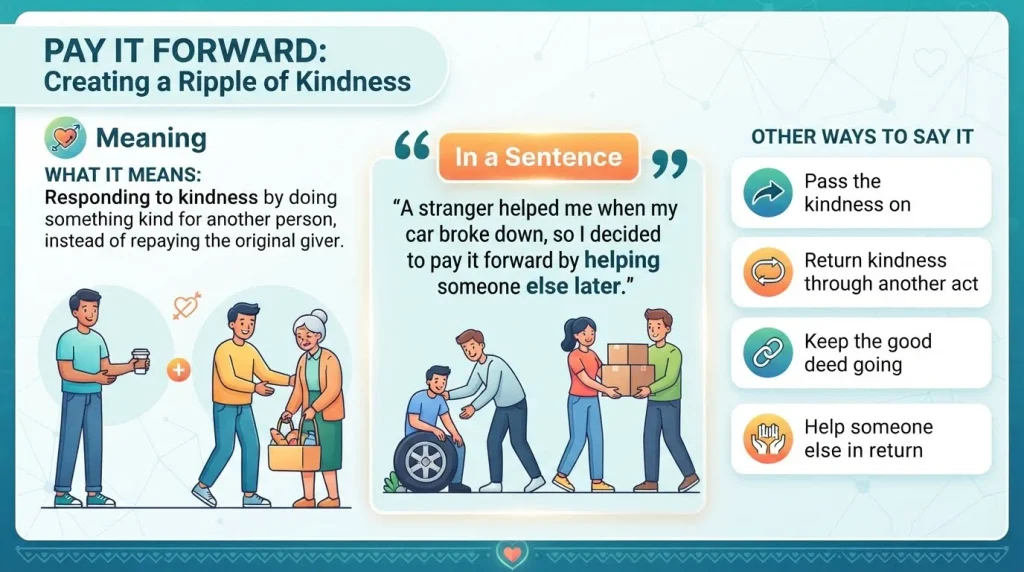
“Pay it forward” means responding to someone’s kindness by doing something kind for another person rather than simply repaying the original person.
In a Sentence
A stranger helped me when my car broke down, so I decided to pay it forward by helping someone else later.
Other Ways to Say It
- Pass the kindness on
- Return kindness through another act
- Keep the good deed going
- Help someone else in return
Explanation
This idiom turns giving into a chain of kindness. Instead of treating generosity as a debt that must be repaid, it encourages people to pass good actions from one person to another.
It has an optimistic and community-minded feeling.
Best Use
Excellent for personal messages, inspirational writing, speeches, social posts, and stories about kindness.
Go the Extra Mile
Meaning
“Go the extra mile” means to make more effort than is normally expected in order to help someone, achieve a goal, or provide good service.
In a Sentence
Our teacher went the extra mile to make sure every student understood the difficult lesson.
Other Ways to Say It
- Make an extra effort
- Do more than expected
- Go above and beyond
- Put in additional effort
Explanation
The expression presents extra effort as taking an additional journey beyond what was originally required. In the context of giving, it emphasizes giving more time, effort, or care than someone is obligated to provide.
It is positive but can work in professional situations without sounding overly emotional.
Best Use
Useful in workplace writing, recommendations, speeches, conversations, reviews, and professional messages.
Put Your Money Where Your Mouth Is
Meaning
“Put your money where your mouth is” means to support your words or beliefs with real action or resources.
In a Sentence
If you believe the community center needs new equipment, put your money where your mouth is and help fund the project.
Other Ways to Say It
- Back up your words with action
- Support what you believe
- Follow through on your claims
- Show your commitment
Explanation
This expression contrasts talking with doing. Someone may say they care about a cause, but this idiom challenges them to demonstrate that commitment through action.
It is often direct, informal, and slightly confrontational, so it should be used thoughtfully.
Best Use
Best for conversations, persuasive writing, debates, speeches, and informal discussions.
Chip In
Meaning
“Chip in” means to contribute something, especially money, effort, food, or help, toward a shared purpose.
In a Sentence
Everyone chipped in to buy a farewell gift for our colleague.
Other Ways to Say It
- Contribute
- Pitch in
- Share the cost
- Do your part
Explanation
The expression suggests that several people each contribute a small part to achieve something together. It is especially useful when giving is a group effort rather than an individual act of generosity.
The tone is casual and cooperative.
Best Use
Great for conversations, group plans, workplace messages, family discussions, and informal writing.
Give Someone a Leg Up
Meaning
“Give someone a leg up” means to give someone an advantage, opportunity, or useful assistance that helps them make progress.
In a Sentence
Her internship gave her a leg up when she started applying for full-time jobs.
Other Ways to Say It
- Give someone an advantage
- Help someone get ahead
- Give someone a head start
- Open a door for someone
Explanation
The phrase comes from the image of physically helping someone climb by giving them a boost with a leg. Figuratively, it describes support that helps someone move forward.
It does not necessarily mean giving money. Advice, connections, experience, and opportunities can all give someone a leg up.
Best Use
Works well in career advice, education, conversations, essays, and professional contexts.
Give Someone a Break
Meaning
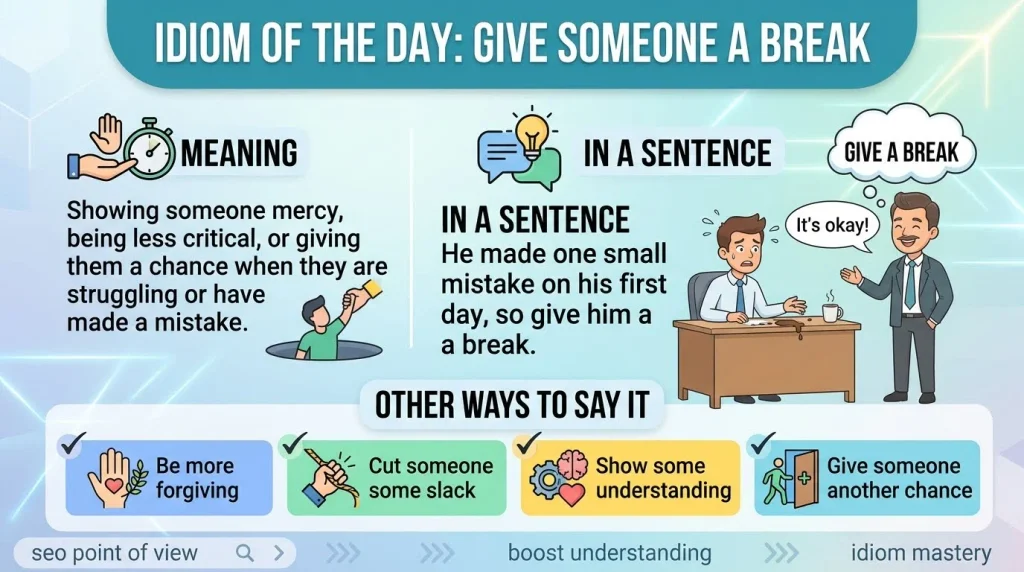
“Give someone a break” can mean showing someone mercy, being less critical, or giving them a chance when they are struggling or have made a mistake.
In a Sentence
He made one small mistake on his first day, so give him a break.
Other Ways to Say It
- Be more forgiving
- Cut someone some slack
- Show some understanding
- Give someone another chance
Explanation
Here, “break” represents relief from pressure or criticism. The giving is emotional rather than material.
The expression is usually informal and can sound sympathetic, but depending on tone, it can also sound impatient when used as a command.
Best Use
Best for everyday conversations, personal messages, informal writing, and dialogue.
Give Someone the Benefit of the Doubt
Meaning
“Give someone the benefit of the doubt” means choosing to believe that a person may have a reasonable explanation instead of immediately assuming they are wrong or dishonest.
In a Sentence
I don’t know why she missed the meeting, so I’ll give her the benefit of the doubt and wait to hear her explanation.
Other Ways to Say It
- Give someone a fair chance
- Avoid judging too quickly
- Assume good intentions
- Be willing to believe someone
Explanation
This idiom describes giving someone something intangible: trust and fairness. Rather than giving a physical object, you give another person room to explain themselves.
It is especially useful when facts are incomplete and an immediate judgment could be unfair.
Best Use
Suitable for conversations, essays, workplace situations, personal discussions, and thoughtful writing.
Give Someone a Shoulder to Cry On
Meaning
“Give someone a shoulder to cry on” means providing emotional support to someone who is upset, worried, or going through a difficult time.
In a Sentence
When her project failed, her brother gave her a shoulder to cry on and listened without judging her.
Other Ways to Say It
- Offer emotional support
- Be there for someone
- Listen to someone’s troubles
- Provide a sympathetic ear
Explanation
The image comes from the familiar idea of someone resting their head on a trusted person’s shoulder while crying. It represents comfort, listening, and emotional safety.
This expression is warmer and more personal than simply saying “help.”
Best Use
Best for personal writing, storytelling, conversations, messages, and emotional descriptions.
Give Someone a Second Chance
Meaning
“Give someone a second chance” means allowing a person another opportunity after they have made a mistake, failed, or disappointed someone.
In a Sentence
The manager decided to give the new employee a second chance after their first project went badly.
Other Ways to Say It
- Give someone another opportunity
- Let someone try again
- Offer another chance
- Allow someone to make things right
Explanation
This expression focuses on mercy, patience, and renewed opportunity. It recognizes that one mistake does not always have to define a person.
It is straightforward rather than highly poetic, which makes it useful in many situations.
Best Use
Works well in conversations, essays, speeches, stories, personal messages, and discussions about forgiveness.
Give Someone a Boost
Meaning
“Give someone a boost” means giving someone encouragement, confidence, energy, or practical help that makes it easier for them to move forward.
In a Sentence
Her kind words gave me a boost just when I was beginning to doubt myself.
Other Ways to Say It
- Encourage someone
- Lift someone’s confidence
- Give someone a little help
- Raise someone’s spirits
Explanation
The word “boost” creates the image of something being pushed upward. In emotional situations, it suggests helping someone’s confidence or spirits rise.
It can describe a small but meaningful act of encouragement.
Best Use
Useful in conversations, motivational writing, personal messages, workplace communication, and storytelling.
Give Someone a Lift
Meaning
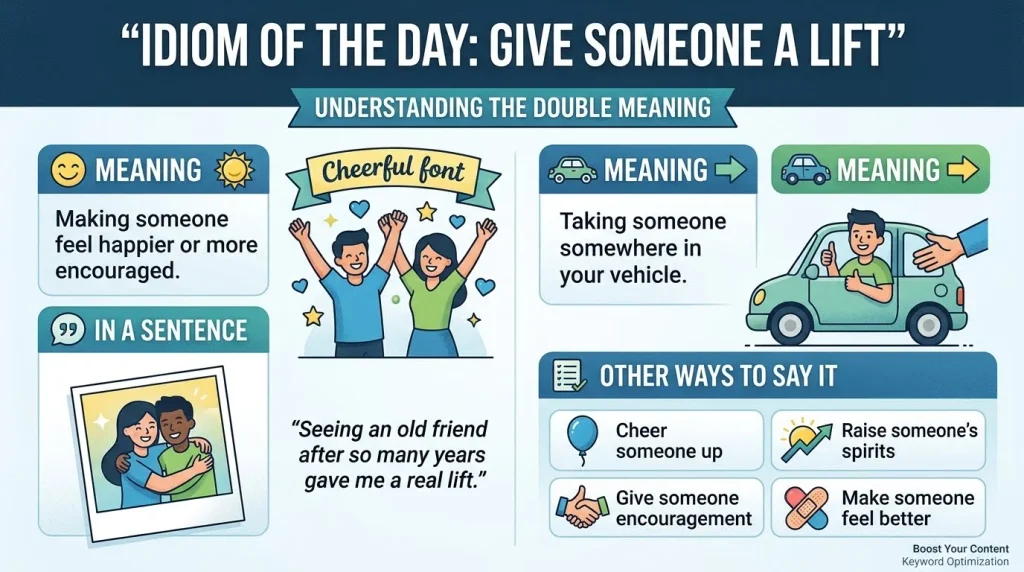
“Give someone a lift” can mean taking someone somewhere in your vehicle. It can also mean making someone feel happier or more encouraged.
In a Sentence
Seeing an old friend after so many years gave me a real lift.
Other Ways to Say It
- Cheer someone up
- Raise someone’s spirits
- Give someone encouragement
- Make someone feel better
Explanation
The expression works through the image of lifting someone upward. When used emotionally, it describes giving someone a little happiness or renewed energy.
Because “give someone a lift” also has a transportation meaning, context is important.
Best Use
Best for everyday conversation, personal messages, informal writing, and storytelling.
Give Credit Where Credit Is Due
Meaning
“Give credit where credit is due” means recognizing someone for something they genuinely did well or contributed to.
In a Sentence
We disagreed throughout the project, but I have to give credit where credit is due—she solved the hardest problem.
Other Ways to Say It
- Acknowledge someone’s contribution
- Recognize someone’s achievement
- Give someone proper recognition
- Praise someone for their work
Explanation
This expression describes giving something intangible: recognition and appreciation. It reminds us that giving is not limited to physical gifts or money.
The tone is generally fair and respectful, making it useful when acknowledging another person’s effort.
Best Use
Excellent for workplace communication, essays, speeches, reviews, conversations, and professional writing.
Give Your All
Meaning
“Give your all” means putting all your effort, energy, commitment, or ability into something.
In a Sentence
She gave her all during the final performance, and the audience could feel how much the moment meant to her.
Other Ways to Say It
- Give everything you have
- Try your hardest
- Put your whole effort into it
- Give it everything you’ve got
Explanation
This expression treats effort as something a person can give completely. It emphasizes dedication and commitment rather than generosity toward another person.
It can be powerful when describing sports, creative work, personal goals, or emotionally important moments.
Best Use
Best for motivational writing, speeches, storytelling, sports discussions, and personal messages.
Give and Take
Meaning
“Give and take” describes a situation in which people make compromises, share responsibilities, or accept that relationships often require both offering and receiving.
In a Sentence
A healthy partnership requires some give and take from both people.
Other Ways to Say It
- Mutual compromise
- A two-way exchange
- Shared understanding
- Meet each other halfway
Explanation
Unlike idioms focused entirely on generosity, this expression highlights balance. Good relationships often involve both people adjusting, contributing, listening, and receiving.
It is especially useful when discussing cooperation rather than one-sided giving.
Best Use
Works well in conversations, relationship advice, essays, workplace discussions, and social commentary.
Give Someone a Shot
Meaning
“Give someone a shot” means giving someone an opportunity to try, succeed, or prove themselves.
In a Sentence
I’ve never managed a team before, but my supervisor decided to give me a shot.
Other Ways to Say It
- Give someone a chance
- Offer an opportunity
- Let someone try
- Give someone an opportunity to prove themselves
Explanation
A “shot” here means an opportunity or attempt, not a literal physical object. The expression is useful when someone takes a chance on another person’s abilities.
It has a casual, encouraging tone.
Best Use
Best for conversations, workplace dialogue, personal stories, informal writing, and motivational messages.
Give Someone Free Rein
Meaning
“Give someone free rein” means allowing someone to act, decide, or create with very few restrictions.
In a Sentence
The director gave the designer free rein to create the campaign in his own style.
Other Ways to Say It
- Give someone freedom
- Let someone take control
- Allow someone to make their own decisions
- Give someone creative freedom
Explanation
This idiom describes giving something particularly valuable: freedom and authority. Rather than directing every move, you trust another person to decide how to proceed.
It can express confidence in someone’s judgment or creativity.
Best Use
Especially useful in professional writing, creative projects, storytelling, and conversations about responsibility.
Give Someone a Voice
Meaning
“Give someone a voice” means providing someone with an opportunity to express their opinions, experiences, needs, or ideas and have them heard.
In a Sentence
The community meeting gave local residents a voice in decisions that affected their neighborhood.
Other Ways to Say It
- Let someone speak
- Give someone a platform
- Help someone’s views be heard
- Provide an opportunity to express an opinion
Explanation
A “voice” represents the power to speak and be heard, not simply the ability to make sounds. This makes the expression especially meaningful when discussing participation, representation, or inclusion.
It often carries a serious, empowering tone.
Best Use
Best for essays, speeches, journalism, community discussions, advocacy writing, and thoughtful conversations.
Exercise: Practice Using Idioms
Choose the best answer for each question.
Which idiom means to help someone with a task?
A. Mutual compromise and cooperation
B. Lend someone a helping hand
C. Allow someone complete freedom
D. Acknowledge someone’s contribution fairly
Which idiom describes extreme generosity?
A. Offer someone an opportunity
B. Help someone travel or move
C. Sacrifice your own needs to help another person
D. Ensure someone’s opinions are heard
What does “pay it forward” mean?
A. Settle an outstanding debt right away
B. Put funds aside for future needs
C. Request that someone pay what they owe
D. Return a kind gesture by helping someone else
Which expression means making more effort than expected?
A. Go the extra mile
B. Chip in
C. Give someone a break
D. Give and take
If several friends each contribute money toward a gift, what might they do?
A. Give their all
B. Chip in
C. Give someone a boost
D. Give someone free rein
What does “give someone a leg up” mean?
A. Provide someone with a competitive edge
B. Offer another person a ride
C. Help someone feel reassured and supported
D. Allow someone to do something officially
Which idiom means showing someone mercy after a mistake?
A. Back up your words with real action
B. Allow another person to express their opinions
C. Show someone patience or offer another opportunity
D. Help another person gain an advantage
What are you doing when you give someone the benefit of the doubt?
A. Giving them money
B. Assuming they may have a reasonable explanation
C. Giving them complete control
D. Giving them professional advice
Which idiom focuses on emotional support?
A. Offer emotional support during difficult times
B. Allow a person to act without restrictions
C. Provide someone with an opportunity to try
D. Contribute money or effort to help others
What does “give someone a second chance” involve?
A. Giving someone a reward
B. Giving someone a ride
C. Allowing someone another opportunity
D. Giving someone a financial contribution
Which expression means giving encouragement or renewed confidence?
A. Provide someone with extra confidence or support
B. Reach a compromise through mutual cooperation
C. Let another person act without restrictions
D. Recognize a person’s efforts and achievements fairly
“Give credit where credit is due” is mainly about:
A. Lending money
B. Recognizing someone’s contribution
C. Giving someone permission
D. Offering transportation
Which idiom means putting all your effort into something?
A. Give someone a lift
B. Give your all
C. Pay it forward
D. Give someone a break
Which expression emphasizes compromise and mutual exchange?
A. Offer someone an opportunity to try
B. Make a generous sacrifice for others
C. Reach a compromise through mutual cooperation
D. Help another person express their opinions
If a manager allows an employee to make creative decisions without many restrictions, the manager may:
A. Allow the worker to make decisions independently
B. Sacrifice personal comfort to help another person
C. Donate generously despite personal costs
D. Pass kindness along by helping someone else in return
Answers
- B — “Give someone a hand” means to help someone with a task or problem.
- C — “Give the shirt off your back” describes someone who is exceptionally generous and willing to sacrifice.
- D — “Pay it forward” means passing kindness along by helping another person.
- A — “Go the extra mile” means making more effort than people normally expect.
- B — “Chip in” means contributing money, effort, or another resource toward a shared purpose.
- A — “Give someone a leg up” means giving them an advantage or useful assistance.
- C — “Give someone a break” can mean showing mercy or being less critical.
- B — Giving someone the benefit of the doubt means choosing not to assume the worst without enough evidence.
- A — “Give someone a shoulder to cry on” means offering emotional comfort and support.
- C — A second chance gives someone another opportunity after a mistake, failure, or disappointment.
- A — “Give someone a boost” means providing encouragement, confidence, energy, or helpful support.
- B — “Give credit where credit is due” means recognizing someone for their genuine contribution or achievement.
- B — “Give your all” means putting all your effort, energy, or commitment into something.
- C — “Give and take” describes mutual compromise, contribution, and adjustment.
- A — “Give someone free rein” means allowing them considerable freedom to act or make decisions.
FAQs
What is an idiom for giving?
An idiom for giving is a figurative expression used to describe generosity, help, support, effort, opportunity, recognition, or other forms of giving. Examples include “give someone a hand,” “pay it forward,” and “give someone a second chance.”
How do I create my own idiom?
Creating an original figurative expression starts with a clear image and a distinct idea. Think about what giving feels like physically or emotionally, then connect that feeling to a memorable image. A strong expression should be easy to understand from context without simply replacing one synonym with another.
What makes an idiom effective?
An effective idiom creates a clear mental picture while communicating an idea that may otherwise be difficult to express. It should fit the context naturally and add something beyond a plain literal statement.
Can I use these idioms in everyday conversation?
Yes. Several of these expressions, such as “chip in,” “give someone a hand,” “give someone a break,” and “give someone a shot,” are natural in casual conversation. Others, such as “give someone a voice,” may fit more naturally in serious, professional, or written contexts.
What is the difference between an idiom and a simile?
An idiom is an established expression with a figurative meaning, while a simile directly compares two things using words such as “like” or “as.” For example, “give someone a hand” is an idiomatic expression, while “giving is like planting a seed” is a simile.
Conclusion
Giving is much broader than handing someone a physical gift. We give time, encouragement, trust, opportunities, recognition, effort, freedom, and emotional support every day. The right idiom can make these forms of giving easier to describe and more memorable to the reader or listener.
Expressions such as “give someone a hand” emphasize practical help, while “give the shirt off your back” highlights exceptional generosity. Others, including “give someone a second chance” and “give someone a voice,” show that giving can also involve compassion and empowerment.
When choosing an idiom, think about the exact feeling or idea you want to communicate. The strongest expression is not necessarily the most dramatic one it is the one that makes your meaning clear. With thoughtful use, idioms can turn a simple statement about giving into language that stays with the reader.

Oliver Whitcombe is a British writer and language enthusiast who has been fascinated by English expressions since childhood, when his grandmother told him he was “born with a silver spoon” and he spent a week trying to find it.
He created Idiom Looms to help learners and native speakers alike make sense of English idioms. Their origins, their meanings, and the moments they’re best used. His writing mixes plain explanations with a good dose of British wit.
Oliver lives in England, where he divides his time between writing, walking, and correcting everyone’s grammar (politely).