

Have you noticed how a familiar phrase can make everyday English sound more natural? 20 Idioms for Everyday With Real Examples introduces practical expressions that add clarity, personality, and meaning to daily communication. These idioms help learners understand English usage, express ideas naturally, and communicate with greater confidence. Each example shows how these phrases work in realistic situations.
From scheduling and time management to meetings, conversations, and business communication, idioms appear across many settings. They can also support online booking, calendar planning, project management, and broadcasting. Learning these expressions can strengthen vocabulary, improve grammar, and make everyday communication more fluent and consistent.
This guide explains 20 useful idioms through clear meanings, practical examples, alternative expressions, and simple explanations. You will also discover how idioms fit into formal writing and casual conversations. Whether you are improving your English or refining your communication skills, these examples make idiomatic language easier to understand, remember, and use confidently.
What Is an Idiom?
An idiom is a group of words whose meaning is different from the literal meaning of the individual words.
For example, “break the ice” does not usually mean physically breaking ice. It means to make people feel more comfortable when they first meet.
Another example is “hit the nail on the head,” which means to describe or identify something exactly right.
Idioms are a form of figurative language. They create mental pictures or comparisons that help people express ideas in a memorable way. Because their meanings are not always literal, readers and listeners understand them through context and common usage.
Why Use Idioms for Everyday?
Everyday experiences can sometimes feel ordinary when described with plain language. Idioms give those moments more character.
They can help you:
- Express emotions without using long explanations.
- Make ordinary situations more vivid and memorable.
- Describe difficult or abstract experiences through familiar images.
- Add personality to conversations and personal messages.
- Make stories and creative writing more engaging.
- Communicate complicated feelings in a short, recognizable expression.
- Add humor, warmth, drama, or emphasis to everyday communication.
For example, saying someone has “a lot on their plate” quickly communicates that they have many responsibilities. Likewise, saying a person is “on the same page” suggests that everyone understands or agrees about something.
The key is choosing an idiom that fits the situation rather than using figurative language simply for decoration.
Quick List of 20 Idioms
- A Piece of Cake
- Break the Ice
- Under the Weather
- Once in a Blue Moon
- Hit the Nail on the Head
- A Blessing in Disguise
- Bite the Bullet
- Cost an Arm and a Leg
- Get the Ball Rolling
- On the Same Page
- A Lot on Your Plate
- Go the Extra Mile
- Keep Your Chin Up
- Spill the Beans
- In Hot Water
- Pull Yourself Together
- Back to Square One
- See Eye to Eye
- Make Ends Meet
- The Last Straw
A Piece of Cake
Read more:20 Idioms for Dumb With Read Examples
Meaning
“A piece of cake” means that something is very easy to do. The expression compares an easy task with something as simple and enjoyable as eating a piece of cake.
In a Sentence
After practicing the new software for a few days, using it became a piece of cake.
Other Ways to Say It
- Very easy
- Simple to do
- No trouble at all
- Easy as anything
Explanation
This idiom creates a light and cheerful image, which makes it especially useful for everyday situations. It suggests that a task requires little effort or difficulty.
It is informal and friendly, so it works naturally in conversations, messages, and casual writing.
Best Use
Use “a piece of cake” in casual conversations, personal messages, social posts, and informal storytelling when you want to emphasize that something was easy.
Break the Ice
Meaning
“Break the ice” means to make people feel more relaxed or comfortable when a conversation or social situation initially feels awkward.
In a Sentence
We played a quick game to break the ice before the meeting started.
Other Ways to Say It
- Start a friendly conversation
- Ease the tension
- Make people comfortable
- Get people talking
Explanation
The image comes from breaking through a layer of ice so that movement can begin. In social situations, the “ice” represents awkwardness or silence.
It is particularly effective when describing first meetings, introductions, group activities, or uncomfortable beginnings.
Best Use
This idiom fits conversations, workplace situations, speeches, classroom activities, storytelling, and social situations.
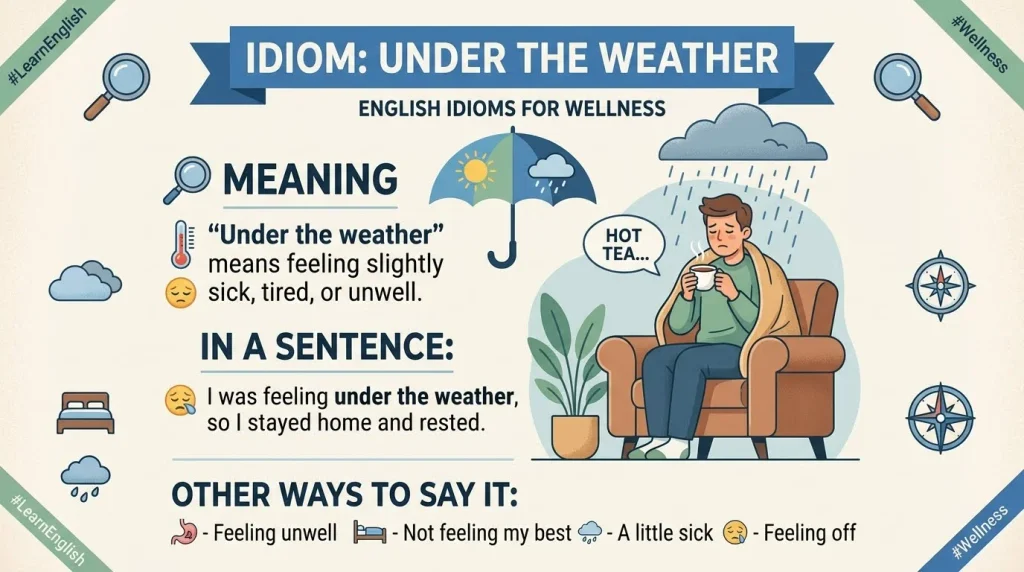
Under the Weather
Meaning
“Under the weather” means feeling slightly sick, tired, or unwell.
In a Sentence
I was feeling under the weather, so I stayed home and rested.
Other Ways to Say It
- Feeling unwell
- Not feeling my best
- A little sick
- Feeling off
Explanation
The expression creates the image of someone being affected by unpleasant weather. Rather than describing a serious illness, it often suggests mild sickness or low energy.
Its familiar and gentle tone makes it less blunt than simply saying, “I am sick.”
Best Use
Use it in everyday conversations, friendly messages, casual emails, and personal writing. It is generally too informal for a formal medical or professional report.
Once in a Blue Moon
Meaning
“Once in a blue moon” describes something that happens very rarely.
In a Sentence
We eat at that restaurant once in a blue moon because it is far from our neighborhood.
Other Ways to Say It
- Very rarely
- Hardly ever
- Almost never
- On rare occasions
Explanation
The phrase creates an unusual picture of a rare blue-colored moon. It is useful when an event does happen occasionally but is far from regular.
The expression has a playful, conversational quality, making ordinary habits sound more colorful.
Best Use
It works well in conversations, personal stories, social media posts, and informal writing about habits or routines.
Hit the Nail on the Head
Meaning
“Hit the nail on the head” means to identify something exactly or accurately.
In a Sentence
When Maya said we needed better communication, she hit the nail on the head.
Other Ways to Say It
- Get it exactly right
- Identify the real issue
- Be exactly correct
- Put your finger on it
Explanation
The literal image is someone striking a nail directly on its head with a hammer. Figuratively, it represents accuracy and precision.
It is particularly useful when someone gives an explanation, observation, or solution that perfectly matches the situation.
Best Use
Use this idiom in conversations, workplace discussions, essays, storytelling, and informal professional communication.
A Blessing in Disguise
Meaning
“A blessing in disguise” describes something that initially seems bad or disappointing but eventually produces a positive result.
In a Sentence
Missing that train turned out to be a blessing in disguise because it prevented us from getting caught in the storm.
Other Ways to Say It
- An unexpected benefit
- Something good from a bad situation
- A hidden advantage
- A fortunate setback
Explanation
The phrase suggests that something beneficial is temporarily hidden beneath an unpleasant appearance.
It captures the way an everyday disappointment can sometimes lead to an opportunity, better decision, or fortunate outcome.
Best Use
This idiom works especially well in personal stories, inspirational writing, conversations, and reflective essays.
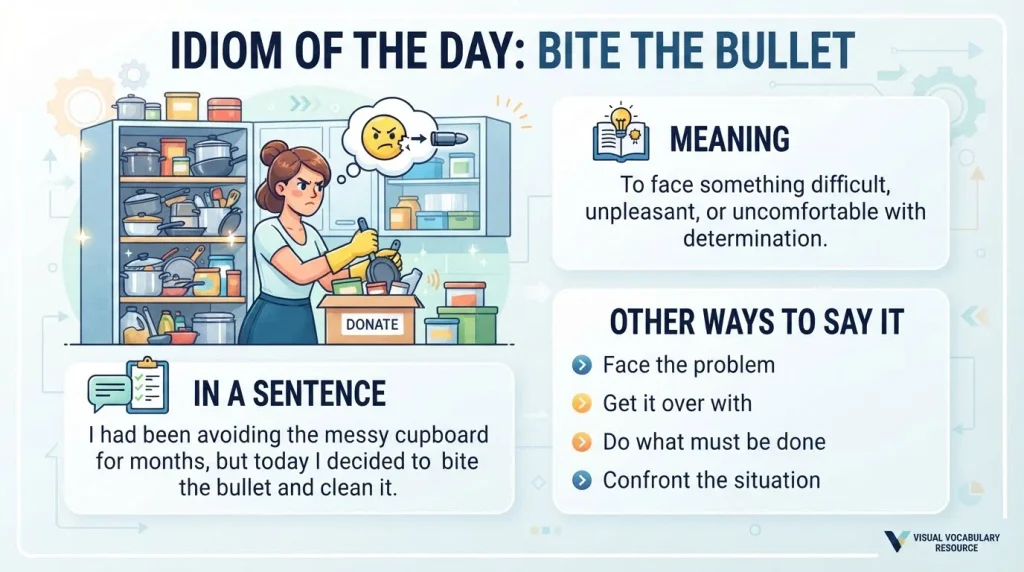
Bite the Bullet
Meaning
“Bite the bullet” means to face something difficult, unpleasant, or uncomfortable with determination.
In a Sentence
I had been avoiding the messy cupboard for months, but today I decided to bite the bullet and clean it.
Other Ways to Say It
- Face the problem
- Get it over with
- Do what must be done
- Confront the situation
Explanation
The expression creates a dramatic image of enduring something painful without backing away. In everyday use, it usually refers to accepting an unpleasant task or decision.
It adds a sense of courage and determination to an otherwise ordinary situation.
Best Use
It suits casual conversations, personal writing, storytelling, and motivational messages.
Cost an Arm and a Leg
Meaning
“Cost an arm and a leg” means that something is extremely expensive.
In a Sentence
The repairs cost an arm and a leg, but at least the car is working again.
Other Ways to Say It
- Very expensive
- Cost a fortune
- Be extremely pricey
- Cost a lot of money
Explanation
The expression uses an exaggerated image of giving up body parts to emphasize a high price. It is figurative and humorous, not literal.
It can make a complaint about an expensive purchase sound more expressive and conversational.
Best Use
Use it in casual conversations, reviews, personal stories, and informal writing about prices or expenses.
Get the Ball Rolling
Meaning
“Get the ball rolling” means to start something, especially a project, activity, conversation, or process.
In a Sentence
Let’s send the first few invitations today and get the ball rolling.
Other Ways to Say It
- Get started
- Begin the process
- Set things in motion
- Make a start
Explanation
The mental image is a ball beginning to move after someone gives it a push. Once it starts rolling, the activity can continue.
This makes the idiom useful for everyday situations where someone needs to take the first practical step.
Best Use
It works well in meetings, conversations, project discussions, emails, group activities, and informal professional communication.
On the Same Page
Meaning
“On the same page” means that people share the same understanding, expectations, or opinion about something.
In a Sentence
Before we make any changes, let’s make sure everyone is on the same page.
Other Ways to Say It
- Have the same understanding
- Agree about the plan
- Share the same expectations
- Understand each other
Explanation
The expression comes from the image of people looking at the same page and therefore seeing the same information.
It is particularly useful when teamwork, communication, or agreement matters.
Best Use
Use it in conversations, meetings, workplace writing, group projects, and everyday planning.
A Lot on Your Plate
Meaning
“A lot on your plate” means having many responsibilities, tasks, or problems to deal with.
In a Sentence
I would help with the event, but I already have a lot on my plate this week.
Other Ways to Say It
- Very busy
- Have many responsibilities
- Have a lot to handle
- Have too much going on
Explanation
The expression compares responsibilities with food on a plate. A plate filled with too much food becomes difficult to manage, creating a simple image for an overloaded schedule.
It communicates busyness in a natural and relatable way.
Best Use
This idiom is ideal for everyday conversations, work discussions, personal messages, and informal writing.
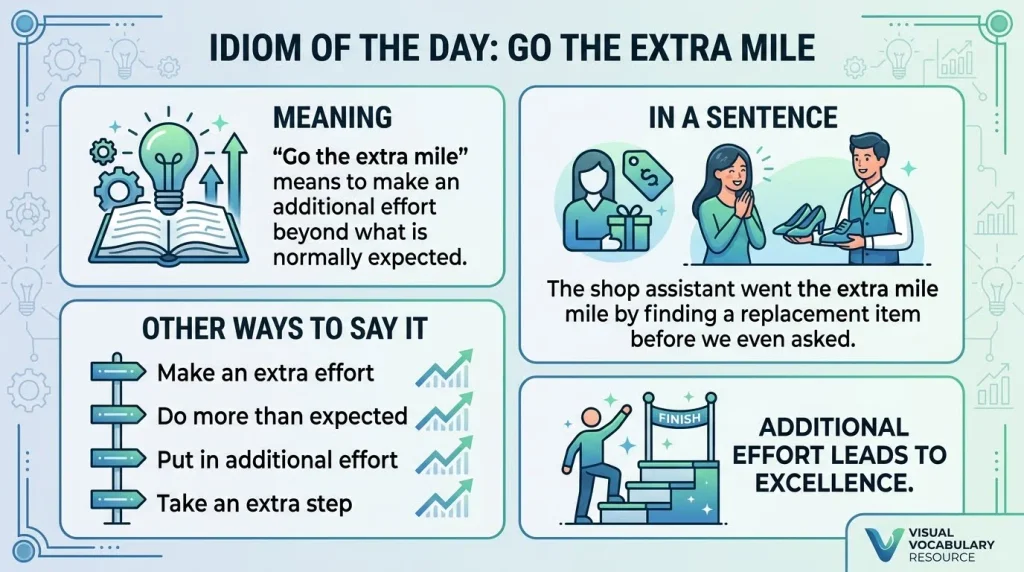
Go the Extra Mile
Meaning
“Go the extra mile” means to make an additional effort beyond what is normally expected.
In a Sentence
The shop assistant went the extra mile by finding a replacement item before we even asked.
Other Ways to Say It
- Make an extra effort
- Do more than expected
- Put in additional effort
- Take an extra step
Explanation
The expression creates an image of continuing farther than necessary. It suggests generosity, commitment, or exceptional effort.
It can describe small acts of kindness as well as serious dedication to a task.
Best Use
It works well in workplace communication, appreciation messages, reviews, speeches, conversations, and personal writing.
13. Keep Your Chin Up
Meaning
“Keep your chin up” is an encouraging expression that means stay positive and do not lose hope during a difficult time.
In a Sentence
The exam did not go as planned, but my teacher told me to keep my chin up and try again.
Other Ways to Say It
- Stay positive
- Don’t give up
- Keep going
- Stay hopeful
Explanation
The physical image is someone holding their head high instead of looking down. That simple posture becomes a symbol of confidence and resilience.
The phrase usually sounds warm and supportive rather than formal.
Best Use
Use it in personal messages, conversations, encouraging notes, speeches, and informal motivational writing.
14. Spill the Beans
Meaning
“Spill the beans” means to reveal information or a secret, especially information that was supposed to remain private.
In a Sentence
We planned to keep the trip a surprise, but Sam accidentally spilled the beans.
Other Ways to Say It
- Reveal the secret
- Give away the information
- Let the secret out
- Tell someone what happened
Explanation
The phrase creates a playful image of beans spilling out of a container and becoming impossible to gather back up. Similarly, once private information is revealed, it can be difficult to take it back.
It is usually light and informal, especially when the secret is harmless.
Best Use
It fits casual conversations, storytelling, friendly messages, and humorous writing.
15. In Hot Water
Meaning
“In hot water” means to be in trouble or facing consequences because of something that happened.
In a Sentence
He was in hot water after forgetting to submit the important form.
Other Ways to Say It
- In trouble
- Facing problems
- In a difficult situation
- Facing consequences
Explanation
The expression creates an uncomfortable image of someone being surrounded by hot water. That physical discomfort represents the pressure of being in trouble.
Its tone can range from mildly humorous to serious depending on the situation.
Best Use
Use it in everyday conversations, stories, informal writing, and situations where someone has made a mistake or caused a problem.
16. Pull Yourself Together
Meaning
“Pull yourself together” means to regain control of your emotions and become calm, focused, or composed.
In a Sentence
After taking a few quiet minutes, she pulled herself together and returned to the discussion.
Other Ways to Say It
- Calm yourself
- Regain your composure
- Get yourself under control
- Collect yourself
Explanation
The phrase imagines someone gathering scattered parts of themselves back into one whole. It communicates the idea of recovering emotional balance.
Because it can sound firm, it should be used thoughtfully when speaking to someone who is upset.
Best Use
It works in storytelling and conversations, but a gentler alternative may be better when offering emotional support.
17. Back to Square One
Meaning
“Back to square one” means returning to the starting point after an attempt has failed or a plan has not worked.
In a Sentence
The computer crashed before we saved the file, so we’re back to square one.
Other Ways to Say It
- Start again
- Return to the beginning
- Begin from scratch
- Start over
Explanation
The phrase suggests moving through a sequence and suddenly returning to the first position. It captures the frustration of losing progress.
It is especially effective when something has gone wrong after considerable effort.
Best Use
Use it in conversations, workplace discussions, project updates, personal stories, and informal writing.
18. See Eye to Eye
Meaning
“See eye to eye” means to agree completely or share the same opinion about something.
In a Sentence
My brother and I do not always see eye to eye, but we usually find a way to compromise.
Other Ways to Say It
- Agree completely
- Share the same view
- Be in agreement
- Have the same opinion
Explanation
The image suggests two people looking directly at each other at the same level. Figuratively, they are seeing an issue from a similar perspective.
Unlike “on the same page,” which often focuses on shared understanding, this idiom more strongly emphasizes agreement or shared opinion.
Best Use
It works naturally in conversations, essays, personal stories, workplace discussions, and relationship writing.
19. Make Ends Meet
Meaning
“Make ends meet” means to have enough money to cover your necessary expenses.
In a Sentence
With rising household costs, they are working carefully to make ends meet each month.
Other Ways to Say It
- Cover your expenses
- Live within your income
- Manage financially
- Pay for basic needs
Explanation
The expression creates the image of bringing two ends together so that nothing is left incomplete. In financial language, those “ends” represent income and expenses.
This idiom can describe financial pressure without requiring a long explanation.
Best Use
It is appropriate in everyday conversations, personal writing, financial discussions, news-style writing, and essays. In formal financial documents, plain language may be clearer.
20. The Last Straw
Meaning
“The last straw” refers to the final problem or annoyance that makes someone lose patience after several difficulties.
In a Sentence
The broken printer was the last straw after an already exhausting morning.
Other Ways to Say It
- The final problem
- The final annoyance
- The breaking point
- The final trigger
Explanation
The expression comes from the idea that a load can become too heavy when one final piece is added. The “last straw” may seem small by itself, but it becomes overwhelming because of everything that came before.
It is powerful when describing accumulated frustration rather than a single isolated problem.
Best Use
Use it in conversations, storytelling, personal essays, social posts, and informal descriptions of frustrating situations.
Exercise: Practice Using Idioms
Choose the best answer for each question.
What does “a piece of cake” mean?
A. Costly or high-priced
B. Effortless to accomplish
C. Unforeseen or surprising
D. Puzzling or difficult to understand
Which idiom means to make people feel more comfortable in a new social situation?
A. Break the ice
B. Bite the bullet
C. Spill the beans
D. Make ends meet
If someone says they are “under the weather,” what do they probably mean?
A. Traveling to another place
B. Feeling thrilled and enthusiastic
C. Experiencing poor health
D. Doing their job outdoors
Which situation best fits “once in a blue moon”?
A. Going to work every day
B. Eating breakfast every morning
C. Checking your phone several times a day
D. Visiting a distant friend very rarely
What does “hit the nail on the head” communicate?
A. Making an accurate observation
B. Purchasing an expensive item
C. Avoiding a challenging task
D. Revealing confidential information
Which example describes “a blessing in disguise”?
A. Winning a prize you expected to win
B. Missing an event and discovering a better opportunity afterward
C. Buying something at its normal price
D. Finishing a task exactly on schedule
If you “bite the bullet,” what are you doing?
A. Avoiding responsibility
B. Celebrating success
C. Facing something difficult
D. Sharing confidential information
Which idiom describes something extremely expensive?
A. Get the ball rolling
B. Cost an arm and a leg
C. Keep your chin up
D. See eye to eye
What does “get the ball rolling” mean?
A. Start a process
B. Stop an activity
C. Solve a disagreement
D. Cancel a plan
If two coworkers are “on the same page,” they probably:
A. Work in different offices
B. Have the same understanding
C. Disagree about everything
D. Have not discussed the issue
Which idiom best describes having many responsibilities?
A. Spill the beans
B. A lot on your plate
C. A piece of cake
D. Break the ice
What does “go the extra mile” suggest?
A. Making more effort than expected
B. Arriving late
C. Refusing to help
D. Starting over
Someone tells you to “keep your chin up.” What are they encouraging you to do?
A. Stay hopeful
B. Reveal a secret
C. Spend more money
D. Avoid a conversation
Which idiom means to reveal a secret?
A. Back to square one
B. In hot water
C. Spill the beans
D. Make ends meet
If a small problem becomes “the last straw,” what does it represent?
A. The beginning of a successful plan
B. The final problem that causes someone to lose patience
C. A very easy task
D. A rare event
Answers
- B — “A piece of cake” describes something that is very easy to do.
- A — “Break the ice” means to reduce awkwardness and help people feel comfortable.
- C — “Under the weather” means feeling slightly sick or unwell.
- D — “Once in a blue moon” describes something that happens very rarely.
- A — “Hit the nail on the head” means to identify something exactly or accurately.
- B — A “blessing in disguise” is something that first appears negative but later brings an unexpected benefit.
- C — “Bite the bullet” means to face an unpleasant or difficult situation with determination.
- B — “Cost an arm and a leg” means something is extremely expensive.
- A — “Get the ball rolling” means to begin an activity, project, or process.
- B — Being “on the same page” means having the same understanding or expectations.
- B — “A lot on your plate” means having many responsibilities or things to handle.
- A — “Go the extra mile” means making additional effort beyond what is normally expected.
- A — “Keep your chin up” is an encouraging way to tell someone to remain positive and hopeful.
- C — “Spill the beans” means to reveal information or a secret.
- B — “The last straw” is the final problem that causes someone to reach their limit or lose patience.
FAQs
What is an idiom for Everyday?
An idiom for everyday life is a familiar figurative expression that can describe ordinary experiences, emotions, routines, problems, relationships, or decisions in a more vivid way. Examples include “a piece of cake,” “a lot on your plate,” and “get the ball rolling.”
How do I create my own idioms?
Traditional idioms usually develop through repeated use over time, so inventing a phrase does not automatically make it a widely recognized idiom. For creative writing, however, you can create original figurative expressions by connecting an idea with a clear, memorable image.
What makes an idiom effective?
An effective idiom communicates an idea quickly while creating a recognizable mental image. It should fit the context naturally and add something beyond plain wording, such as emotion, humor, emphasis, or personality.
Can I use these idioms in everyday conversation?
Yes. Many of these expressions are common in informal spoken English. However, context matters. Expressions such as “spill the beans” are casual, while more formal situations may call for direct language such as “reveal the information.”
What is the difference between an idiom and a simile?
An idiom has an established figurative meaning that may differ significantly from its literal words. A simile directly compares two things, usually with “like” or “as.” For example, “He is as busy as a bee” is a simile, while “He has a lot on his plate” is an idiom.
Conclusion
Idioms can turn ordinary experiences into language that feels more vivid, memorable, and human. A busy schedule can become “a lot on your plate,” a rare event can happen “once in a blue moon,” and an unexpected benefit can be “a blessing in disguise.” These expressions help us communicate everyday emotions and situations without relying on long explanations.
The best idiom is not necessarily the most dramatic one. It is the expression that fits the meaning, audience, and tone of what you want to say. Use warm expressions when you want to encourage someone, playful ones when the situation is light, and more serious language when the subject demands care. With the right imagery, even the simplest part of everyday life can become easier to describe and remember.

Eleanor Prose is a writer and English teacher with a soft spot for the phrases that trip us up. She has spent years helping students and professionals use idioms with confidence not just memorizing them, but understanding the culture and humor behind each one.
Through Idiom Looms, Eleanor explores the threads that connect language, history, and everyday conversation. Her goal is simple: to make English idioms clear, memorable, and actually fun to use.
She writes from a quiet desk surrounded by notebooks, and firmly believes there’s an idiom for every situation usually more than one.



[…] Read more:20 Idioms for Everyday With Real Examples […]