
Have you ever needed a creative way to describe someone who avoids effort? The 20 Idioms for Lazy With Real Examples in this article make those descriptions more vivid and natural. These expressions can help you talk about laziness, lack of motivation, procrastination, and avoiding responsibilities without sounding repetitive. Each idiom adds a different shade of meaning, from playful and humorous to direct and critical. You will also see how these expressions work in everyday English usage, conversations, and descriptive writing.
Understanding idioms can strengthen your grammar, vocabulary, and overall communication style. They can also improve formal writing when used carefully and in suitable contexts. Whether you are discussing time management, scheduling, meetings, or project management, the right expression can make your message clearer and more engaging. These phrases may also appear indirectly in business communication, online content, online booking, broadcasting, and calendar-related discussions.
In this guide, every idiom includes a clear meaning, a natural example sentence, alternative expressions, and practical usage advice. You will learn when an idiom sounds casual, humorous, professional, or strongly critical. The examples are designed to support consistency and help you recognize figurative language in real situations. By the end, you will have useful expressions for conversations, creative writing, formal writing, storytelling, and everyday communication.
What Is an Idiom?
An idiom is a commonly used expression whose meaning cannot always be understood by taking the individual words literally. Idioms often use images, comparisons, or familiar situations to communicate an idea in a more colorful way.
For example, if someone says, “I’m under the weather,” they usually do not mean they are physically underneath a cloud. They mean they are feeling unwell. Similarly, “break the ice” does not usually mean breaking frozen water; it means helping people feel more comfortable in a new or awkward situation.
Literal language states something directly, while figurative language uses an image or familiar expression to communicate a related idea.
Why Use Idioms for Lazy?
Calling someone “lazy” is clear, but it can sometimes sound blunt. Figurative expressions give you more ways to describe different types of inactivity.
For example, a person who spends most of the day relaxing on a sofa can be called a couch potato, while someone who keeps delaying a task may be dragging their feet. Someone who avoids responsibility may be described as shirking their duties.
These expressions can:
- Add personality and humor to conversations.
- Make descriptions more vivid and memorable.
- Help distinguish between laziness, procrastination, and simple relaxation.
- Give creative writers stronger imagery.
- Make stories and dialogue sound more natural.
- Express criticism in a playful or indirect way.
- Help explain the difference between resting and avoiding effort.
The best expression depends on the situation. Some are humorous, some mildly critical, and others can be neutral when they describe taking a break.
Quick List of 20 Idioms
- Couch potato
- Twiddle your thumbs
- Sit on your hands
- Drag your feet
- Put your feet up
- Kick back
- Take it easy
- Bum around
- Goof off
- Slack off
- Rest on your laurels
- Take the easy way out
- Let the grass grow under your feet
- Idle away the time
- Couldn’t be bothered
- Goldbrick
- Shirk your duties
- Coast along
- Lie around
- Procrastinate until the last minute
Couch Potato
Read more:20 Idioms for Opportunity With Real Examples
Meaning
A couch potato is a person who spends a lot of time sitting or lying around, usually watching television, scrolling through a phone, or doing very little physical activity.
The expression creates a humorous image of someone becoming almost as stationary as a potato sitting on a couch. It usually describes inactive behavior rather than laziness at one particular task.
In a Sentence
After a long week at work, Daniel turned into a couch potato and spent Saturday watching old movies.
Other Ways to Say It
- Spend the day lounging around
- Be inactive
- Sit around all day
- Be a homebody
Explanation
The phrase is memorable because it combines an ordinary vegetable with a familiar piece of furniture. It suggests someone who is comfortably inactive for an extended period.
It is generally playful rather than harsh, so it can work well when teasing a friend or describing your own relaxed weekend.
Best Use
Best for casual conversations, humorous writing, social media posts, and friendly descriptions. It is usually too informal for professional writing.
Twiddle Your Thumbs
Meaning
To twiddle your thumbs means to sit around doing nothing, especially while waiting for something to happen.
The expression often focuses on inactivity caused by waiting, rather than permanent laziness.
In a Sentence
We had finished our part of the project, so there was nothing left to do but twiddle our thumbs until the manager arrived.
Other Ways to Say It
- Sit around doing nothing
- Wait around
- Kill time
- Do nothing productive
Explanation
The image comes from literally moving or rubbing your thumbs together while having nothing useful to occupy yourself. It communicates boredom, waiting, and inactivity.
It is especially useful when someone is inactive because there is nothing happening rather than because they deliberately refuse to work.
Best Use
Works naturally in everyday conversation, storytelling, dialogue, and informal writing.
Sit on Your Hands
Meaning
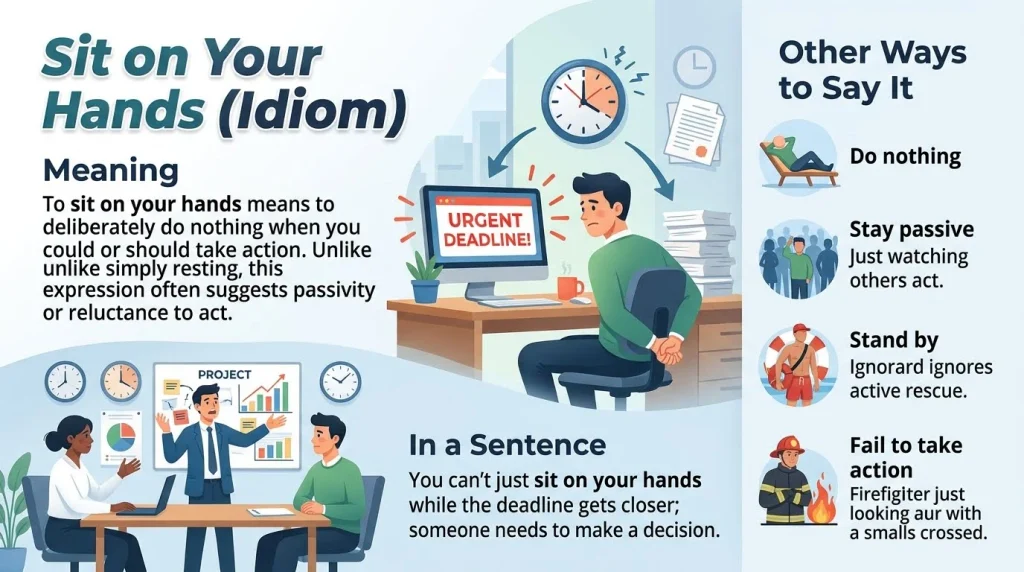
To sit on your hands means to deliberately do nothing when you could or should take action.
Unlike simply resting, this expression often suggests passivity or reluctance to act.
In a Sentence
You can’t just sit on your hands while the deadline gets closer; someone needs to make a decision.
Other Ways to Say It
- Do nothing
- Stay passive
- Stand by
- Fail to take action
Explanation
The mental picture is simple: instead of using your hands to do something, you literally keep them still. The expression can suggest laziness, hesitation, or unwillingness to become involved.
It is particularly effective when the problem is inaction rather than physical tiredness.
Best Use
Useful in conversations, speeches, opinion writing, workplace discussions, and persuasive writing.
Drag Your Feet
Meaning
To drag your feet means to delay doing something because you are unwilling, reluctant, or slow to take action.
It is closely associated with procrastination and reluctance, rather than simply enjoying a rest.
In a Sentence
Maya kept dragging her feet about cleaning the garage until her parents finally gave her a deadline.
Other Ways to Say It
- Put something off
- Delay taking action
- Procrastinate
- Be reluctant to act
Explanation
The phrase creates an image of someone walking slowly while allowing their feet to scrape along the ground. That image captures the feeling of moving forward reluctantly.
It works particularly well when a person knows they need to do something but keeps finding reasons to delay it.
Best Use
Excellent for everyday speech, essays, workplace communication, and storytelling. It can sound mildly critical without being extremely harsh.
Put Your Feet Up
Meaning
To put your feet up means to sit or lie down and relax, especially after working or doing something tiring.
This expression does not necessarily mean someone is lazy. Often, it simply means taking a well-earned break.
In a Sentence
Once the guests had gone home, I put my feet up with a cup of tea and enjoyed the quiet evening.
Other Ways to Say It
- Relax
- Take a break
- Rest for a while
- Take a load off
Explanation
The image is of someone sitting comfortably with their feet raised. It communicates comfort, rest, and relief from effort.
This is an important distinction: someone putting their feet up may be resting responsibly rather than avoiding work.
Best Use
Natural in casual conversations, personal messages, lifestyle writing, and storytelling. It has a warm and relaxed tone.
Kick Back
Meaning
To kick back means to relax and spend time without worrying about work or responsibilities.
It can describe someone who is taking a break or simply enjoying a period of easygoing inactivity.
In a Sentence
After finishing his exams, Amir decided to kick back for a few days and catch up on his favorite shows.
Other Ways to Say It
- Relax
- Chill out
- Unwind
- Take a break
Explanation
The phrase suggests settling into a comfortable position and letting go of pressure. Unlike more critical expressions for laziness, kick back often sounds positive.
It is especially suitable when the person has earned some downtime and is intentionally choosing relaxation.
Best Use
Best for informal conversations, social media, messages, and relaxed storytelling.
Take It Easy
Meaning
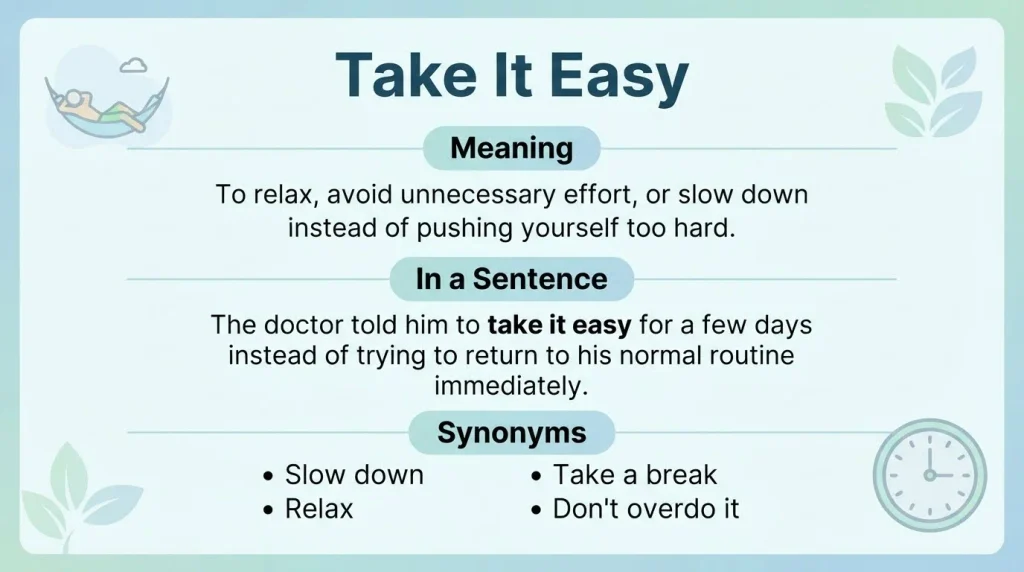
To take it easy means to relax, avoid unnecessary effort, or slow down instead of pushing yourself too hard.
Depending on context, it can mean resting or simply adopting a more relaxed attitude.
In a Sentence
The doctor told him to take it easy for a few days instead of trying to return to his normal routine immediately.
Other Ways to Say It
- Slow down
- Relax
- Take a break
- Don’t overdo it
Explanation
This expression is more about relaxation and moderation than laziness. It can be used as friendly advice when someone has been working too hard.
Because of that, it should not automatically be treated as a negative description of someone who avoids work.
Best Use
Works well in everyday conversation, friendly advice, personal messages, and informal writing.
Bum Around
Meaning
To bum around means to spend time doing very little, usually without a clear purpose or plan.
It can suggest a relaxed, aimless, or somewhat lazy way of spending time.
In a Sentence
We had no plans for Sunday, so we just bummed around the house and ordered food.
Other Ways to Say It
- Lounge around
- Hang around
- Do nothing much
- Waste the day
Explanation
The expression creates a picture of someone moving through a day without accomplishing much. It is often casual and mildly humorous, rather than strongly insulting.
It can describe temporary laziness, especially during free time.
Best Use
Most suitable for casual speech, dialogue, personal writing, and humorous social posts. Avoid it in formal or professional contexts.
Goof Off
Meaning
To goof off means to avoid serious work by playing around, joking, or doing things that are not important.
The focus is often on fooling around instead of concentrating.
In a Sentence
The students started goofing off as soon as the teacher stepped out of the classroom.
Other Ways to Say It
- Fool around
- Mess around
- Waste time
- Play instead of working
Explanation
The expression suggests that someone has chosen fun or distraction over responsibility. It is often less severe than directly calling someone lazy.
It works particularly well when the problem is lack of focus combined with playful behavior.
Best Use
Useful in casual conversations, school-related stories, workplace dialogue, and humorous writing.
Slack Off
Meaning
To slack off means to work less hard than you should or to become less productive.
It usually implies that a person is capable of doing the work but is not putting in enough effort.
In a Sentence
The team worked hard at first, but a few members began to slack off once they realized the deadline had been extended.
Other Ways to Say It
- Ease off
- Stop putting in enough effort
- Become less productive
- Take things too casually
Explanation
Unlike simply relaxing, slacking off suggests a failure to maintain the effort that a situation requires. The phrase can therefore carry a mildly critical tone.
It is particularly useful for describing changing work habits.
Best Use
Strong for workplace conversations, school situations, everyday speech, and informal writing.
Rest on Your Laurels
Meaning
To rest on your laurels means to become too satisfied with past success and stop making an effort to achieve more.
This expression describes a form of complacency, rather than ordinary tiredness.
In a Sentence
Winning the first competition was impressive, but the team cannot rest on its laurels if it wants to remain successful.
Other Ways to Say It
- Rely on past success
- Become complacent
- Stop pushing yourself
- Be satisfied with previous achievements
Explanation
The expression comes from the old symbolic association of laurel wreaths with victory and achievement. The idea is that someone becomes so comfortable with previous success that they no longer strive.
It is a useful choice when “lazy” is too simple and the real issue is losing motivation after achieving something.
Best Use
Especially effective in essays, speeches, professional writing, motivational discussions, and formal conversations.
Take the Easy Way Out
Meaning
To take the easy way out means to choose the simplest solution because it requires less effort, responsibility, or difficulty, especially when a better option would require more work.
The expression often carries a critical or disapproving tone.
In a Sentence
Instead of fixing the problem properly, he took the easy way out and ignored it.
Other Ways to Say It
- Choose the simplest option
- Avoid the harder solution
- Cut corners
- Avoid the effort involved
Explanation
The expression presents a problem as if there are different paths available. One path is difficult but responsible, while another offers a quick escape.
It is useful when laziness involves avoiding effort or responsibility rather than simply resting.
Best Use
Suitable for essays, discussions, speeches, workplace situations, and serious conversations.
Let the Grass Grow Under Your Feet
Meaning
To let the grass grow under your feet means to be so slow or inactive that you fail to take opportunities or get things done.
It suggests unnecessary delay and passivity.
In a Sentence
Don’t let the grass grow under your feet; apply for the position while the opportunity is still available.
Other Ways to Say It
- Waste time
- Delay taking action
- Miss opportunities
- Be too slow to act
Explanation
The image is deliberately exaggerated: if someone stands still for so long that grass grows beneath their feet, they must be extremely inactive.
The expression has a colorful, old-fashioned feel, which can make it memorable in storytelling or expressive writing.
Best Use
Best for creative writing, speeches, storytelling, and slightly old-fashioned or playful conversation. It may sound less common in very casual modern speech.
Idle Away the Time
Meaning
To idle away the time means to spend time doing little or nothing useful.
The expression often describes time passing while someone is unproductive or pleasantly inactive.
In a Sentence
He idled away the afternoon reading magazines instead of finishing the report.
Other Ways to Say It
- Pass the time
- Waste time
- Spend time aimlessly
- Do very little
Explanation
The phrase treats time as something that can be spent without a productive purpose. It can sound mildly critical, but the context may also make it feel peaceful.
For example, idling away a quiet afternoon can sound pleasant, while idling away working hours suggests poor time management.
Best Use
Works well in storytelling, essays, descriptive writing, and everyday conversation.
Couldn’t Be Bothered
Meaning
If someone couldn’t be bothered, they did not want to make the effort to do something.
The expression often communicates indifference, unwillingness, or casual laziness.
In a Sentence
He couldn’t be bothered to cook, so he ordered the same meal he had yesterday.
Other Ways to Say It
- Didn’t want to make the effort
- Couldn’t be bothered to try
- Didn’t feel like doing it
- Was unwilling to make the effort
Explanation
This phrase focuses on a person’s attitude: the task may be easy, but they simply do not consider it worth the effort.
It can sound casual, dismissive, or mildly critical, depending on the speaker’s tone.
Best Use
Excellent for conversation, dialogue, informal writing, and character development. It is less suitable for formal professional writing.
Goldbrick
Meaning
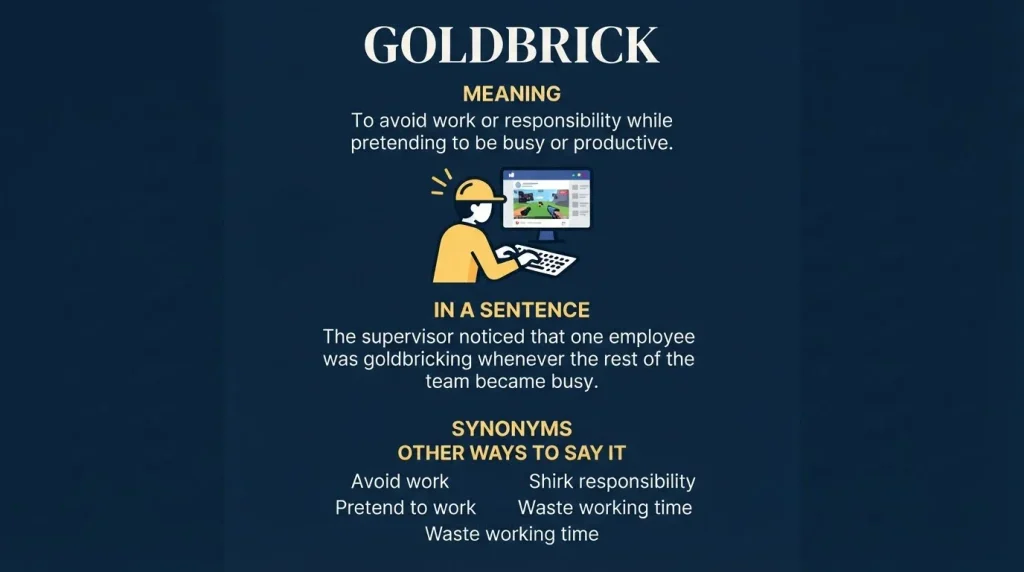
To goldbrick means to avoid work or responsibility while pretending to be busy or productive.
A person who goldbricks is not simply resting; they are shirking work while appearing to do something else.
In a Sentence
The supervisor noticed that one employee was goldbricking whenever the rest of the team became busy.
Other Ways to Say It
- Avoid work
- Pretend to work
- Shirk responsibility
- Waste working time
Explanation
This is a more specialized and somewhat old-fashioned expression. Its value comes from the idea of someone hiding their lack of effort behind an appearance of activity.
It can be useful when you want to describe deceptive or deliberate workplace laziness rather than ordinary procrastination.
Best Use
Best for literary writing, storytelling, historical contexts, and discussions about work habits. It may sound unusual in everyday modern conversation.
Shirk Your Duties
Meaning
To shirk your duties means to deliberately avoid responsibilities or fail to perform tasks that you are expected to handle.
This expression is more serious than simply saying someone is lazy.
In a Sentence
A reliable team depends on everyone doing their part, so no one should shirk their duties when problems arise.
Other Ways to Say It
- Avoid your responsibilities
- Neglect your duties
- Fail to do your job
- Refuse to take responsibility
Explanation
The word “shirk” directly emphasizes avoiding an obligation. It therefore works when laziness has consequences for other people.
The expression sounds more formal and serious than phrases such as “goof off” or “bum around.”
Best Use
Useful in essays, speeches, workplace discussions, formal writing, and serious conversations.
Coast Along
Meaning
To coast along means to continue with little effort, often because things are already going well or because a person is relying on previous ability.
It can describe someone who is doing just enough to continue without actively trying to improve.
In a Sentence
After getting comfortable in the position, he started to coast along instead of developing new skills.
Other Ways to Say It
- Get by with little effort
- Do the minimum
- Rely on existing success
- Make little effort to improve
Explanation
The expression comes from the idea of moving forward without actively providing power. Figuratively, a person can “coast” when they continue progressing without much effort.
It is especially useful for describing comfortable underachievement, where someone is not completely inactive but is no longer pushing themselves.
Best Use
Effective in workplace discussions, education, essays, personal development writing, and conversations about motivation.
Lie Around
Meaning
To lie around means to spend time resting or staying in one place without doing much.
The expression can be neutral when someone is relaxing, but it can also imply idleness or laziness when responsibilities are being ignored.
In a Sentence
Instead of helping with the preparations, the boys lay around the living room playing video games.
Other Ways to Say It
- Lounge around
- Stay in bed
- Sit around
- Do very little
Explanation
The physical image is straightforward: someone is lying down instead of getting up and doing something.
Whether it sounds negative depends heavily on context. Lying around on a holiday may be perfectly reasonable, while lying around during an important task suggests unhelpful inactivity.
Best Use
Natural in casual conversation, storytelling, informal descriptions, and dialogue.
Procrastinate Until the Last Minute
Meaning
To procrastinate until the last minute means to keep delaying a task until there is almost no time left to complete it.
Unlike general laziness, procrastination specifically involves putting off something that needs to be done.
In a Sentence
I always tell myself I’ll start the assignment early, but somehow I procrastinate until the last minute every semester.
Other Ways to Say It
- Put things off
- Delay a task
- Leave something until the deadline
- Keep postponing work
Explanation
This expression is useful because it identifies a particular form of unproductive behavior: the person knows the task exists but repeatedly chooses not to begin.
It can be humorous when describing a familiar habit, but it can also carry a serious tone when delays create real problems.
Best Use
Works well in essays, student writing, conversations, self-reflection, productivity discussions, and social media content.
Exercise: Practice Using Idioms
Test your understanding of these expressions by choosing the best answer for each question.
Which expression describes someone who spends most of the day sitting around watching television or doing very little?
A. Rest on your laurels
B. Couch potato
C. Drag your feet
D. Shirk your duties
If someone keeps delaying a decision because they do not want to act, which expression fits best?
A. Kick back
B. Take it easy
C. Drag your feet
D. Put your feet up
What does “twiddle your thumbs” usually suggest?
A. Waiting or doing nothing
B. Working extremely hard
C. Completing a task quickly
D. Accepting a responsibility
Which expression can describe relaxing after a tiring day without necessarily suggesting laziness?
A. Goldbrick
B. Shirk your duties
C. Goof off
D. Put your feet up
Someone is joking and playing around instead of doing their schoolwork. Which expression is most appropriate?
A. Goof off
B. Coast along
C. Take it easy
D. Rest on your laurels
What does “slack off” mean?
A. Begin working more efficiently
B. Become less hardworking or productive
C. Finish a difficult assignment
D. Take responsibility for a mistake
Which expression describes becoming too satisfied with past achievements?
A. Bum around
B. Sit on your hands
C. Rest on your laurels
D. Lie around
“Take the easy way out” usually has what kind of tone?
A. Strongly celebratory
B. Mildly critical
C. Deeply romantic
D. Completely neutral
Which expression describes someone who avoids taking action when action is needed?
A. Sit on your hands
B. Kick back
C. Take it easy
D. Put your feet up
What does “goldbrick” specifically suggest?
A. Working harder than everyone else
B. Taking a well-earned vacation
C. Pretending to work while avoiding work
D. Finishing a task before the deadline
Which expression means to avoid responsibilities deliberately?
A. Shirk your duties
B. Kick back
C. Twiddle your thumbs
D. Bum around
What does “coast along” suggest?
A. Making a major effort to improve
B. Continuing with little effort
C. Refusing to relax
D. Working under pressure
Which expression can describe spending time without a clear purpose?
A. Idle away the time
B. Shirk your duties
C. Drag your feet
D. Take the easy way out
If someone says they “couldn’t be bothered” to clean their room, what do they mean?
A. Losing track of where the room was located
B. Avoiding the effort required to do it
C. Cleaning the room without delay
D. Being physically unable to enter the room
Which expression most specifically describes repeatedly delaying work until a deadline is close?
A. Kick back
B. Lie around
C. Procrastinate until the last minute
D. Put your feet up
Answers
- B — A couch potato spends a lot of time being inactive, often sitting on a sofa watching television or using a device.
- C — To drag your feet means to delay or act reluctantly when something needs to be done.
- A — Twiddle your thumbs describes sitting around with nothing useful to do, often while waiting.
- D — Put your feet up means to relax or rest, and it does not necessarily imply laziness.
- A — To goof off means to fool around or play instead of concentrating on serious work.
- B — To slack off means to reduce your effort or become less productive than you should be.
- C — To rest on your laurels means to rely too much on previous success instead of continuing to make an effort.
- B — Take the easy way out often suggests criticism because it implies choosing an easier option to avoid effort or responsibility.
- A — To sit on your hands means to remain passive instead of taking action.
- C — To goldbrick means to avoid work while pretending to be busy or productive.
- A — To shirk your duties means to deliberately avoid responsibilities that you are expected to handle.
- B — To coast along means to continue with relatively little effort, often because things are already going reasonably well.
- A — To idle away the time means to spend time doing little or nothing useful.
- B — Saying you couldn’t be bothered means you did not want to make the effort required.
- C — Procrastinate until the last minute describes repeatedly delaying a task until there is very little time remaining.
FAQs
What is an idiom for lazy?
There are several useful expressions for describing laziness, depending on the exact behavior. Couch potato describes someone who is habitually inactive, while slack off describes someone who is not putting enough effort into work. Drag your feet is better for someone who keeps delaying action.
How do I create my own idiom for lazy?
Start with a clear mental image that represents the type of laziness you want to describe. Think about whether the person is avoiding work, delaying a task, relaxing, or simply doing nothing. Then connect that image to the behavior in a way that feels memorable and understandable.
For example, imagining someone carrying a heavy clock could suggest someone who constantly delays getting started. The strongest figurative expressions have a clear image and a meaning that readers can understand from context.
What makes an idiom effective?
An effective idiom usually creates a strong mental picture while communicating an idea that ordinary wording may express less vividly. It should also fit naturally into the sentence and match the tone of the situation.
An expression such as “couch potato” feels humorous and casual, while “shirk your duties” sounds much more serious.
Can I use these idioms in everyday conversation?
Yes, many of them are common in informal spoken English. Expressions such as “couch potato,” “kick back,” “take it easy,” “goof off,” and “slack off” can sound natural in everyday conversation.
More formal expressions, such as “shirk your duties” or “rest on your laurels,” are often better suited to serious discussions, essays, speeches, or professional contexts.
What is the difference between an idiom and a simile?
An idiom is an established expression with a figurative meaning, such as “couch potato.” A simile directly compares two things using words such as “like” or “as.”
For example, “He is a couch potato” is an idiomatic expression, while “He sits like a statue all afternoon” is a simile. Both use figurative language, but they work differently.
Conclusion
English gives us many ways to describe lazy behavior without relying on the same simple word again and again. A couch potato suggests comfortable inactivity, while drag your feet highlights reluctance and delay. Goof off focuses on playing around instead of working, and rest on your laurels describes losing motivation after success. Other expressions, such as put your feet up and take it easy, remind us that not every form of inactivity is negative; sometimes people simply need time to rest.
The key is to choose an expression that matches the behavior and tone you want to communicate. Whether you are writing an essay, creating dialogue, telling a story, or having a casual conversation, the right figurative expression can make your description more vivid and memorable. Sometimes, one well chosen image says much more than simply calling someone lazy.

Oliver Whitcombe is a British writer and language enthusiast who has been fascinated by English expressions since childhood, when his grandmother told him he was “born with a silver spoon” and he spent a week trying to find it.
He created Idiom Looms to help learners and native speakers alike make sense of English idioms. Their origins, their meanings, and the moments they’re best used. His writing mixes plain explanations with a good dose of British wit.
Oliver lives in England, where he divides his time between writing, walking, and correcting everyone’s grammar (politely).