
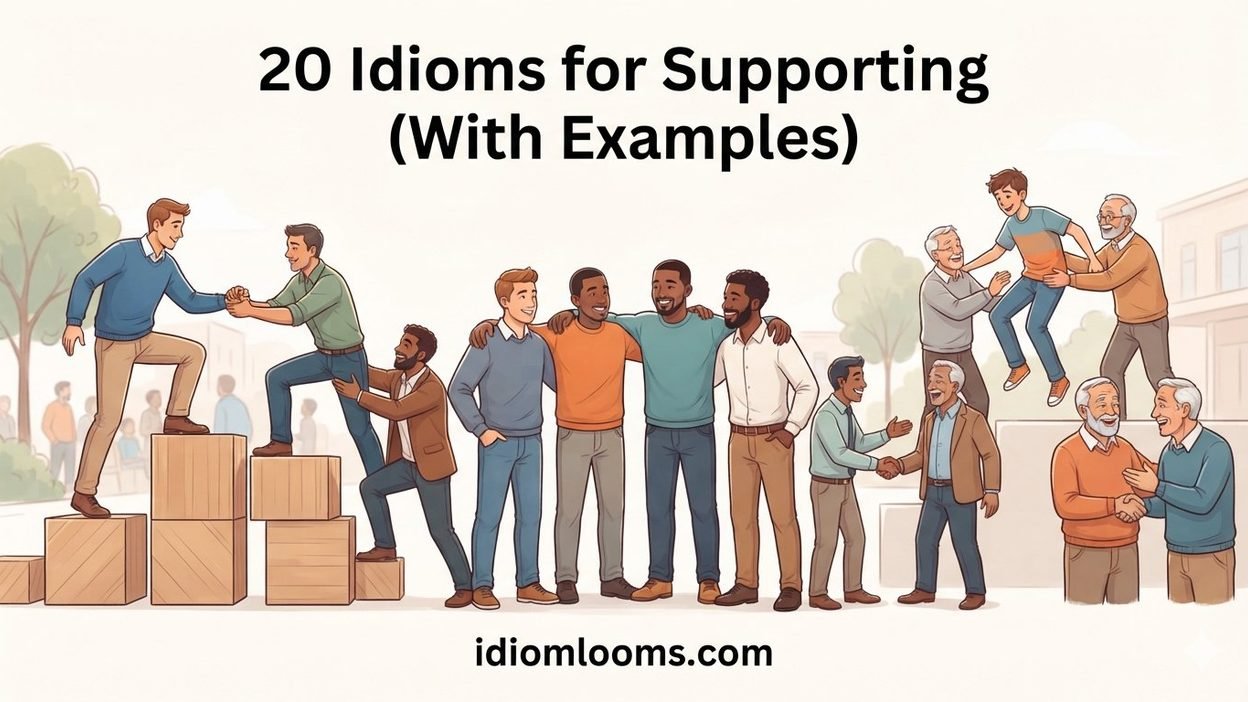
Have you ever struggled to express support, encouragement, or understanding in a natural way? The 20 Idioms for Supporting With Real Examples guide helps you communicate these ideas with greater clarity and personality. Idioms add emotional depth while making everyday English usage more vivid and memorable. They can also strengthen conversations, messages, and creative expression.
This article explores 20 useful idioms for supporting others, with clear meanings and realistic examples. You will learn how each expression works in conversations, business communication, formal writing, and everyday situations. The examples also show how idiomatic language can improve grammar, tone, and consistency without making your writing sound forced. Whether you are discussing meetings, project management, or personal encouragement, the right phrase can make your message feel more natural.
You will also discover practical alternatives and guidance on when each idiom fits best. These expressions can support communication involving scheduling, time management, online booking, broadcasting, and calendar planning when encouragement or cooperation matters. By understanding figurative meaning and context, you can use supportive language confidently in conversations and formal writing.
What Is an Idiom?
An idiom is a common expression whose meaning is different from the literal meaning of its individual words. Idioms often use familiar images to communicate an idea in a memorable way.
For example, “break the ice” does not literally mean breaking frozen water. It means to make people feel more comfortable in a social situation.
Similarly, “lend a hand” does not necessarily involve giving someone your physical hand. It means to help or support someone.
Idioms are a form of figurative language. Understanding their intended meaning rather than reading them literally helps you communicate more naturally in English.
Why Use Idioms for Supporting?
Idioms can make the idea of supporting much more expressive. They can show whether support is practical, emotional, loyal, protective, or encouraging.
They are useful because they can:
- Express emotion: “I’ve got your back” can sound warmer than “I support you.”
- Make descriptions vivid: “Stand shoulder to shoulder” creates an image of people facing something together.
- Explain abstract ideas: Figurative language can make loyalty and encouragement easier to understand.
- Add personality: Idioms can make everyday conversations sound more natural.
- Strengthen creative writing: Writers can use imagery to show relationships and emotional bonds.
- Communicate complex feelings simply: A short expression can capture a deeper idea of solidarity or assistance.
The key is choosing an idiom that matches the kind of support you want to describe.
Quick List of 20 Idioms
- Lend a Hand
- Have Someone’s Back
- Back Someone Up
- Stand By Someone
- Stand Shoulder to Shoulder
- Be in Someone’s Corner
- Give Someone a Leg Up
- Throw Someone a Lifeline
- Hold Someone Up
- Rally Around Someone
- Pull Together
- Pitch In
- Keep Someone Afloat
- Go to Bat for Someone
- Stick Together
- Carry Someone Through
- Be There for Someone
- Give Someone a Boost
- Put Your Weight Behind Something
- Join Forces
Lend a Hand
Read more:20 Idioms for Relax With Real Examples
Meaning
“Lend a hand” means to offer help or practical assistance. The image suggests temporarily giving someone your hand so they can manage a difficult task.
In a Sentence
When the community center needed volunteers, dozens of residents lent a hand.
Other Ways to Say It
- Help someone out
- Give someone assistance
- Offer support
- Do someone a favor
Explanation
This idiom presents supporting someone as a helping action, rather than simply expressing sympathy. It works especially well when the support involves doing something practical.
It is friendly and natural, making it suitable for everyday conversations as well as informal writing.
Best Use
Best for conversations, community stories, personal messages, and informal writing.
Have Someone’s Back
Meaning
“Have someone’s back” means to protect, defend, or support someone, especially when they face trouble or criticism.
In a Sentence
Don’t worry about the presentation; I have your back if anyone raises difficult questions.
Other Ways to Say It
- Stand up for someone
- Watch out for someone
- Support someone
- Protect someone
Explanation
The phrase creates the image of someone standing behind you while you face a challenge. It communicates loyalty and protection, not merely agreement.
It has a warm, reassuring tone but is quite informal.
Best Use
Ideal for conversations, personal messages, teamwork, and storytelling.
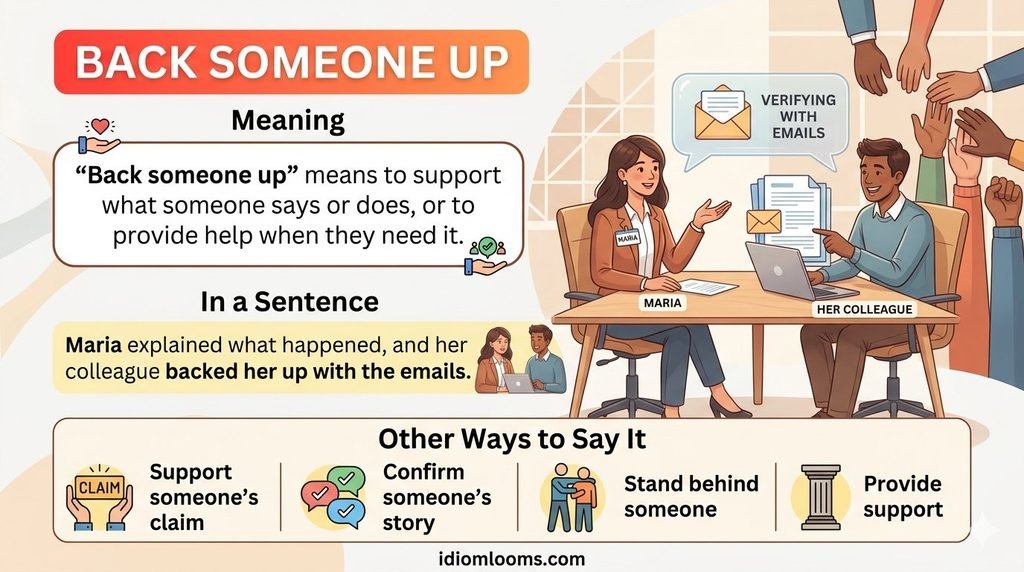
Back Someone Up
Meaning
“Back someone up” means to support what someone says or does, or to provide help when they need it.
In a Sentence
Maria explained what happened, and her colleague backed her up with the emails.
Other Ways to Say It
- Support someone’s claim
- Confirm someone’s story
- Stand behind someone
- Provide support
Explanation
This expression often suggests evidence, agreement, or reinforcement. It can describe emotional support, but it is especially useful when someone needs another person to confirm or strengthen their position.
Best Use
Useful in workplace conversations, discussions, arguments, and everyday speech.
Stand By Someone
Meaning
“Stand by someone” means to remain loyal and supportive, particularly when that person is experiencing difficulty.
In a Sentence
Even during the hardest months, his friends stood by him.
Other Ways to Say It
- Remain loyal
- Stay supportive
- Stay by someone’s side
- Support someone through difficulty
Explanation
The image is simple: you do not walk away when things become difficult. The expression emphasizes loyalty, commitment, and emotional support.
It can sound sincere and serious, especially when discussing challenging circumstances.
Best Use
Works well in personal writing, speeches, conversations, and emotional storytelling.
Stand Shoulder to Shoulder
Meaning
“Stand shoulder to shoulder” means to support one another and face a challenge together.
In a Sentence
The volunteers stood shoulder to shoulder after the neighborhood was affected by the storm.
Other Ways to Say It
- Stand together
- Unite
- Face something together
- Support one another
Explanation
This idiom creates a strong visual image of people standing closely together. It emphasizes unity and solidarity, especially when facing a shared problem.
The expression has a determined and sometimes inspirational tone.
Best Use
Especially effective in speeches, journalism, storytelling, and motivational writing.
Be in Someone’s Corner
Meaning
“Be in someone’s corner” means to support and encourage someone, especially when they are facing competition, pressure, or difficulty.
In a Sentence
Whatever decision he makes, his family will always be in his corner.
Other Ways to Say It
- Support someone
- Cheer someone on
- Stand behind someone
- Encourage someone
Explanation
The expression comes from the image of a fighter having a supportive team in their corner. It communicates encouragement, loyalty, and belief in someone.
It is informal but highly expressive.
Best Use
Great for conversations, motivational writing, personal messages, and sports-related contexts.
Give Someone a Leg Up
Meaning
“Give someone a leg up” means to give someone help or an advantage that allows them to make progress.
In a Sentence
Her mentor gave her a leg up by introducing her to experienced people in the industry.
Other Ways to Say It
- Give someone an advantage
- Help someone progress
- Give someone a boost
- Give someone an opportunity
Explanation
The mental image is someone receiving a physical lift to climb higher. Figuratively, it describes help that enables progress rather than simply emotional encouragement.
It can suggest practical assistance, useful connections, or an early advantage.
Best Use
Suitable for career discussions, education, professional writing, and everyday conversation.
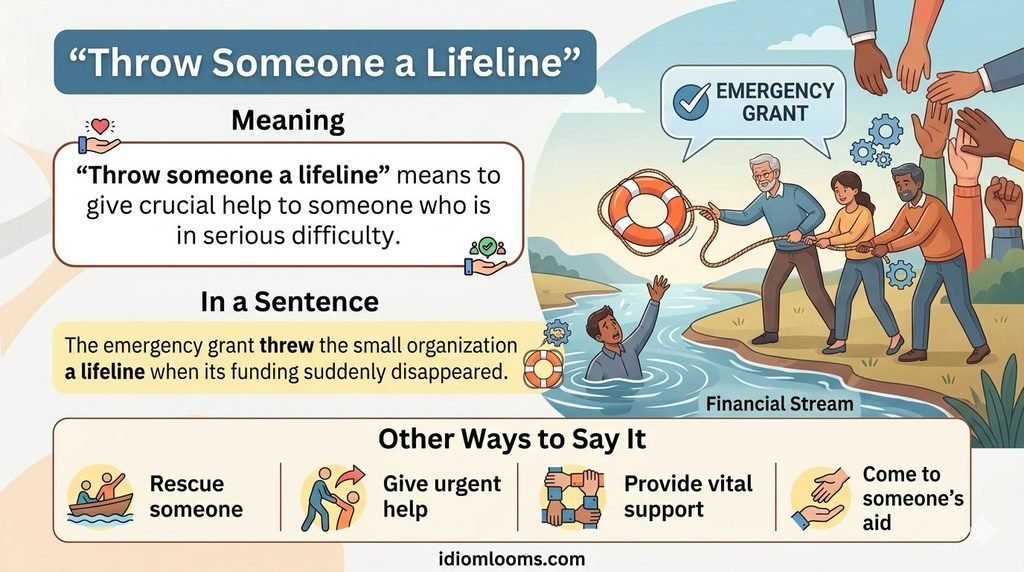
Throw Someone a Lifeline
Meaning
“Throw someone a lifeline” means to give crucial help to someone who is in serious difficulty.
In a Sentence
The emergency grant threw the small organization a lifeline when its funding suddenly disappeared.
Other Ways to Say It
- Rescue someone
- Give urgent help
- Provide vital support
- Come to someone’s aid
Explanation
The expression compares support to a lifeline thrown to someone in danger. It suggests that the help may be especially important or even decisive.
Because of its dramatic imagery, it is stronger than simply saying “help.”
Best Use
Best for serious situations, journalism, storytelling, speeches, and persuasive writing.
Hold Someone Up
Meaning
In the sense of emotional or practical support, “hold someone up” can mean helping someone remain strong or steady during a difficult period.
In a Sentence
Her close friends held her up when she struggled to cope with the changes.
Other Ways to Say It
- Keep someone strong
- Support someone
- Help someone cope
- Sustain someone
Explanation
The image is of physically keeping someone from falling. Figuratively, it communicates strengthening or sustaining someone when they might otherwise feel overwhelmed.
The expression can sound emotional and compassionate.
Best Use
Effective in personal stories, reflective writing, poetry, and emotional conversations.
Rally Around Someone
Meaning
“Rally around someone” means coming together to give a person encouragement, assistance, or emotional support.
In a Sentence
When the coach became seriously ill, the entire team rallied around him.
Other Ways to Say It
- Unite in support of someone
- Gather around someone
- Come together for someone
- Show solidarity
Explanation
The expression creates an image of people gathering together with a shared purpose. It is particularly powerful when many people support one person during a difficult experience.
It often carries a strong sense of community.
Best Use
Good for news-style writing, speeches, community stories, and emotional narratives.
Pull Together
Meaning
“Pull together” means working cooperatively and supporting one another to achieve something or overcome a problem.
In a Sentence
We had very little time, but everyone pulled together to finish the project.
Other Ways to Say It
- Work together
- Cooperate
- Unite
- Support one another
Explanation
The phrase suggests several people pulling in the same direction. Rather than focusing on one person helping another, it emphasizes collective effort.
It is practical, positive, and common in everyday English.
Best Use
Useful for workplaces, schools, teams, community projects, and conversations.
Pitch In
Meaning
“Pitch in” means to contribute help, effort, money, or resources to a shared task.
In a Sentence
Everyone pitched in to clean the hall before the event.
Other Ways to Say It
- Contribute
- Help out
- Do your part
- Lend a hand
Explanation
This casual idiom presents support as joining an effort and doing your share. It does not necessarily imply deep emotional support; it is often about practical contribution.
Its friendly tone makes it common in informal situations.
Best Use
Best for everyday conversation, group activities, workplaces, and community events.
Keep Someone Afloat
Meaning
“Keep someone afloat” means providing enough emotional, financial, or practical support to help someone continue through a difficult period.
In a Sentence
Her temporary job kept the family afloat while she searched for permanent work.
Other Ways to Say It
- Help someone survive
- Sustain someone
- Keep someone going
- Provide essential support
Explanation
The idiom compares a difficult situation to deep water and support to something that prevents a person from sinking. It often implies ongoing assistance rather than one quick act.
It can be emotional, financial, or practical depending on the context.
Best Use
Useful in personal writing, financial discussions, journalism, and serious conversations.
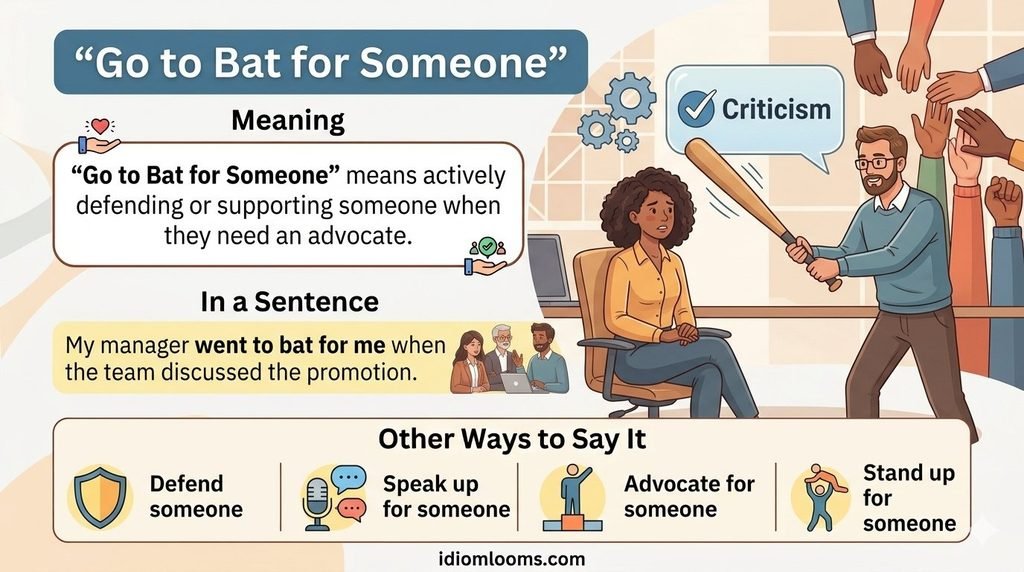
Go to Bat for Someone
Meaning
“Go to bat for someone” means actively defending or supporting someone when they need an advocate.
In a Sentence
My manager went to bat for me when the team discussed the promotion.
Other Ways to Say It
- Defend someone
- Speak up for someone
- Advocate for someone
- Stand up for someone
Explanation
The expression comes from baseball imagery, where a player steps up to bat. Figuratively, it suggests taking action on someone else’s behalf.
It is stronger than quietly agreeing with someone because it implies active support.
Best Use
Best suited to workplace conversations, personal stories, discussions, and informal writing.
Stick Together
Meaning
“Stick together” means remaining united and supporting one another, especially when circumstances are difficult.
In a Sentence
Whatever happens next, the team promised to stick together.
Other Ways to Say It
- Stay united
- Remain together
- Stand together
- Support each other
Explanation
The word “stick” suggests staying firmly attached instead of separating. The expression emphasizes loyalty, unity, and shared strength.
It is simple enough for everyday conversation but can also work in serious situations.
Best Use
Appropriate for conversations, speeches, teamwork, stories, and motivational messages.
Carry Someone Through
Meaning
“Carry someone through” means helping someone survive or endure a difficult experience.
In a Sentence
The encouragement from her friends carried her through the most stressful part of the year.
Other Ways to Say It
- Help someone get through
- Sustain someone
- Help someone endure
- Support someone through hardship
Explanation
The imagery suggests carrying a person when they are too exhausted to continue alone. It communicates deep emotional or practical support over time.
It is particularly effective when describing resilience during hardship.
Best Use
Works well in personal narratives, reflective essays, speeches, and emotional writing.
Be There for Someone
Meaning
“Be there for someone” means being available to provide emotional support, companionship, or help when someone needs you.
In a Sentence
She knew her brother would be there for her whenever she needed to talk.
Other Ways to Say It
- Be supportive
- Stand by someone
- Offer emotional support
- Be available
Explanation
This is one of the most natural ways to express reliable emotional support. It does not necessarily mean solving a problem; sometimes simply being present is the support that matters.
The phrase is warm and personal.
Best Use
Ideal for everyday conversations, personal messages, relationships, and reflective writing.
Give Someone a Boost
Meaning
“Give someone a boost” means giving someone encouragement, confidence, energy, or assistance that helps them move forward.
In a Sentence
A few kind words from her teacher gave her a boost before the competition.
Other Ways to Say It
- Encourage someone
- Lift someone’s spirits
- Give someone confidence
- Help someone move forward
Explanation
The word “boost” suggests lifting something upward. Figuratively, the idiom can describe a small but meaningful improvement in confidence, motivation, or progress.
It usually has a positive and encouraging tone.
Best Use
Useful in conversations, education, personal messages, motivational writing, and workplace settings.
Put Your Weight Behind Something
Meaning
“Put your weight behind something” means giving strong support to an idea, project, campaign, or cause.
In a Sentence
Several respected organizations put their weight behind the environmental campaign.
Other Ways to Say It
- Strongly support something
- Back something
- Get behind something
- Support a cause
Explanation
The expression uses physical weight as a metaphor for influence and commitment. It suggests more than passive approval because the person or organization is actively adding its influence to the effort.
It can sound stronger and more purposeful than simply saying “support.”
Best Use
Particularly effective in professional writing, speeches, journalism, campaigns, and formal discussions.
Join Forces
Meaning
“Join forces” means combining efforts, skills, or resources to accomplish something together.
In a Sentence
Two local groups joined forces to provide food and supplies to families in need.
Other Ways to Say It
- Work together
- Combine efforts
- Unite
- Collaborate
Explanation
The idiom creates an image of separate groups becoming one stronger team. It focuses on cooperation and shared power rather than one person simply assisting another.
It can sound energetic and purposeful.
Best Use
Good for business, community projects, campaigns, teamwork, speeches, and news-style writing.
Exercise: Practice Using Idioms
Test your understanding of these supporting idioms. Choose the best answer for each question.
1. What does “lend a hand” mean?
A. Refuse to participate
B. Offer help
C. Leave quickly
D. Give someone a warning
2. If someone “has your back,” what are they doing?
A. Avoiding responsibility
B. Competing with you
C. Supporting or protecting you
D. Asking you for advice
3. Which idiom means actively defending someone?
A. Go to bat for someone
B. Pitch in
C. Keep someone afloat
D. Stick together
4. What does “rally around someone” suggest?
A. Avoiding someone
B. Coming together to support someone
C. Challenging someone’s decision
D. Leaving a group
5. Which expression best describes giving someone an advantage?
A. Stand by someone
B. Join forces
C. Give someone a leg up
D. Be there for someone
6. “Keep someone afloat” can refer to:
A. Giving someone essential support during difficulty
B. Making someone physically swim
C. Preventing someone from joining a group
D. Giving someone a new hobby
7. Which idiom focuses on contributing to a shared task?
A. Have someone’s back
B. Pitch in
C. Go to bat for someone
D. Carry someone through
8. If several people “pull together,” they:
A. Work cooperatively
B. Compete against each other
C. Stop communicating
D. Change their plans individually
9. Which expression most strongly suggests remaining loyal during hardship?
A. Give someone a boost
B. Stand by someone
C. Pitch in
D. Join forces
10. “Throw someone a lifeline” usually suggests:
A. Giving someone a minor compliment
B. Offering crucial help during serious difficulty
C. Asking someone to work harder
D. Starting a friendly competition
11. Which idiom describes combining efforts or resources?
A. Join forces
B. Hold someone up
C. Have someone’s back
D. Give someone a leg up
12. If a teacher “gives a student a boost,” the teacher may:
A. Discourage the student
B. Give the student encouragement or confidence
C. Ask the student to leave
D. Replace the student’s work
13. Which sentence uses “back someone up” correctly?
A. The witness backed him up by confirming his account.
B. The witness backed him up by walking away.
C. The witness backed him up by changing the subject.
D. The witness backed him up by refusing to listen.
14. Which idiom is especially associated with being emotionally available?
A. Put your weight behind something
B. Be there for someone
C. Pitch in
D. Give someone a leg up
15. Which expression is most suitable for describing organizations supporting a campaign?
A. Put your weight behind something
B. Hold someone up
C. Carry someone through
D. Stick together
Answers
- B — “Lend a hand” means to help or assist someone.
- C — Having someone’s back means supporting or protecting them.
- A — “Go to bat for someone” means to actively defend or advocate for them.
- B — “Rally around someone” means people come together to provide support.
- C — “Give someone a leg up” means giving them help or an advantage.
- A — “Keep someone afloat” means providing enough support to help someone continue through difficulty.
- B — “Pitch in” means contribute effort or assistance to a shared task.
- A — “Pull together” means cooperate and work toward a common goal.
- B — “Stand by someone” emphasizes loyalty and continued support.
- B — A lifeline represents important or urgent help during serious difficulty.
- A — “Join forces” means combine efforts or resources.
- B — Giving someone a boost can mean increasing their confidence or motivation.
- A — “Back someone up” can mean confirming or supporting what they have said.
- B — “Be there for someone” commonly refers to reliable emotional support and presence.
- A — “Put your weight behind something” means giving strong support or influence to an idea or cause.
FAQs
What is an idiom for supporting someone?
There are several useful idioms for supporting someone, including “have someone’s back,” “stand by someone,” “be in someone’s corner,” and “be there for someone.” The best choice depends on whether you mean protection, loyalty, encouragement, or emotional presence.
How do I create my own idiom?
Creating an effective idiom usually involves connecting an abstract idea with a clear and memorable image. Think about what supporting someone looks like physically—holding, lifting, standing beside, or joining together—and use that image to express the deeper idea.
What makes an idiom effective?
A strong idiom creates an image that readers or listeners can understand quickly. It should communicate a distinct feeling or idea without becoming confusing or overly complicated.
Can I use these idioms in everyday conversation?
Yes. Many of these expressions, such as “lend a hand,” “have your back,” “pitch in,” and “be there for someone,” are natural in everyday English. Others, such as “throw someone a lifeline,” may sound more dramatic or figurative.
What is the difference between an idiom and a simile?
An idiom has an established figurative meaning that may not be obvious from its individual words. A simile directly compares two things using words such as “like” or “as.” For example, “He has your back” is an idiom, while “Her support was like a safety net” is a simile.
Conclusion
The language of supporting does not have to be plain or repetitive. Idioms allow us to describe encouragement, loyalty, cooperation, protection, and shared strength through memorable images. Expressions such as “have someone’s back,” “lend a hand,” “stand by someone,” and “join forces” each highlight a different kind of support. The most effective choice depends on what you want your reader or listener to feel.
A casual conversation may call for a simple phrase, while a speech or story may benefit from stronger imagery such as a lifeline or people standing shoulder to shoulder. Use these expressions naturally, and avoid choosing an idiom simply because it sounds impressive. The strongest figurative language is the kind that makes the support behind your words unmistakably clear.




[…] Read more:20 Idioms for Supporting With Real Examples […]
[…] Read more:20 Idioms for Supporting With Real Examples […]