

What makes a new beginning feel exciting, uncertain, or full of possibility? The right expression can make that moment easier to describe. 20 Idioms for Starting With Real Examples introduces natural phrases for talking about beginnings, fresh opportunities, and taking the first step. These expressions add personality while improving everyday English usage and grammar.
Starting something new appears in many situations, from scheduling tasks to managing a calendar, launching projects, and arranging meetings. You may encounter these expressions in business communication, online booking, broadcasting, or project management. Learning their figurative meanings helps you communicate ideas about beginnings with greater clarity and consistency.
In this guide, each idiom includes a clear meaning, a realistic example, alternative expressions, and practical usage advice. You will also see how these phrases fit formal writing, conversations, storytelling, and professional situations. By understanding context instead of memorizing phrases alone, you can use idioms naturally and confidently.
What Is an Idiom?
An idiom is a group of words whose meaning is different from the literal meaning of the individual words.
For example, “break the ice” does not usually mean physically breaking ice. It means making people feel more comfortable in a new or awkward situation.
Similarly, “spill the beans” does not mean dropping beans. It means revealing a secret or piece of information.
Idioms are a form of figurative language. Instead of stating an idea directly, they use an image, comparison, or familiar expression to communicate it.
Why Use Idioms for Starting?
Idioms can make the idea of starting more expressive because beginnings are not always simple. A person might begin with confidence, take a risky first step, rebuild after failure, or move into an entirely new phase of life.
The right expression can:
- Express emotion behind a new beginning.
- Make descriptions more vivid and memorable.
- Turn an abstract idea into an easy-to-picture image.
- Add personality to conversations and creative writing.
- Help explain complicated feelings in a short, familiar expression.
- Make speeches, stories, essays, and personal messages more engaging.
The important thing is to choose an idiom that matches the situation. A dramatic expression may suit a story but sound unnatural in a formal report.
Quick List of 20 Idioms
- Hit the ground running
- Get the ball rolling
- Start from scratch
- Get off the ground
- Take the plunge
- Turn over a new leaf
- Open a new chapter
- Make a fresh start
- From the get-go
- At the outset
- Lay the groundwork
- Set the wheels in motion
- Break new ground
- Make a flying start
- Jump-start something
- Take the first step
- Get in on the ground floor
- In at the deep end
- Start with a clean slate
- Strike while the iron is hot
Hit the Ground Running
Read moe:20 Idioms for Running With Real Examples
Meaning
“Hit the ground running” means to start something with energy, speed, and immediate action. It suggests that someone is ready to make progress without spending much time getting organized.
In a Sentence
After a short orientation, Maya hit the ground running and completed her first project ahead of schedule.
Other Ways to Say It
- Get off to a strong start
- Begin with energy
- Make an immediate impact
- Start at full speed
Explanation
The expression creates a vivid picture of someone beginning a race while already running. It is useful when a person needs to act confidently and efficiently from the beginning.
It usually has a positive, energetic tone and works naturally in conversations, workplace writing, speeches, and storytelling.
Best Use
Best for work, school, projects, competitions, and personal goals where an energetic beginning matters.
Get the Ball Rolling
Meaning
“Get the ball rolling” means to start an activity, conversation, project, or process so that progress can begin.
In a Sentence
Let’s get the ball rolling by deciding who will handle each part of the presentation.
Other Ways to Say It
- Get things started
- Begin the process
- Set things moving
- Start the discussion
Explanation
The image comes from pushing a ball so that it begins moving. Once the ball is rolling, it becomes easier to imagine continued movement and progress.
This is a casual and practical idiom that sounds natural in everyday conversation and workplace discussions.
Best Use
It works especially well for meetings, plans, group projects, conversations, and events.
Start from Scratch
Meaning
“Start from scratch” means to begin again from the very beginning without using previous work or progress.
In a Sentence
The original design was too complicated, so the team decided to start from scratch.
Other Ways to Say It
- Begin from the beginning
- Start over
- Rebuild from the ground up
- Begin with nothing prepared
Explanation
“Scratch” represents the starting point with nothing already created. The expression is useful when someone has to abandon an earlier attempt and build something again.
It can sound practical, frustrating, or determined, depending on the context.
Best Use
Use it for projects, designs, businesses, creative work, repairs, and second attempts.
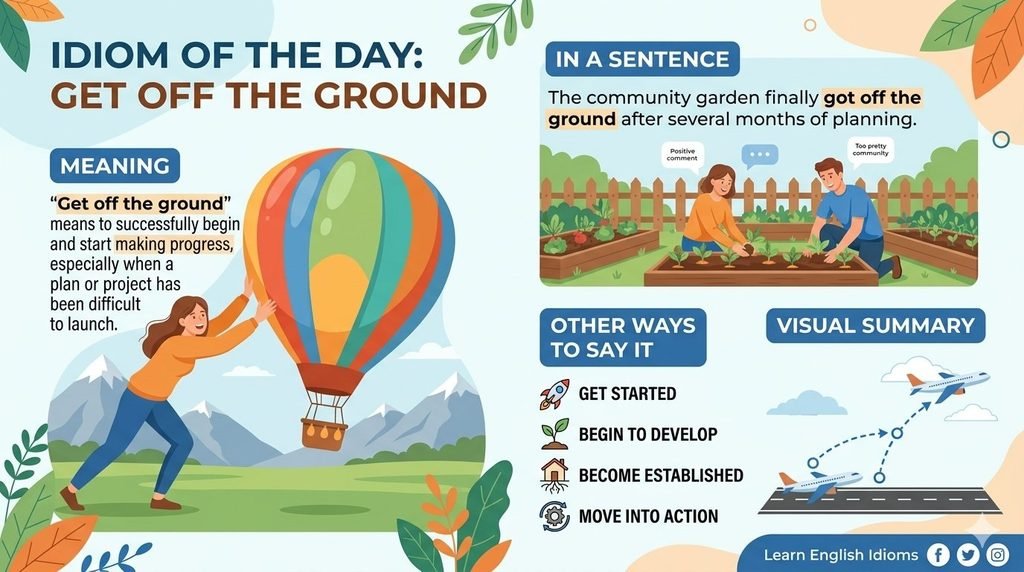
Get Off the Ground
Meaning
“Get off the ground” means to successfully begin and start making progress, especially when a plan or project has been difficult to launch.
In a Sentence
The community garden finally got off the ground after several months of planning.
Other Ways to Say It
- Get started
- Begin to develop
- Become established
- Move into action
Explanation
The expression creates the image of something lifting away from the ground. It suggests that an idea has moved beyond planning and has finally become active.
The tone is generally hopeful and practical, particularly when a beginning required effort.
Best Use
A strong choice for businesses, projects, campaigns, organizations, and new initiatives.
Take the Plunge
Meaning
“To take the plunge” means to make a bold decision to begin something despite uncertainty or fear.
In a Sentence
After years of thinking about it, Daniel finally took the plunge and opened his own studio.
Other Ways to Say It
- Take a chance
- Make the leap
- Go for it
- Commit to the decision
Explanation
The expression compares starting something risky to jumping into deep water. It captures the moment when hesitation ends and action begins.
It often carries a courageous, adventurous, or emotional feeling.
Best Use
Use it for major life decisions, careers, businesses, travel, relationships, and personal challenges.
Turn Over a New Leaf
Meaning
“To turn over a new leaf” means to start behaving differently and make a positive change in your life.
In a Sentence
After struggling with poor habits, he decided to turn over a new leaf and create a healthier routine.
Other Ways to Say It
- Make a fresh change
- Start anew
- Change your ways
- Begin a better chapter
Explanation
The image is like turning the page of a book and beginning a different part of the story. It is especially powerful when the new beginning follows mistakes, difficulties, or an old habit.
The expression has a hopeful and reflective tone.
Best Use
It fits personal growth, lifestyle changes, relationships, recovery from setbacks, and inspirational writing.
Open a New Chapter
Meaning
“Open a new chapter” means to begin a new period or stage of life.
In a Sentence
Moving to a new city felt like opening a new chapter in her life.
Other Ways to Say It
- Begin a new phase
- Start a new journey
- Enter a new stage
- Begin again
Explanation
Life is compared to a book, with different experiences forming different chapters. The expression focuses less on a single action and more on the meaningful transition into something new.
It has a distinctly reflective and slightly poetic quality.
Best Use
Excellent for personal messages, speeches, essays, storytelling, social media, and life transitions.
Make a Fresh Start
Meaning
“To make a fresh start” means to begin again with a clean opportunity to do things differently.
In a Sentence
The move gave the family a chance to make a fresh start in a quieter town.
Other Ways to Say It
- Begin anew
- Start over
- Have a new beginning
- Begin with renewed energy
Explanation
The word “fresh” suggests something new, clean, and free from the weight of what came before. This makes the expression especially effective when starting again brings hope or relief.
It is natural enough for everyday speech while still working well in emotional writing.
Best Use
Use it for moving, changing jobs, rebuilding relationships, personal growth, or recovering from difficult experiences.
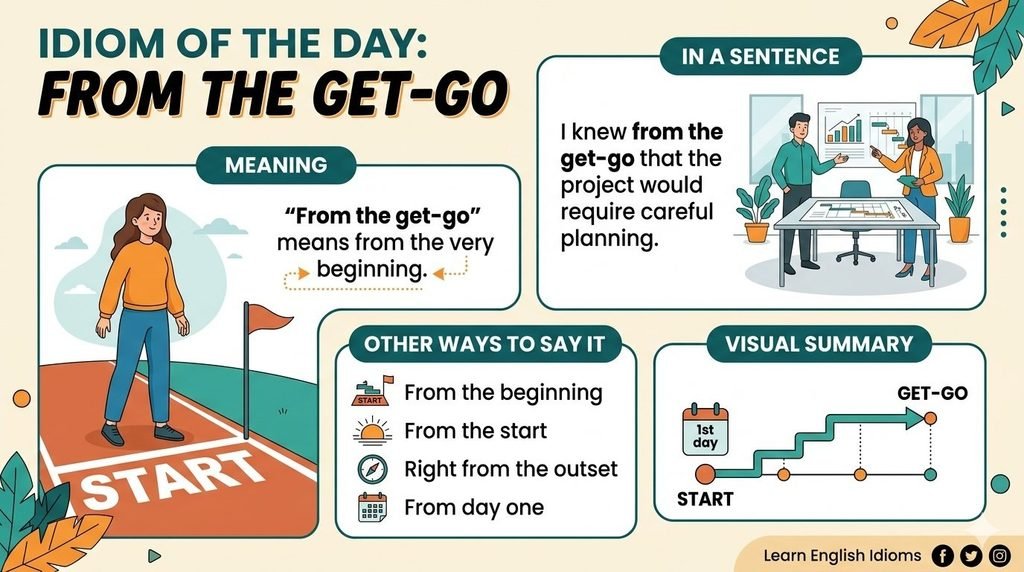
From the Get-Go
Meaning
“From the get-go” means from the very beginning.
In a Sentence
I knew from the get-go that the project would require careful planning.
Other Ways to Say It
- From the beginning
- From the start
- Right from the outset
- From day one
Explanation
This informal expression emphasizes that something was true or happened right at the beginning. Unlike some idioms on this list, it describes the timing of a beginning rather than the action of starting itself.
It has a casual, conversational tone.
Best Use
Best suited to conversations, informal writing, interviews, personal stories, and relaxed workplace communication.
At the Outset
Meaning
“At the outset” means at the beginning of an activity, process, or situation.
In a Sentence
At the outset, the researchers agreed that careful documentation would be essential.
Other Ways to Say It
- At the beginning
- At the start
- Initially
- From the beginning
Explanation
Unlike highly visual idioms, this expression is more understated. It points readers toward the earliest stage of something and helps establish when an idea, decision, or condition began.
It sounds more formal and polished than “from the get-go.”
Best Use
A good choice for essays, reports, professional writing, presentations, and formal discussions.
Lay the Groundwork
Meaning
“To lay the groundwork” means to prepare the conditions needed for something to begin or succeed later.
In a Sentence
The training sessions laid the groundwork for a much smoother launch.
Other Ways to Say It
- Build a foundation
- Prepare the way
- Create the conditions
- Put the basics in place
Explanation
The expression compares preparation to building a structure. Before the visible work can rise, a strong foundation must be prepared.
It communicates careful preparation rather than immediate action, making it different from expressions such as “hit the ground running.”
Best Use
Especially effective for business plans, education, research, construction, campaigns, and long-term projects.
Set the Wheels in Motion
Meaning
“To set the wheels in motion” means to start a process that will lead to further action or change.
In a Sentence
The signed agreement set the wheels in motion for the company’s expansion.
Other Ways to Say It
- Start the process
- Put a plan into action
- Trigger a series of events
- Get things moving
Explanation
The image is of wheels beginning to turn after being still. Once they are moving, the process has momentum and is likely to continue.
The expression often sounds purposeful and slightly formal, especially when one decision produces several later actions.
Best Use
Use it for plans, negotiations, projects, policy changes, business decisions, and major developments.
Break New Ground
Meaning
“To break new ground” means to do something innovative or explore an area that has not been approached in the same way before.
In a Sentence
The young scientist hopes to break new ground with her research into sustainable materials.
Other Ways to Say It
- Try something innovative
- Explore new territory
- Do something pioneering
- Create a new approach
Explanation
The expression originally evokes clearing or opening previously untouched ground. Figuratively, it describes creating a new path or approach rather than simply starting an ordinary task.
Its tone is ambitious and inspirational.
Best Use
It works particularly well in research, technology, art, business, education, and creative writing.
Make a Flying Start
Meaning
“To make a flying start” means to begin very successfully and make rapid progress early on.
In a Sentence
The team made a flying start to the season by winning its first three matches.
Other Ways to Say It
- Get off to a great start
- Begin strongly
- Start successfully
- Make rapid early progress
Explanation
The word “flying” suggests speed, height, and momentum. The expression therefore gives a beginning an energetic and successful image.
It is especially useful when early results are impressive.
Best Use
Best for sports, business, competitions, projects, campaigns, and performance reviews.
Jump-Start Something
Meaning
“To jump-start something” means to give a process, activity, or project the energy needed to begin or become active again.
In a Sentence
The new advertising campaign helped jump-start sales after a slow month.
Other Ways to Say It
- Get things moving
- Give it a boost
- Kick-start the process
- Revive the activity
Explanation
The expression comes from the idea of using an external power source to start a vehicle. Figuratively, it suggests providing the extra push needed to create movement.
It can describe both a brand-new beginning and a renewed beginning after a slowdown.
Best Use
Useful in business, marketing, projects, motivation, education, and everyday conversation.
Take the First Step
Meaning
“To take the first step” means to begin taking action toward a goal, especially when a larger task feels difficult.
In a Sentence
Signing up for the course was her decision to take the first step toward a new career.
Other Ways to Say It
- Begin the journey
- Get started
- Make the first move
- Start moving forward
Explanation
The image is simple but powerful: a long journey cannot begin without a first step. The expression emphasizes progress through action, even when the final goal is still far away.
It is encouraging without sounding overly dramatic.
Best Use
A natural choice for motivational speeches, personal messages, self-improvement writing, education, and everyday conversation.
Get in on the Ground Floor
Meaning
“To get in on the ground floor” means to become involved in something at an early stage, often when there is potential for future growth.
In a Sentence
Joining the small startup early allowed Priya to get in on the ground floor of an exciting new project.
Other Ways to Say It
- Join at the beginning
- Become an early participant
- Get involved early
- Enter at the early stage
Explanation
The “ground floor” represents the lowest or earliest level of a developing structure. Figuratively, it suggests getting involved before something becomes fully established.
It often has a business-oriented or opportunity-focused tone.
Best Use
Best for startups, business opportunities, new organizations, technologies, and developing projects.
In at the Deep End
Meaning
“To be thrown in at the deep end” means to start a difficult situation without much preparation or gradual introduction.
In a Sentence
On his first day as a manager, he was thrown in at the deep end when two major problems appeared at once.
Other Ways to Say It
- Start under pressure
- Learn by doing
- Face a challenge immediately
- Begin without much preparation
Explanation
The image comes from being placed directly into deep water, where swimming is immediately necessary. It captures a beginning that feels challenging, sudden, and demanding.
Unlike “hit the ground running,” this expression does not necessarily suggest that the person is fully prepared.
Best Use
Useful for workplace experiences, education, new responsibilities, personal challenges, and storytelling.
Start with a Clean Slate
Meaning
“To start with a clean slate” means to begin again without allowing past mistakes, disagreements, or problems to control the new situation.
In a Sentence
After their disagreement, the two teammates agreed to start with a clean slate.
Other Ways to Say It
- Begin anew
- Leave the past behind
- Start fresh
- Put old problems aside
Explanation
A clean slate represents a surface with nothing written on it. The image suggests that the past will not dictate what happens next.
The expression often carries a forgiving, hopeful, or restorative feeling.
Best Use
Especially appropriate for relationships, teamwork, personal growth, conflict resolution, and second chances.
Strike While the Iron Is Hot
Meaning
“To strike while the iron is hot” means to take action at the right moment while an opportunity is available.
In a Sentence
The audience responded enthusiastically, so the author decided to strike while the iron was hot and announce the next book.
Other Ways to Say It
- Act while the opportunity lasts
- Seize the moment
- Take advantage of the opportunity
- Act at the right time
Explanation
The expression comes from working with heated metal, which is easier to shape while it is hot. The figurative lesson is about timing: starting at the right moment can make action more effective.
It has a practical, energetic, and opportunity-focused tone.
Best Use
Use it for business decisions, creative opportunities, negotiations, competitions, and situations where timing matters.
Exercise: Practice Using Idioms
Choose the best answer for each question.
1. What does “hit the ground running” mean?
A. Running outside immediately
B. Giving something an energetic and speedy beginning
C. Doing exercise before starting work
D. Avoiding an early decision
2. Which idiom means to begin again without using previous work?
A. Get off the ground
B. Take the plunge
C. Start from scratch
D. Make a flying start
3. Sarah decided to open her own business despite being nervous. Which idiom best describes this?
A. Take the plunge
B. From the get-go
C. At the outset
D. Lay the groundwork
4. Which expression describes beginning a new stage of life?
A. Get the ball rolling
B. Jump-start something
C. Open a new chapter
D. Strike while the iron is hot
5. What does “from the get-go” mean?
A. After a long delay
B. From the very beginning
C. At the end of a process
D. Without making a plan
6. Which idiom focuses on preparation before something begins?
A. Lay the groundwork
B. Take the first step
C. Make a fresh start
D. Hit the ground running
7. A new policy causes several other actions to begin. Which idiom fits best?
A. Turn over a new leaf
B. Set the wheels in motion
C. Start with a clean slate
D. Get in on the ground floor
8. Which expression suggests doing something innovative or entering unexplored territory?
A. Break new ground
B. Get off the ground
C. From the get-go
D. Take the first step
9. What does “make a flying start” suggest?
A. Starting quietly
B. Beginning with difficulty
C. Beginning very successfully
D. Starting after someone else
10. Which idiom means to give something the push it needs to become active?
A. Open a new chapter
B. Jump-start something
C. At the outset
D. In at the deep end
11. Which expression emphasizes beginning a journey or goal with one small action?
A. Take the first step
B. Strike while the iron is hot
C. Make a flying start
D. Get in on the ground floor
12. A person joins a promising company when it is still very small. Which idiom fits best?
A. Start from scratch
B. Get in on the ground floor
C. Turn over a new leaf
D. Get the ball rolling
13. What does “thrown in at the deep end” suggest?
A. Being given an easy introduction
B. Starting something without much preparation
C. Refusing to begin a difficult task
D. Waiting for the right opportunity
14. Two people decide to forget their previous disagreement and begin again. Which expression is most appropriate?
A. Make a flying start
B. Start with a clean slate
C. Break new ground
D. Set the wheels in motion
15. What does “strike while the iron is hot” emphasize?
A. Careful preparation
B. Starting from nothing
C. Acting at the right opportunity
D. Learning something gradually
Answers
- B — “Hit the ground running” means to begin with energy and immediate action.
- C — “Start from scratch” means to begin again from the beginning, without relying on previous work.
- A — “Take the plunge” describes making a bold decision despite uncertainty.
- C — “Open a new chapter” refers to beginning a new period or stage of life.
- B — “From the get-go” means from the very beginning.
- A — “Lay the groundwork” focuses on preparation that supports later progress.
- B — “Set the wheels in motion” means to start a process that leads to further action.
- A — “Break new ground” means to create a new approach or explore something in an innovative way.
- C — “Make a flying start” means to begin very successfully and make rapid early progress.
- B — “Jump-start something” means to provide the energy or push needed to get it moving.
- A — “Take the first step” emphasizes beginning a journey or goal through an initial action.
- B — “Get in on the ground floor” means becoming involved at an early stage.
- B — “Thrown in at the deep end” describes being placed into a challenging situation without much preparation.
- B — “Start with a clean slate” means leaving past problems behind and beginning again.
- C — “Strike while the iron is hot” emphasizes taking action while an opportunity is available.
FAQs
What is an idiom for starting?
Several idioms can describe starting, depending on the situation. “Get the ball rolling” means to begin a process, while “hit the ground running” suggests beginning with energy and speed. “Take the plunge” is better when the beginning involves courage or risk.
How do I create my own idiom?
A useful way to create figurative language is to connect the idea of starting with a strong mental image. Think about movement, journeys, doors, pages, foundations, or other familiar experiences. Make sure the comparison communicates a clear idea rather than simply replacing one word with another.
What makes an idiom effective?
An effective idiom creates a recognizable image while communicating an idea that might otherwise take several words to explain. It should also fit the context naturally. A playful expression may work in conversation but feel out of place in a formal academic essay.
Can I use these idioms in everyday conversation?
Yes. Expressions such as “get the ball rolling,” “start from scratch,” “take the plunge,” and “from the get-go” are natural in everyday communication. More formal expressions, such as “at the outset,” may be better suited to professional or academic writing.
What is the difference between an idiom and a simile?
An idiom has a conventional figurative meaning that may not be obvious from its individual words. A simile directly compares two things, usually with “like” or “as,” such as “starting a new job is like stepping onto a new road.” Idioms are generally established expressions, while similes can be created freely.
Conclusion
Starting can mean much more than simply beginning. It can involve courage, preparation, momentum, opportunity, change, or a second chance. The idioms in this guide offer different ways to express those shades of meaning. “Hit the ground running” captures energetic action, “lay the groundwork” emphasizes preparation, while “turn over a new leaf” suggests personal change. Choosing the right expression depends on what kind of beginning you want to communicate.
For everyday conversation, keep your wording natural and familiar; for creative writing, you can lean into more vivid imagery. The strongest figurative expression is not necessarily the most dramatic one it is the one that makes your intended meaning clear. When the right words meet the right moment, starting becomes more than an action; it becomes the beginning of a story.

Eleanor Prose is a writer and English teacher with a soft spot for the phrases that trip us up. She has spent years helping students and professionals use idioms with confidence not just memorizing them, but understanding the culture and humor behind each one.
Through Idiom Looms, Eleanor explores the threads that connect language, history, and everyday conversation. Her goal is simple: to make English idioms clear, memorable, and actually fun to use.
She writes from a quiet desk surrounded by notebooks, and firmly believes there’s an idiom for every situation usually more than one.



[…] Read more:20 Idioms for Starting With Real Examples […]