
Ever wondered how native speakers describe relaxing without repeating the same words? 20 Idioms for Relax With Real Examples explores natural expressions for rest, calm, comfort, and taking a break. These idioms add color to everyday conversations while helping learners understand figurative English more naturally.
The guide connects relaxation-related expressions with practical English usage, grammar, and formal writing. You’ll see how idioms can fit conversations about scheduling, time management, meetings, and a busy calendar. Clear examples make each expression easy to understand and remember.
Whether you discuss business communication, project management, online booking, or broadcasting, choosing suitable language improves clarity and consistency. Each idiom includes a realistic example and useful alternatives. By the end, you’ll know how to describe peace, downtime, and unwinding confidently in everyday English.
What Is an Idiom?
An idiom is a phrase whose meaning is different from the literal meaning of the individual words. Native speakers often use idioms to communicate ideas, emotions, and situations in a more colorful way.
For example, “break the ice” does not mean physically breaking ice. It means to make people feel more comfortable when they first meet. Similarly, “spill the beans” does not mean dropping beans; it means revealing a secret.
Literal language gives information directly, while figurative language creates an image or association that helps the listener understand an idea differently.
Why Use Idioms for Relax?
Relaxation can involve more than simply stopping work. A person may need to release stress, forget responsibilities, enjoy quiet time, or become comfortable in a social situation. Idioms allow you to express these different experiences with more detail.
They can help you:
- Express emotions such as relief, comfort, and calmness.
- Make descriptions of rest more vivid and memorable.
- Explain feelings that are difficult to describe literally.
- Add personality to conversations and personal messages.
- Make creative writing, stories, and speeches more expressive.
- Communicate complicated feelings through a simple mental image.
- Choose language that matches the mood, from playful and casual to poetic and reflective.
The key is choosing an expression that fits the situation rather than treating every idiom as a direct replacement for “relax.”
Quick List of 20 Idioms for Relax
- Take it easy
- Kick back
- Chill out
- Let your hair down
- Put your feet up
- Wind down
- Unwind
- Recharge your batteries
- Take a breather
- Blow off steam
- Loosen up
- Sit back and relax
- Go with the flow
- Don’t sweat it
- Keep your shirt on
- Cool your jets
- Breathe easy
- Put your mind at ease
- Stop and smell the roses
- Hang loose
Take It Easy
Read more:20 Idioms for Outdoors With Real Examples
Meaning
Take it easy means to relax, avoid unnecessary stress, or slow down instead of pushing yourself too hard. It can also be friendly advice telling someone not to worry.
The expression is usually casual, warm, and reassuring.
In a Sentence
“You’ve been working since sunrise, so take it easy this evening and get some rest.”
Other Ways to Say It
- Relax and don’t overdo it.
- Slow down for a while.
- Don’t put too much pressure on yourself.
- Give yourself a break.
Explanation
The phrase suggests choosing a calmer approach instead of rushing or worrying. It does not necessarily mean going to sleep or doing absolutely nothing. The emphasis is on reducing pressure and taking things calmly.
It works especially well when someone appears tired, stressed, or overly concerned about something.
Best Use
Best for: everyday conversations, friendly advice, personal messages, and informal writing.
It is one of the most natural choices when you simply want to tell someone to relax without sounding overly formal.
Kick Back
Meaning
Kick back means to relax and enjoy some free time, usually in a comfortable or informal setting.
The mental image is of someone settling into a chair and putting their responsibilities aside.
In a Sentence
“After we finish cleaning the house, let’s kick back and watch a movie.”
Other Ways to Say It
- Put your feet up.
- Take it easy.
- Relax for a while.
- Have some downtime.
Explanation
This expression has a distinctly casual and laid-back feeling. It often suggests enjoyable relaxation rather than simply recovering from exhaustion.
Because it sounds informal, it feels especially natural when talking about weekends, holidays, evenings, or time with friends.
Best Use
Best for: conversations, texts, social media, casual stories, and informal dialogue.
It may sound too relaxed for highly formal or academic writing.
Chill Out
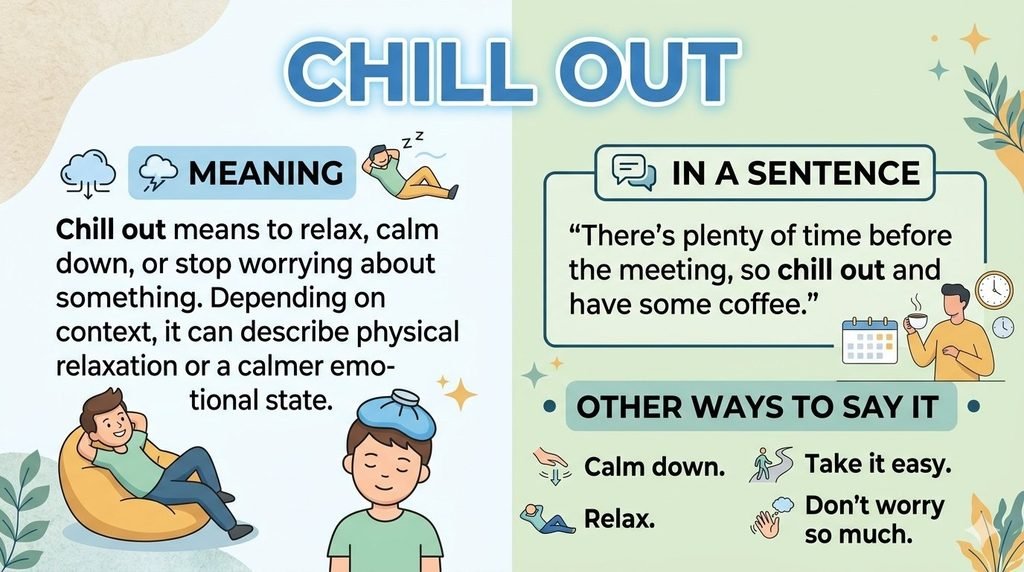
Meaning
Chill out means to relax, calm down, or stop worrying about something. Depending on context, it can describe physical relaxation or a calmer emotional state.
In a Sentence
“There’s plenty of time before the meeting, so chill out and have some coffee.”
Other Ways to Say It
- Calm down.
- Relax.
- Take it easy.
- Don’t worry so much.
Explanation
The word chill creates an image of cooling down after being emotionally or physically heated. As an idiomatic expression, it suggests becoming less tense.
Be careful with tone: telling someone “chill out” can sound friendly among close friends but dismissive or irritated if said during a serious argument.
Best Use
Best for: casual conversations, texting, friendly dialogue, and informal social situations.
Use a gentler expression when speaking to someone who is genuinely upset.
Let Your Hair Down
Meaning
Let your hair down means to stop behaving formally or cautiously and enjoy yourself freely. It often describes relaxing after a period of work, responsibility, or self-control.
In a Sentence
“It’s your vacation, so let your hair down and enjoy the weekend.”
Other Ways to Say It
- Relax and have fun.
- Loosen up.
- Be yourself.
- Forget your worries for a while.
Explanation
The phrase comes from the image of removing a formal hairstyle and allowing the hair to fall naturally. Figuratively, it represents dropping social restraint and becoming more carefree.
It is less about lying down to rest and more about giving yourself permission to enjoy the moment.
Best Use
Best for: personal messages, conversations, storytelling, party-related writing, and informal social posts.
It has a playful, warm tone and can work well when encouraging someone to enjoy themselves.
Put Your Feet Up
Meaning
Put your feet up means to sit or lie comfortably and rest, especially after working or completing a tiring task.
In a Sentence
“Dinner is ready, so put your feet up while I finish setting the table.”
Other Ways to Say It
- Sit down and rest.
- Take a well-earned break.
- Relax for a while.
- Make yourself comfortable.
Explanation
The expression creates a simple picture of someone sitting comfortably with their feet raised. That image makes the meaning immediately understandable: stop working and give your body a chance to rest.
It often carries a caring or comforting tone.
Best Use
Best for: everyday speech, family conversations, friendly advice, and cozy lifestyle writing.
It is especially effective when talking about relaxation after chores, work, or physical activity.
Wind Down
Meaning
Wind down means to gradually become calmer or less active, especially after a busy day.
Unlike expressions that suggest suddenly stopping, this one emphasizes a slow transition from activity to rest.
In a Sentence
“I usually read for twenty minutes before bed to wind down.”
Other Ways to Say It
- Slow down.
- Ease into relaxation.
- Unplug for the evening.
- Settle down.
Explanation
The phrase creates the image of something gradually losing speed. It is useful when relaxation happens little by little rather than instantly.
That makes it particularly suitable for describing evening routines, bedtime habits, or the end of a stressful day.
Best Use
Best for: lifestyle writing, conversations, wellness-related content, routines, and storytelling.
It sounds natural in both casual speech and moderately polished writing.
Unwind
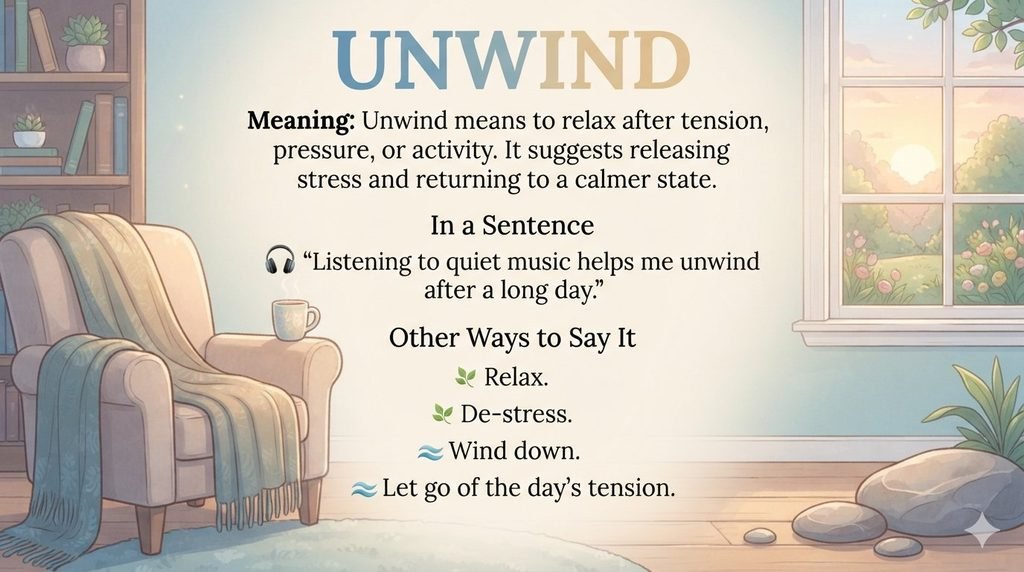
Meaning
Unwind means to relax after tension, pressure, or activity. It suggests releasing stress and returning to a calmer state.
In a Sentence
“Listening to quiet music helps me unwind after a long day.”
Other Ways to Say It
- Relax.
- De-stress.
- Wind down.
- Let go of the day’s tension.
Explanation
The word creates a useful metaphor: something tightly wound is gradually loosened. In the same way, a stressed person can unwind emotionally and mentally.
It is a versatile expression because it can describe simple leisure, emotional recovery, or a peaceful routine.
Best Use
Best for: everyday conversations, blogs, personal writing, lifestyle content, and creative descriptions.
It is more neutral than slang expressions such as “chill out.”
Recharge Your Batteries
Meaning
Recharge your batteries means to rest and restore your physical or mental energy after becoming tired.
The “batteries” represent a person’s energy and motivation.
In a Sentence
“I’ve been running on empty all week, so I’m taking Saturday off to recharge my batteries.”
Other Ways to Say It
- Restore your energy.
- Take time to recover.
- Refresh yourself.
- Get some much-needed rest.
Explanation
This metaphor compares a tired person to a device with a low battery. Rest becomes a form of recharging.
The expression is particularly useful when relaxation is not only about comfort but also about preparing yourself to return with renewed energy.
Best Use
Best for: conversations, workplace communication, motivational writing, social posts, and personal development content.
It can sound encouraging rather than purely restful.
Take a Breather
Meaning
Take a breather means to stop for a short rest or pause, especially during something tiring, stressful, or demanding.
In a Sentence
“Before we tackle the next part of the project, let’s take a breather.”
Other Ways to Say It
- Take a short break.
- Pause for a moment.
- Catch your breath.
- Step away for a while.
Explanation
The expression connects relaxation with breathing and recovery. It usually suggests a brief pause rather than a long period of rest.
That makes it useful when someone needs to reset before continuing an activity.
Best Use
Best for: conversations, workplace discussions, sports situations, study sessions, and storytelling.
It works particularly well when the speaker wants to emphasize a short and necessary pause.
Blow Off Steam
Meaning
Blow off steam means to release pent-up anger, frustration, or stress through an activity or conversation.
It is different from simply relaxing because it focuses on letting emotional pressure out.
In a Sentence
“After a frustrating day at work, he went for a long run to blow off steam.”
Other Ways to Say It
- Release some frustration.
- Let off some stress.
- Clear your head.
- Work out your frustrations.
Explanation
The image comes from steam escaping from a pressurized system. Figuratively, emotions can build up in a similar way until a person needs a safe outlet.
This expression is especially effective when relaxation follows anger, pressure, disappointment, or frustration.
Best Use
Best for: conversations, storytelling, personal writing, and descriptions of emotional recovery.
It is not the best choice when you simply mean enjoying a quiet afternoon.
Loosen Up
Meaning
Loosen up means to become more relaxed, less tense, or less serious. It can refer to physical stiffness, emotional tension, or social nervousness.
In a Sentence
“He was nervous at first, but he loosened up once everyone started joking around.”
Other Ways to Say It
- Relax.
- Become more comfortable.
- Let yourself relax.
- Stop being so tense.
Explanation
The expression suggests that tension is something that can be physically or emotionally tightened and then released.
It is especially useful when someone feels awkward, nervous, overly serious, or socially uncomfortable.
Best Use
Best for: casual conversations, social situations, dialogue, and storytelling.
Because it can sound like advice or criticism, use it thoughtfully when speaking to someone who is already uncomfortable.
Sit Back and Relax
Meaning
Sit back and relax means to stop taking action for a while and enjoy what is happening without worrying about controlling everything.
In a Sentence
“Everything is organized for the trip, so sit back and relax.”
Other Ways to Say It
- Take a break and enjoy yourself.
- Let things happen for a while.
- Make yourself comfortable.
- Enjoy the moment.
Explanation
This expression combines a physical image with a mental attitude. Sitting back suggests stepping away from effort, while relaxing suggests letting go of tension.
It can sound reassuring, especially when someone has already done what needs to be done.
Best Use
Best for: conversations, travel writing, advertisements, invitations, and friendly messages.
It can also work humorously when someone is being told to stop trying to manage every detail.

Go With the Flow
Meaning
Go with the flow means to accept events as they happen instead of trying to control every detail.
It is connected to relaxation because it encourages flexibility and reduced worry.
In a Sentence
“We don’t have a strict schedule for the afternoon; let’s just go with the flow.”
Other Ways to Say It
- Take things as they come.
- Don’t overplan everything.
- Stay flexible.
- Let things unfold naturally.
Explanation
The expression compares life to water moving along a current. Fighting the current takes effort, while going with it suggests acceptance and adaptability.
It does not mean being careless. Rather, it can describe choosing not to become stressed when plans change.
Best Use
Best for: travel conversations, personal advice, lifestyle writing, storytelling, and informal messages.
It works particularly well when relaxation comes from letting go of excessive control.
Don’t Sweat It
Meaning
Don’t sweat it means not to worry about something because it is probably not a serious problem.
The phrase is informal and reassuring.
In a Sentence
“You made a small mistake on the form, but don’t sweat it—we can fix it.”
Other Ways to Say It
- Don’t worry about it.
- It’s not a big deal.
- Don’t stress over it.
- Let it go.
Explanation
The expression uses “sweat” as a metaphor for nervousness or worry. It tells someone that the situation does not deserve so much emotional energy.
Because it is casual, it can make reassurance sound friendly and uncomplicated.
Best Use
Best for: casual conversations, texts, friendly advice, and informal workplace communication.
Avoid it when someone is dealing with a serious problem that requires empathy rather than casual reassurance.
Keep Your Shirt On
Meaning
Keep your shirt on means to remain calm and patient instead of becoming angry, impatient, or excited.
It is not directly about physical relaxation; it is about controlling impatience.
In a Sentence
“Keep your shirt on—we’re almost ready to leave.”
Other Ways to Say It
- Be patient.
- Stay calm.
- Don’t get worked up.
- Give it a moment.
Explanation
The phrase is humorous and informal. Its unusual image makes the advice memorable: there is no need to become so impatient that you “lose your shirt.”
Because of its playful quality, it can soften a request for patience—or, depending on tone, sound slightly teasing.
Best Use
Best for: informal conversations, humorous dialogue, storytelling, and playful messages.
It is not suitable for formal professional communication.
Cool Your Jets
Meaning
Cool your jets means to calm down, slow down, or stop becoming overly excited or impatient.
In a Sentence
“Cool your jets; we haven’t even heard the full story yet.”
Other Ways to Say It
- Calm down.
- Slow down.
- Take a moment.
- Don’t rush into it.
Explanation
The phrase creates a playful mechanical image in which overheated “jets” need cooling. Figuratively, it asks someone to reduce emotional intensity.
It often has a humorous or teasing tone rather than a gentle one.
Best Use
Best for: informal conversations, humorous writing, dialogue, and situations involving impatience or excitement.
Because it can sound commanding, it is better among people who are comfortable with informal language.
Breathe Easy
Meaning
Breathe easy means to feel relieved because a difficult, worrying, or uncertain situation has improved.
In a Sentence
“Once the doctor confirmed that everything was fine, the family could finally breathe easy.”
Other Ways to Say It
- Feel relieved.
- Stop worrying.
- Relax at last.
- Have peace of mind.
Explanation
Breathing becomes a symbol of emotional freedom. When worry disappears, a person can finally breathe easily again.
Unlike “kick back,” this expression focuses less on leisure and more on relief after anxiety or uncertainty.
Best Use
Best for: storytelling, personal writing, news-style descriptions, conversations, and emotional situations.
It can carry a serious or deeply reassuring tone.
Put Your Mind at Ease
Meaning
Put your mind at ease means to make someone feel less worried, anxious, or uncertain.
In a Sentence
“Her message put my mind at ease because I knew she had arrived safely.”
Other Ways to Say It
- Reassure yourself.
- Feel less worried.
- Find peace of mind.
- Set your concerns aside.
Explanation
The phrase treats the mind as something that can be disturbed and then returned to a calmer state. It focuses on mental relaxation rather than physical rest.
It is especially useful when information, reassurance, or a solution removes a source of worry.
Best Use
Best for: personal messages, serious conversations, storytelling, essays, and emotionally supportive writing.
It sounds warmer and more thoughtful than simply saying “don’t worry.”
Stop and Smell the Roses
Meaning
Stop and smell the roses means to slow down and appreciate the enjoyable or beautiful parts of life instead of constantly rushing toward the next task.
In a Sentence
“Don’t spend the whole vacation answering emails—stop and smell the roses.”
Other Ways to Say It
- Slow down and enjoy the moment.
- Appreciate the little things.
- Take time to enjoy life.
- Don’t rush through everything.
Explanation
The literal image of stopping to notice the scent of roses represents pausing to appreciate simple pleasures.
This expression has a reflective, positive quality. It is less about doing nothing and more about paying attention to what makes a moment worthwhile.
Best Use
Best for: creative writing, inspirational messages, personal essays, social media captions, and reflective conversations.
It has a slightly poetic quality, making it particularly effective when talking about enjoying life.
Hang Loose
Meaning
Hang loose means to stay relaxed, calm, and carefree. It is strongly associated with an informal, laid-back attitude.
In a Sentence
“We have plenty of time before the concert, so just hang loose and enjoy the afternoon.”
Other Ways to Say It
- Stay relaxed.
- Take it easy.
- Keep calm.
- Stay laid-back.
Explanation
The expression conveys a sense of freedom from pressure and urgency. Its tone is casual and carefree rather than serious.
It is more conversational than formal, so it can add personality to dialogue when a relaxed atmosphere is important.
Best Use
Best for: casual speech, friendly messages, informal dialogue, travel writing, and playful social content.
Because it is quite informal, choose a more neutral expression in academic or professional writing.
Exercise: Practice Using Idioms
Test your understanding of the expressions above. Choose the best answer for each question.
Which idiom means to relax after a busy or stressful period?
A. Keep your shirt on
B. Unwind
C. Cool your jets
D. Blow off steam
Someone is worried about a small mistake. Which expression would reassure them that it is not a serious problem?
A. Don’t sweat it
B. Let your hair down
C. Put your feet up
D. Hang loose
Which idiom describes releasing frustration through an activity?
A. Go with the flow
B. Breathe easy
C. Blow off steam
D. Take it easy
“We don’t need to plan every minute of the trip. Let’s ______.”
A. keep our shirt on
B. put our feet up
C. recharge our batteries
D. go with the flow
Which expression suggests gradually becoming calmer at the end of a busy day?
A. Wind down
B. Cool your jets
C. Hang loose
D. Let your hair down
Which idiom is especially connected with taking a short break?
A. Breathe easy
B. Take a breather
C. Stop and smell the roses
D. Put your mind at ease
What does “let your hair down” usually suggest?
A. Becoming physically tired
B. Going to sleep
C. Becoming more carefree and less formal
D. Solving a difficult problem
Which expression focuses on relief after a worrying situation has improved?
A. Kick back
B. Breathe easy
C. Loosen up
D. Take it easy
A nervous person becomes comfortable after meeting new people. Which expression fits best?
A. Loosen up
B. Don’t sweat it
C. Put your feet up
D. Recharge your batteries
Which idiom encourages someone to appreciate the present instead of rushing through life?
A. Keep your shirt on
B. Stop and smell the roses
C. Cool your jets
D. Take a breather
“Put your feet up” most directly suggests:
A. Starting a new activity
B. Becoming more impatient
C. Sitting comfortably and resting
D. Releasing anger
Which expression can mean reducing impatience or excessive excitement?
A. Cool your jets
B. Recharge your batteries
C. Put your mind at ease
D. Sit back and relax
“Don’t sweat it” is closest in meaning to:
A. Take a long vacation
B. Don’t worry about it
C. Become more energetic
D. Enjoy a formal event
Which phrase is most likely to sound playful and informal when telling someone to remain patient?
A. Put your mind at ease
B. Breathe easy
C. Keep your shirt on
D. Unwind
What is the main idea behind “recharge your batteries”?
A. Restore your energy through rest
B. Change your daily schedule
C. Hide your emotions
D. Avoid talking to people
Answers
- B — “Unwind” means to relax and release tension after activity or stress.
- A — “Don’t sweat it” tells someone not to worry about something that is not a major problem.
- C — “Blow off steam” means to release built-up anger, frustration, or stress.
- D — “Go with the flow” means accepting events as they happen instead of trying to control everything.
- A — “Wind down” describes gradually becoming calmer or less active.
- B — “Take a breather” means to stop for a short rest or pause.
- C — “Let your hair down” means becoming more carefree and less restrained or formal.
- B — “Breathe easy” describes the relief felt when a worrying situation has improved.
- A — “Loosen up” can describe becoming less nervous, tense, or socially uncomfortable.
- B — “Stop and smell the roses” encourages people to slow down and appreciate life’s simple pleasures.
- C — “Put your feet up” means to sit comfortably and rest.
- A — “Cool your jets” means to calm down or reduce impatience and excitement.
- B — “Don’t sweat it” is an informal way to say “don’t worry about it.”
- C — “Keep your shirt on” is a playful expression telling someone to remain patient.
- A — “Recharge your batteries” compares rest with restoring the energy of a depleted battery.
FAQs
What is an idiom for relax?
There are several natural idioms and expressions for relaxation. “Take it easy,” “kick back,” “chill out,” “unwind,” and “put your feet up” are common choices. The best expression depends on whether you mean physical rest, emotional calm, or simply enjoying free time.
How do I create my own idiom for relaxation?
Start with a clear image that represents the feeling you want to express. Think about things becoming slower, lighter, quieter, or freer. For example, you could compare mental stress with a tightly wound object and imagine it gradually becoming loose. Effective figurative language works because the image is easy to understand and emotionally meaningful.
What makes an idiom effective?
An effective idiom creates a memorable comparison without making the reader work too hard to understand it. It should have a recognizable image, a clear figurative meaning, and a natural connection to the situation. Context matters because an expression that sounds warm in a personal message may sound too casual in a formal essay.
Can I use these idioms in everyday conversation?
Yes. Many of these expressions are naturally used in everyday English, particularly “take it easy,” “kick back,” “unwind,” “chill out,” and “take a breather.” Some, such as “hang loose” and “keep your shirt on,” are more informal or playful. Always consider your audience and the situation.
What is the difference between an idiom and a simile?
An idiom is an established expression whose overall meaning is usually different from its literal words, such as “blow off steam.” A simile directly compares two things using words such as “like” or “as.” For example, “His mind was like a quiet lake” is a simile. Both can create imagery, but they work differently.
Conclusion
Relaxation can mean many things: taking a physical break, releasing frustration, becoming comfortable, finding relief, or simply slowing down enough to enjoy the moment. The 20 idioms and expressions in this guide give you different ways to communicate those shades of meaning. “Kick back” feels casual, “put your mind at ease” focuses on emotional reassurance, while “stop and smell the roses” adds a more reflective touch.
The strongest figurative language is not necessarily the fanciest. It is the expression that matches the feeling, audience, and situation. Use casual idioms when chatting with friends, more reflective expressions in personal writing, and choose carefully when the context is formal. When your words create the right mental picture, even a simple idea like relaxing can become more expressive and memorable

Eleanor Prose is a writer and English teacher with a soft spot for the phrases that trip us up. She has spent years helping students and professionals use idioms with confidence not just memorizing them, but understanding the culture and humor behind each one.
Through Idiom Looms, Eleanor explores the threads that connect language, history, and everyday conversation. Her goal is simple: to make English idioms clear, memorable, and actually fun to use.
She writes from a quiet desk surrounded by notebooks, and firmly believes there’s an idiom for every situation usually more than one.


[…] Read more:20 Idioms for Relax With Real Examples […]