

How do you express genuine gratitude without repeating the same simple words? 20 Idioms for Appreciation With Real Examples introduces natural expressions that make gratitude, recognition, and thankfulness more vivid. These phrases help you communicate sincere feelings in conversations, messages, speeches, and everyday English.
This guide explores useful idioms for appreciation with clear meanings and realistic examples. You will learn how each expression fits different situations, from friendly conversations to business communication, formal writing, meetings, and professional messages. The examples also show practical English usage, grammar, and natural sentence patterns.
Whether you are writing a thank-you message or improving workplace communication, these idioms add warmth and personality. They can support clearer communication, thoughtful writing, and confident expression. Even in scheduling, time management, online booking, broadcasting, calendar updates, or project management, the right appreciation phrase can make your message more human and memorable.
What Is an Idiom?
An idiom is a phrase whose meaning is different from the literal meaning of the individual words.
For example, if someone says, “It’s raining cats and dogs,” they do not mean that animals are falling from the sky. They mean that it is raining very heavily.
Another example is “break the ice.” Literally, it sounds like someone is breaking frozen water, but figuratively it means to make people feel more comfortable in a new or awkward situation.
Idioms rely on shared understanding and imagery. That is what makes them useful for appreciation: they can turn a simple feeling such as admiration or gratitude into a phrase with personality and emotional color.
Why Use Idioms for Appreciation?
Appreciation can sometimes be difficult to express without sounding repetitive. Saying “I appreciate you” or “You did a great job” is meaningful, but figurative language gives you more choices.
Idioms can help you:
- Express admiration without sounding overly formal.
- Make praise more vivid and memorable.
- Show gratitude in a warm, personal way.
- Describe someone’s effort, character, or achievement.
- Add personality to speeches, messages, essays, and stories.
- Communicate complicated feelings through a familiar image.
- Make creative writing more expressive and emotionally engaging.
- Choose language that fits the situation, whether it is casual, professional, heartfelt, or poetic.
The key is to choose an expression that matches the kind of appreciation you want to communicate. Some idioms celebrate achievement, while others recognize kindness, effort, value, or character.
Quick List of 20 Idioms
- Give credit where credit is due
- Hats off to
- Take your hat off to someone
- Sing someone’s praises
- Give someone their flowers
- A pat on the back
- Go the extra mile
- Go above and beyond
- Pull out all the stops
- Raise a glass to
- Tip your hat to someone
- A feather in someone’s cap
- Worth one’s weight in gold
- Have a heart of gold
- The salt of the earth
- A cut above the rest
- In a league of one’s own
- Put someone on a pedestal
- Roll out the red carpet
- Shine a light on someone’s work
Give Credit Where Credit Is Due
Read more:20 Idioms for Affordable With Real Examples
Meaning
Give credit where credit is due means recognizing or praising someone for something they genuinely accomplished or contributed.
It is especially useful when appreciation should be fair and deserved, rather than exaggerated.
In a Sentence
After reviewing the project, the manager gave credit where credit was due and praised Maya for solving the most difficult problem.
Other Ways to Say It
- Acknowledge someone’s contribution.
- Give someone the recognition they deserve.
- Recognize good work.
- Give praise where it belongs.
Explanation
This expression works because it connects appreciation with fairness and honesty. The word “credit” suggests that recognition belongs to the person who earned it.
It is particularly effective when several people contributed to something and you want to make sure an individual’s effort is not overlooked.
Best Use
This idiom works especially well in professional conversations, essays, speeches, workplace writing, and thoughtful discussions. It sounds respectful without being overly emotional.
Hats Off To
Meaning
Hats off to someone means showing admiration, respect, or appreciation for what they have done.
The phrase comes from the old custom of removing one’s hat as a gesture of respect.
In a Sentence
Hats off to everyone who stayed late to make the community event a success.
Other Ways to Say It
- Well done.
- Much respect.
- Congratulations on a great job.
- I admire what you accomplished.
Explanation
The phrase creates a simple visual image: taking off your hat to honor someone. Because of that image, the expression feels warmer and more expressive than a plain “good job.”
It can communicate appreciation while still sounding natural and conversational.
Best Use
Use it in speeches, conversations, social media posts, informal professional messages, and congratulatory notes. It is friendly rather than highly formal.
Take Your Hat Off to Someone
Meaning
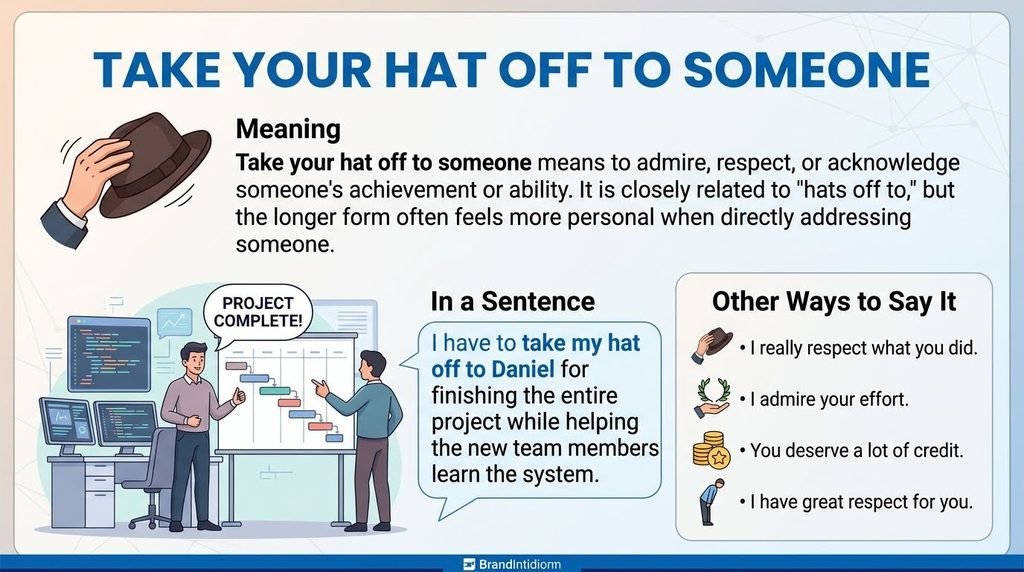
Take your hat off to someone means to admire, respect, or acknowledge someone’s achievement or ability.
It is closely related to “hats off to,” but the longer form often feels more personal when directly addressing someone.
In a Sentence
I have to take my hat off to Daniel for finishing the entire project while helping the new team members learn the system.
Other Ways to Say It
- I really respect what you did.
- I admire your effort.
- You deserve a lot of credit.
- I have great respect for you.
Explanation
The expression uses the image of removing a hat as a sign of respect. It works particularly well when appreciation involves admiration for effort, courage, skill, or persistence.
Unlike a simple compliment, it can suggest that the speaker genuinely respects the person being praised.
Best Use
This idiom fits everyday conversation, personal messages, storytelling, and informal speeches. It can also work in friendly workplace communication.
Sing Someone’s Praises
Meaning
Sing someone’s praises means to speak enthusiastically and positively about someone’s qualities, actions, or achievements.
It does not literally involve singing. The phrase compares enthusiastic praise with a song of admiration.
In a Sentence
Her former students still sing her praises because she encouraged them when they lacked confidence.
Other Ways to Say It
- Praise someone highly.
- Speak very highly of someone.
- Compliment someone enthusiastically.
- Celebrate someone’s achievements.
Explanation
The musical image makes this expression especially lively. It suggests that the praise is not brief or reluctant but enthusiastic and repeated.
It is useful when someone’s positive qualities have made a strong impression on others.
Best Use
Use it in storytelling, articles, personal writing, conversations, and speeches. It can sound slightly expressive or literary, so it may be less suitable for highly formal business documents.
Give Someone Their Flowers
Meaning
Give someone their flowers means to show appreciation, praise, or recognition while the person is present and able to receive it.
The expression uses flowers as a symbol of honor, affection, and recognition.
In a Sentence
Before we move on to the next project, I want to give our volunteers their flowers for everything they contributed this year.
Other Ways to Say It
- Give someone the recognition they deserve.
- Show your appreciation.
- Celebrate someone’s contribution.
- Acknowledge someone while you can.
Explanation
This expression carries a heartfelt message: do not wait to appreciate people. The image of giving flowers makes recognition feel tangible and personal.
It can be especially powerful when talking about people whose work or kindness is often taken for granted.
Best Use
It works well in speeches, social media, personal messages, tributes, and emotional writing. The phrase has a warm, contemporary feel and may sound more expressive than ordinary workplace language.
A Pat on the Back
Meaning
A pat on the back means praise, encouragement, or recognition for doing something well.
The phrase comes from the physical gesture of lightly patting someone on the back to show approval.
In a Sentence
After completing such a demanding assignment, the whole team deserved a pat on the back.
Other Ways to Say It
- A word of praise.
- A little recognition.
- Well-deserved encouragement.
- Acknowledgment of good work.
Explanation
The expression creates an approachable image of friendly encouragement. It usually suggests appreciation that is positive but not overly dramatic.
It can also imply that someone deserves encouragement after making a genuine effort, even if the result was not perfect.
Best Use
This is a natural choice for conversations, workplace discussions, school settings, casual writing, and encouraging messages.

Go the Extra Mile
Meaning
Go the extra mile means making more effort than is normally expected.
When used for appreciation, it recognizes someone who does more than the basic requirement.
In a Sentence
Our neighbor went the extra mile by organizing meals for the family while they were recovering from the move.
Other Ways to Say It
- Make an extra effort.
- Do more than expected.
- Put in additional effort.
- Make a special effort.
Explanation
The phrase creates the image of someone continuing farther than necessary. That makes it particularly effective for appreciating effort, generosity, and dedication.
It does not necessarily mean the person achieved the biggest result; the focus is on the willingness to do more.
Best Use
Use it in professional praise, personal messages, recommendations, speeches, and everyday conversation.
Go Above and Beyond
Meaning
Go above and beyond means doing considerably more than what is expected or required.
It is often used to recognize exceptional effort, service, or commitment.
In a Sentence
The customer-service representative went above and beyond to make sure the elderly customer understood every step.
Other Ways to Say It
- Exceed expectations.
- Do more than required.
- Give exceptional effort.
- Do far more than expected.
Explanation
The expression suggests moving past the normal standard. It communicates stronger appreciation than simply saying someone completed a task well.
It is particularly useful when the person made an unusual effort to help another person or improve an outcome.
Best Use
This expression is suitable for workplace praise, recommendations, thank-you notes, performance feedback, speeches, and everyday conversation.
Pull Out All the Stops
Meaning
Pull out all the stops means using every available effort, resource, or method to achieve something.
When connected with appreciation, it can praise someone who gave everything they had to make an event, project, or occasion successful.
In a Sentence
The organizers pulled out all the stops to create a memorable celebration for the retiring teacher.
Other Ways to Say It
- Give it everything.
- Make every effort.
- Use every available resource.
- Leave nothing to chance.
Explanation
The expression has an energetic, almost theatrical feeling. It suggests that someone did not hold back but used every possible means to accomplish the goal.
That makes it stronger and more dramatic than simply saying “they worked hard.”
Best Use
It works best in storytelling, event descriptions, speeches, feature writing, and enthusiastic conversation. It can sound dramatic in very formal writing.
Raise a Glass To
Meaning
Raise a glass to someone or something means celebrating, honoring, or expressing good wishes for them.
The “glass” usually refers to a drink raised as a symbolic gesture of appreciation or celebration.
In a Sentence
Let’s raise a glass to the volunteers whose generosity made the fundraiser possible.
Other Ways to Say It
- Celebrate someone.
- Honor someone.
- Offer a toast to someone.
- Celebrate an achievement.
Explanation
The expression creates the image of people lifting their glasses together in celebration. It is therefore especially effective when appreciation is shared by a group.
Although traditionally associated with toasts, the phrase can also be used figuratively in writing.
Best Use
Use it in speeches, celebrations, storytelling, invitations, social posts, and personal writing. It can feel festive and ceremonial.
Tip Your Hat to Someone
Meaning
Tip your hat to someone means to acknowledge, respect, or admire someone’s achievement or contribution.
Like several hat-related expressions, it comes from an old gesture of courtesy.
In a Sentence
We should tip our hats to the volunteers who kept the local library open during the renovation.
Other Ways to Say It
- Give someone credit.
- Show your respect.
- Acknowledge someone’s contribution.
- Recognize someone’s achievement.
Explanation
The phrase combines courtesy with recognition. Its physical image makes appreciation feel graceful rather than exaggerated.
It can also be used when you admire someone even if you are not personally close to them.
Best Use
It suits articles, speeches, conversations, storytelling, and informal professional writing. It has a slightly traditional or playful flavor.
A Feather in Someone’s Cap
Meaning
A feather in someone’s cap refers to an achievement that brings someone pride, recognition, or distinction.
The image comes from the idea of adding a feather to a hat as a sign of accomplishment or status.
In a Sentence
Winning the regional design award was another feather in Priya’s cap after years of creative work.
Other Ways to Say It
- A proud achievement.
- A notable accomplishment.
- Something to be proud of.
- A mark of distinction.
Explanation
This expression focuses less on thanking someone and more on recognizing an achievement that enhances their reputation.
It is useful when you want to highlight a particular success as part of a person’s broader record of accomplishments.
Best Use
Use it in articles, biographies, workplace discussions, storytelling, and speeches. It can sound slightly old-fashioned but remains understandable and expressive.
Worth One’s Weight in Gold
Meaning
Worth one’s weight in gold means that someone is extremely valuable, useful, reliable, or helpful.
It is a strong way to express appreciation for a person’s practical or personal value.
In a Sentence
Our experienced technician is worth his weight in gold whenever the equipment fails at the last minute.
Other Ways to Say It
- Extremely valuable.
- Incredibly useful.
- A tremendous asset.
- Very difficult to replace.
Explanation
The expression uses gold as a measure of exceptional value. It tells the listener that the person’s contribution is far more valuable than ordinary praise suggests.
It is often about usefulness and reliability rather than affection alone.
Best Use
It works naturally in conversations, workplace writing, recommendations, storytelling, and personal messages. It is usually informal and enthusiastic.
Have a Heart of Gold
Meaning
Have a heart of gold means to be extremely kind, generous, caring, or compassionate.
The “gold” represents the high value of someone’s character.
In a Sentence
Everyone in the neighborhood knows that Mr. Ahmed has a heart of gold; he is always ready to help someone in need.
Other Ways to Say It
- Be deeply kind.
- Have a generous nature.
- Be warm-hearted.
- Be exceptionally caring.
Explanation
This expression shifts appreciation away from achievement and toward character. The heart represents a person’s emotional nature, while gold suggests something precious and valuable.
It is particularly meaningful when thanking someone for kindness rather than for professional success.
Best Use
Use it in personal messages, stories, tributes, conversations, and heartfelt writing. It is warm and affectionate rather than formal.
The Salt of the Earth
Meaning
The salt of the earth describes someone who is genuinely good, honest, dependable, and down-to-earth.
It is a form of appreciation for strong character and simple goodness.
In a Sentence
The farm owner is the salt of the earth, always treating workers and visitors with the same kindness and respect.
Other Ways to Say It
- A genuinely good person.
- Honest and dependable.
- Down-to-earth and kind.
- A person of excellent character.
Explanation
The expression does not praise one particular achievement. Instead, it communicates admiration for someone’s overall character and integrity.
It works especially well when appreciation is based on how a person consistently treats others.
Best Use
It is best suited to personal writing, storytelling, profiles, tributes, and conversations. It can sound somewhat traditional, so it may feel less natural in highly modern corporate language.
A Cut Above the Rest
Meaning
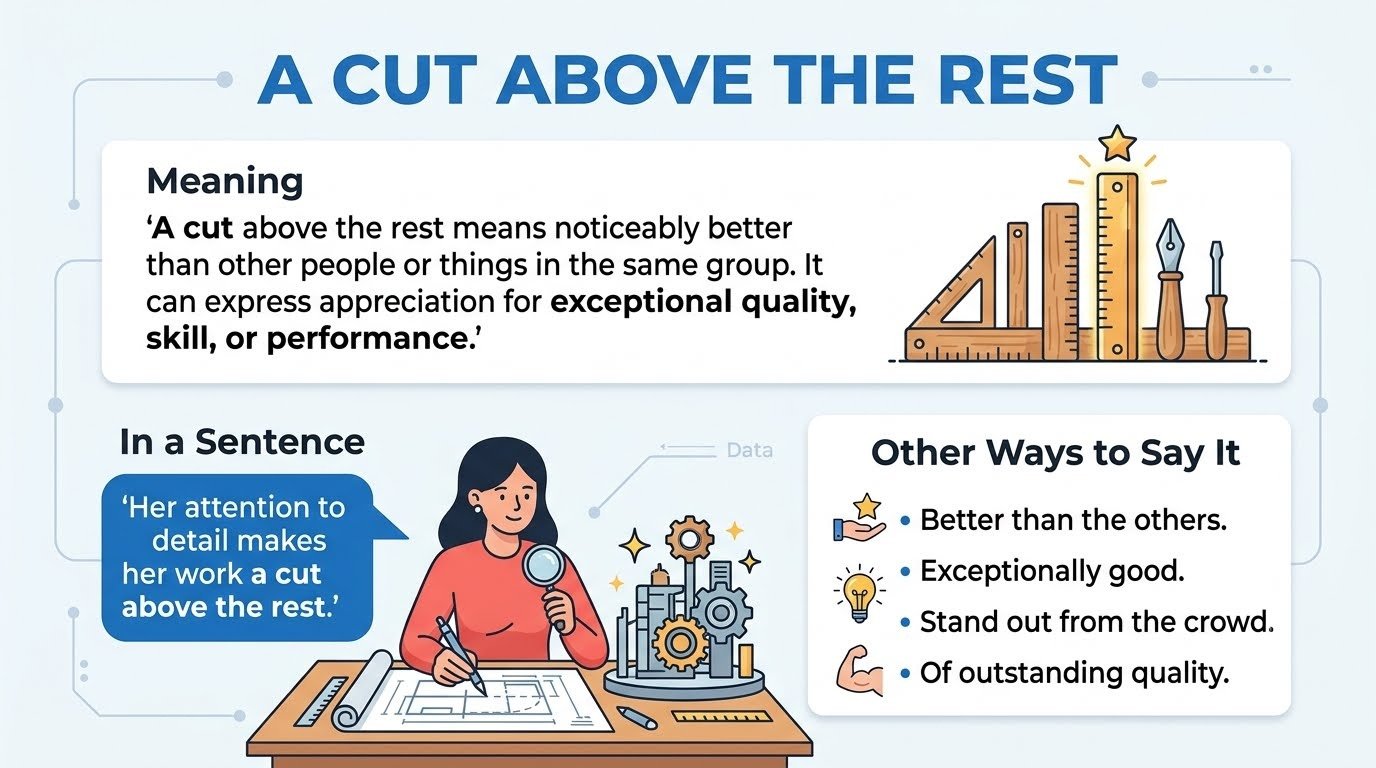
A cut above the rest means noticeably better than other people or things in the same group.
It can express appreciation for exceptional quality, skill, or performance.
In a Sentence
Her attention to detail makes her work a cut above the rest.
Other Ways to Say It
- Better than the others.
- Exceptionally good.
- Stand out from the crowd.
- Of outstanding quality.
Explanation
The phrase creates the image of something being made to a higher standard or quality than the surrounding items.
It is useful when your appreciation involves comparison and you want to emphasize that someone’s work stands out.
Best Use
This expression works well in reviews, professional feedback, creative writing, recommendations, and conversations. It is complimentary without being overly emotional.
In a League of One’s Own
Meaning
In a league of one’s own means being so impressive or distinctive that comparison with others becomes difficult.
It communicates strong admiration for exceptional ability or quality.
In a Sentence
When it comes to explaining complicated ideas in simple language, Professor Khan is in a league of his own.
Other Ways to Say It
- Truly exceptional.
- In a class of one’s own.
- Exceptionally talented.
- Hard to compare with anyone else.
Explanation
The expression uses the image of a separate league where someone competes at a different level. It gives appreciation a sense of distinctiveness and excellence.
Because it is strong praise, it is best reserved for situations where the person’s ability genuinely stands out.
Best Use
It fits speeches, reviews, profiles, storytelling, recommendations, and enthusiastic conversation.
Put Someone on a Pedestal
Meaning
Put someone on a pedestal means to admire or idealize someone so highly that you may overlook their imperfections.
Unlike many expressions in this list, this one carries an important warning or nuance.
In a Sentence
It is wonderful to appreciate a mentor, but we should not put them on a pedestal and assume they can never make mistakes.
Other Ways to Say It
- Idealize someone.
- Admire someone excessively.
- Hold someone in exceptionally high regard.
- Treat someone as perfect.
Explanation
A pedestal is a raised platform used to display something important. The image suggests placing a person above everyone else.
This can communicate admiration, but it can also imply that the praise has become unrealistic. That makes the idiom useful when discussing both appreciation and its limits.
Best Use
Use it in essays, discussions, personal reflection, storytelling, and serious conversations. It is usually less suitable when you simply want to offer uncomplicated praise.
Roll Out the Red Carpet
Meaning
Roll out the red carpet means giving someone a particularly warm, special, or elaborate welcome.
Although it is mainly about hospitality, it can express appreciation by showing that someone is considered important or deserving of special treatment.
In a Sentence
The community rolled out the red carpet for the retiring coach, whose years of service had touched generations of players.
Other Ways to Say It
- Give someone a special welcome.
- Treat someone as an honored guest.
- Give someone VIP treatment.
- Welcome someone warmly.
Explanation
The red-carpet image immediately suggests ceremony, importance, and honor. It makes appreciation visible through action rather than words alone.
The phrase is strongest when recognition involves a special event, welcome, or celebration.
Best Use
It works well in event writing, storytelling, speeches, journalism-style descriptions, invitations, and playful conversation.
Shine a Light on Someone’s Work
Meaning
Shine a light on someone’s work means bringing attention to, highlighting, or helping others notice someone’s contribution.
The metaphor treats attention as light that makes something visible.
In a Sentence
The award helped shine a light on the quiet work the volunteers had been doing for years.
Other Ways to Say It
- Highlight someone’s contribution.
- Draw attention to good work.
- Recognize someone’s efforts publicly.
- Bring someone’s work into focus.
Explanation
This expression is especially useful when appreciation means making overlooked work visible. The image of light suggests clarity, attention, and discovery.
It can be gentler than direct praise because the focus is on helping others recognize the contribution.
Best Use
Use it in articles, speeches, essays, workplace communication, community stories, and social media posts. It works particularly well when discussing people whose efforts have received little attention.
Exercise: Practice Using Idioms
Choose the best answer for each question.
1. What does “give credit where credit is due” mean?
A. Give someone a physical gift
B. Recognize someone for their contribution
C. Ask someone to finish a task
D. Compare two different achievements
2. Which expression is most directly associated with showing admiration or respect?
A. Pull out all the stops
B. Go the extra mile
C. Roll out the red carpet
D. Hats off to
3. If someone “goes the extra mile,” what are they doing?
A. Making more effort than expected
B. Avoiding responsibility
C. Changing their destination
D. Taking a longer break
4. Which expression focuses on praising someone’s character and kindness?
A. A feather in someone’s cap
B. A cut above the rest
C. Have a heart of gold
D. Raise a glass to
5. What does “sing someone’s praises” mean?
A. Write a song for someone
B. Speak very positively about someone
C. Ask someone to perform
D. Repeat someone’s exact words
6. Which expression can mean that someone is extremely valuable or useful?
A. Worth one’s weight in gold
B. A pat on the back
C. Tip your hat to someone
D. Give someone their flowers
7. What does “give someone their flowers” encourage people to do?
A. Decorate someone’s home
B. Offer someone a literal bouquet
C. Appreciate and recognize someone while they can receive it
D. Organize a gardening event
8. Which expression suggests that someone is exceptionally good compared with others?
A. Go above and beyond
B. A cut above the rest
C. Raise a glass to
D. Give credit where credit is due
9. If a person is “the salt of the earth,” they are usually described as:
A. Wealthy and successful
B. Highly competitive
C. Mysterious and private
D. Honest, kind, and dependable
10. What does “pull out all the stops” suggest?
A. Stop working immediately
B. Use every available effort or resource
C. Avoid unnecessary attention
D. Reduce the size of a project
11. Which expression can praise an achievement that adds to someone’s record of success?
A. A feather in someone’s cap
B. Have a heart of gold
C. Put someone on a pedestal
D. Shine a light on someone’s work
12. Which idiom has a potentially negative or cautionary meaning?
A. Hats off to
B. A pat on the back
C. Put someone on a pedestal
D. Go the extra mile
13. In “Let’s raise a glass to the volunteers,” what does the phrase mean?
A. Clean the glasses
B. Celebrate or honor the volunteers
C. Ask the volunteers to serve drinks
D. Give the volunteers new glasses
14. Which expression means that someone’s work or contribution is being brought to public attention?
A. Take your hat off to someone
B. In a league of one’s own
C. Shine a light on someone’s work
D. A feather in someone’s cap
15. Which sentence uses an appreciation idiom appropriately?
A. “She has a heart of gold, so she is probably carrying jewelry.”
B. “Hats off to the volunteers for giving their time every weekend.”
C. “He went the extra mile because the road was exactly one mile longer.”
D. “They sang his praises because they wanted him to sing on stage.”
Answers
- B — “Give credit where credit is due” means recognizing someone for the contribution or achievement they genuinely deserve recognition for.
- D — “Hats off to” is a direct expression of admiration, respect, or appreciation.
- A — “Go the extra mile” means making more effort than is normally expected.
- C — “Have a heart of gold” praises someone for being exceptionally kind, generous, or caring.
- B — “Sing someone’s praises” means speaking enthusiastically and positively about them.
- A — “Worth one’s weight in gold” describes someone or something as extremely valuable or useful.
- C — “Give someone their flowers” means recognizing and appreciating them while they are present to receive that recognition.
- B — “A cut above the rest” means noticeably better or more impressive than others in the same group.
- D — “The salt of the earth” describes someone who is genuinely good, honest, dependable, and down-to-earth.
- B — “Pull out all the stops” means using every available effort, resource, or method to accomplish something.
- A — “A feather in someone’s cap” refers to an achievement that brings pride, recognition, or distinction.
- C — “Put someone on a pedestal” can suggest excessive or unrealistic admiration and therefore has a cautionary nuance.
- B — “Raise a glass to” means to celebrate, honor, or offer good wishes to someone or something.
- C — “Shine a light on someone’s work” means bringing attention to or highlighting their contribution.
- B — The sentence uses “hats off to” naturally to express appreciation for the volunteers’ efforts.
FAQs
What is an idiom for appreciation?
An idiom for appreciation is a figurative expression used to communicate gratitude, admiration, respect, recognition, or praise in a more vivid way. Examples include “hats off to,” “give credit where credit is due,” and “go the extra mile.”
How do I create my own idiom for appreciation?
Start with the feeling you want to express, such as gratitude, respect, admiration, or recognition. Then connect that feeling to a clear and memorable image. The comparison should be easy to understand and should add something beyond a simple synonym.
What makes an idiom effective?
An effective idiom creates a recognizable mental picture while communicating an idea naturally. Good figurative language should make the meaning clearer, more memorable, or more emotionally engaging, rather than simply making the sentence sound complicated.
Can I use these idioms in everyday conversation?
Yes. Many expressions, such as “hats off to,” “go the extra mile,” “a pat on the back,” and “take your hat off to someone,” work naturally in everyday speech. Others, such as “give someone their flowers,” may feel more emotional or contemporary, while “the salt of the earth” can sound more traditional.
What is the difference between an idiom and a simile?
An idiom is a familiar expression whose overall meaning cannot always be understood literally from its individual words. A simile directly compares two things using words such as “like” or “as.” For example, “She has a heart of gold” is an idiomatic expression, while “Her kindness is like a warm blanket” is a simile.
Conclusion
The right expression can turn simple praise into something much more vivid and memorable. These 20 idioms for appreciation show different ways to recognize people: you can admire someone’s achievement, celebrate exceptional effort, value their character, or bring attention to work that might otherwise go unnoticed. Expressions such as “hats off to,” “give someone their flowers,” and “go the extra mile” can add warmth to everyday communication, while others offer a more poetic or traditional touch.
The most effective figurative language is not necessarily the most dramatic. Choose an expression that fits the person, situation, and feeling you want to communicate. When appreciation is sincere and the imagery feels natural, even a short phrase can make someone feel genuinely seen, valued, and respected.

Eleanor Prose is a writer and English teacher with a soft spot for the phrases that trip us up. She has spent years helping students and professionals use idioms with confidence not just memorizing them, but understanding the culture and humor behind each one.
Through Idiom Looms, Eleanor explores the threads that connect language, history, and everyday conversation. Her goal is simple: to make English idioms clear, memorable, and actually fun to use.
She writes from a quiet desk surrounded by notebooks, and firmly believes there’s an idiom for every situation usually more than one.


[…] Read more:20 Idioms for Appreciation With Real Examples […]