

What does your attitude reveal when ordinary words are not enough? The 20 Idioms for Attitude With Real Examples guide explores expressive phrases that describe confidence, negativity, patience, pride, optimism, and personal behavior. These idioms make English usage more vivid while helping readers understand figurative meaning in real situations. Each expression is explained clearly, with practical examples that show how native speakers use it naturally. Whether you are improving everyday conversations or strengthening formal writing, the right idiom can add personality and precision to your message.
Understanding attitude-related idioms also supports effective business communication, workplace conversations, presentations, and meetings. Clear language matters when discussing project management, time management, scheduling, or maintaining consistency across professional communication. Idiomatic expressions can make these situations sound more natural without sacrificing clarity. They can also appear in contexts involving a calendar, online booking, broadcasting, or other everyday communication tasks.
In this article, you will discover 20 useful idioms connected with attitude, behavior, confidence, emotions, and mindset. Each phrase includes its meaning, a natural sentence, alternative expressions, and a practical explanation. You will also learn where each idiom fits best, from casual conversations to professional writing. The examples are designed to improve grammar, vocabulary, comprehension, and confident English expression. By the end, you will have a practical collection of attitude idioms you can recognize, understand, and use with greater accuracy.
What Is an Idiom?
An idiom is a familiar expression whose meaning cannot always be understood by looking at the individual words literally.
For example, if someone says, “Break a leg!,” they are not actually asking you to injure yourself. The expression means good luck, especially before a performance.
Another example is “spill the beans,” which means to reveal a secret. No actual beans need to be spilled.
Idioms use figurative language to communicate an idea in a memorable way. When discussing attitude, they can describe qualities such as optimism, frustration, confidence, patience, stubbornness, emotional openness, or adaptability.
Why Use Idioms for Attitude?
Attitude can be difficult to describe because it is often an abstract quality. Someone may have a cheerful attitude, a defensive attitude, a determined attitude, or a pessimistic outlook, but a figurative expression can make that quality much easier to picture.
Idioms can help you:
- Express emotions without lengthy explanations.
- Make descriptions more vivid and memorable.
- Explain abstract attitudes through familiar images.
- Give creative writing more personality.
- Make conversations sound natural and expressive.
- Communicate complicated feelings in a few words.
- Show whether an attitude is positive, negative, flexible, confident, or guarded.
The right expression can turn a plain statement such as “He remained positive during the problem” into something much more expressive.
Quick List of 20 Idioms
- A chip on your shoulder
- Look on the bright side
- The glass is half full
- Take it in stride
- Roll with the punches
- Keep your chin up
- Face the music
- Put your best foot forward
- Rise to the occasion
- Keep your cool
- Lose your cool
- Wear your heart on your sleeve
- Have a thick skin
- Go with the flow
- Make the best of it
- Draw the line
- Get your act together
- Have a bee in your bonnet
- Jump on the bandwagon
- Keep your eyes on the prize
A Chip on Your Shoulder
Read more:20 Idioms for Anxious With Real Examples
Meaning
To have a chip on your shoulder means to carry resentment, anger, or a sense of being treated unfairly. It often describes someone who approaches situations with a defensive or bitter attitude.
In a Sentence
After being overlooked for the promotion, Marcus seemed to have a chip on his shoulder whenever his manager spoke to him.
Other Ways to Say It
- Hold a grudge
- Feel resentful
- Carry a grievance
- Be easily offended
Explanation
The expression creates the image of someone carrying an unwanted burden on their shoulder. That burden represents old resentment or perceived injustice. It is useful when someone’s attitude seems shaped by something that happened in the past.
Best Use
This idiom works especially well in conversation, storytelling, character descriptions, and informal writing. It can sound critical, so use it carefully when describing a real person.
Look on the Bright Side
Meaning
To look on the bright side means to focus on the positive part of a difficult or disappointing situation. It reflects an optimistic attitude.
In a Sentence
We missed the train, but let’s look on the bright side—we now have an extra hour to explore the station area.
Other Ways to Say It
- Focus on the positive
- Find the silver lining
- Stay optimistic
- See the good in it
Explanation
This expression encourages someone to shift their attention from what went wrong to what can still be appreciated. The “bright side” represents the positive aspect hidden within a difficult experience.
Best Use
Use it in everyday conversation, personal messages, motivational writing, and encouraging speeches. It has a warm and supportive tone.
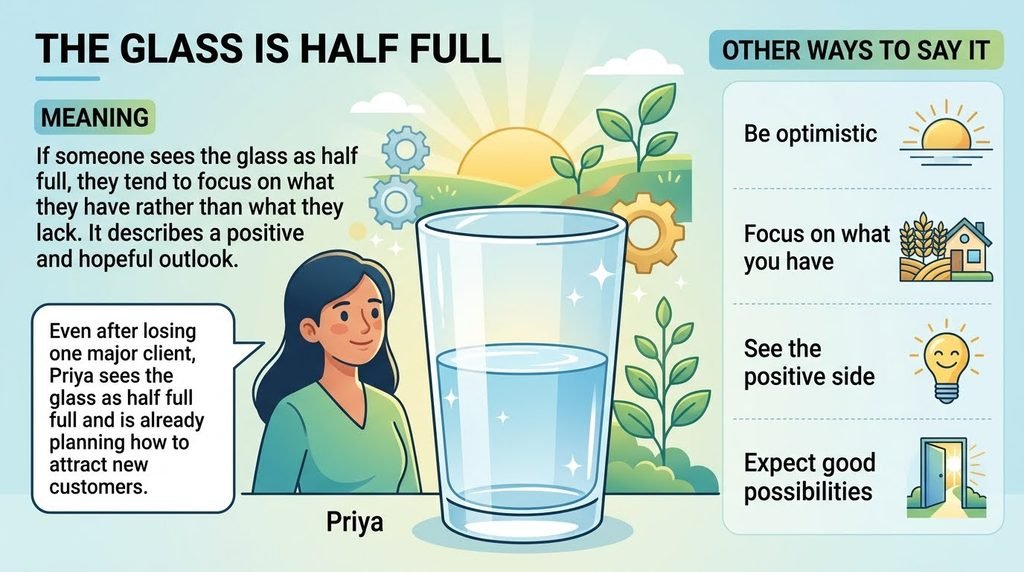
The Glass Is Half Full
Meaning
If someone sees the glass as half full, they tend to focus on what they have rather than what they lack. It describes a positive and hopeful outlook.
In a Sentence
Even after losing one major client, Priya sees the glass as half full and is already planning how to attract new customers.
Other Ways to Say It
- Be optimistic
- Focus on what you have
- See the positive side
- Expect good possibilities
Explanation
The image is simple: one person sees a glass as partly empty, while another sees it as partly full. The expression shows that perspective influences attitude even when the circumstances are exactly the same.
Best Use
This idiom is suitable for conversations, essays, motivational content, and discussions about personality or outlook. It is one of the clearest ways to describe an optimistic mindset.
Take It in Stride
Meaning
To take something in stride means to deal with a difficulty calmly without allowing it to overwhelm you. It suggests a composed and resilient attitude.
In a Sentence
When the presentation went wrong, Daniel took the setback in stride and calmly explained the problem to the audience.
Other Ways to Say It
- Handle it calmly
- Stay composed
- Accept it without panic
- Deal with it easily
Explanation
The expression comes from the idea of continuing to walk without being thrown off your pace. It suggests that a person can experience trouble while remaining steady and moving forward.
Best Use
Use it in professional conversations, workplace writing, personal stories, and everyday speech when describing someone who handles setbacks maturely.
Roll with the Punches
Meaning
To roll with the punches means to adapt when unexpected problems or changes occur instead of becoming overwhelmed by them.
In a Sentence
Running a small business requires you to roll with the punches when plans suddenly change.
Other Ways to Say It
- Adapt to change
- Go with what happens
- Stay flexible
- Handle setbacks
Explanation
The image comes from boxing: rather than taking a punch directly, a fighter moves with it to reduce its force. Figuratively, it describes an adaptable attitude that helps someone cope with uncertainty.
Best Use
This expression fits casual conversation, storytelling, workplace discussions, and advice about resilience. It is informal rather than highly professional.
Keep Your Chin Up
Meaning
To keep your chin up means to remain hopeful and positive during a difficult time. It is usually used as encouragement.
In a Sentence
Keep your chin up; one disappointing interview does not decide your entire career.
Other Ways to Say It
- Stay positive
- Don’t give up
- Keep your spirits up
- Remain hopeful
Explanation
The physical image suggests holding your head high instead of looking down in defeat. It communicates encouragement, courage, and emotional strength.
Best Use
This idiom is especially natural in personal conversations, supportive messages, speeches, and encouraging notes. It has a friendly, reassuring tone.
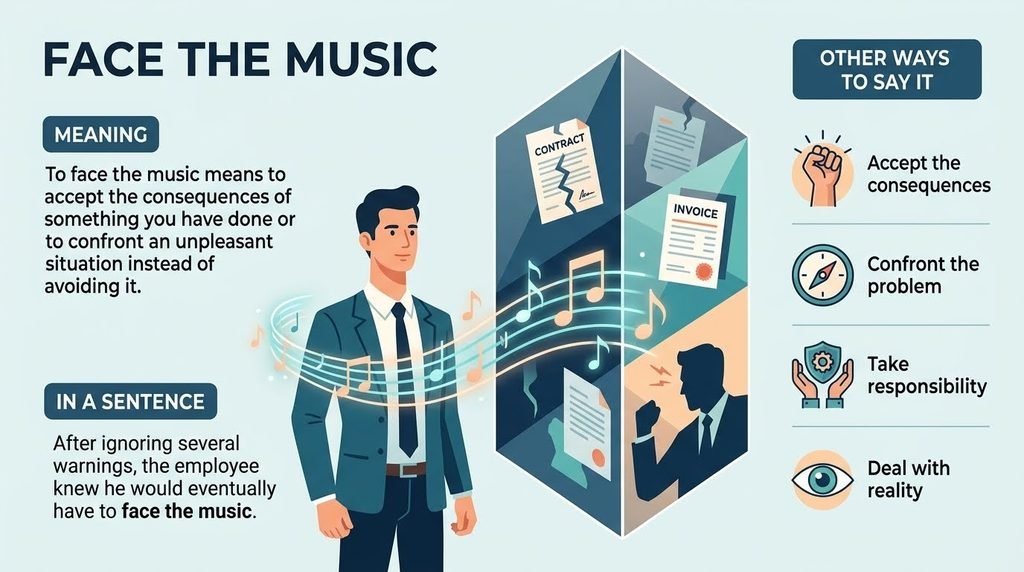
Face the Music
Meaning
To face the music means to accept the consequences of something you have done or to confront an unpleasant situation instead of avoiding it.
In a Sentence
After ignoring several warnings, the employee knew he would eventually have to face the music.
Other Ways to Say It
- Accept the consequences
- Confront the problem
- Take responsibility
- Deal with reality
Explanation
The expression suggests standing directly in front of something unpleasant rather than running away. It describes an attitude of accountability and courage, although the situation itself is usually uncomfortable.
Best Use
It works well in conversations, stories, advice, and informal writing. Because it is fairly casual, a more formal phrase may be better in academic or official writing.
Put Your Best Foot Forward
Meaning
To put your best foot forward means to make a strong effort to present yourself positively or perform well, especially when making a first impression.
In a Sentence
She put her best foot forward during the interview by preparing thoughtful answers and speaking confidently.
Other Ways to Say It
- Make a good impression
- Show your best side
- Give your best effort
- Present yourself well
Explanation
The expression creates the image of taking a step forward with your strongest or best foot. It communicates confidence, preparation, effort, and positive presentation.
Best Use
This idiom is useful in job advice, conversations, speeches, personal development writing, and social situations.
Rise to the Occasion
Meaning
To rise to the occasion means to respond successfully when a difficult, important, or unexpected situation requires your best effort.
In a Sentence
When the team leader became ill, Aisha rose to the occasion and confidently managed the entire presentation.
Other Ways to Say It
- Meet the challenge
- Step up
- Perform under pressure
- Respond effectively
Explanation
The phrase suggests rising above ordinary expectations when circumstances demand more from you. It often highlights confidence, determination, and competence.
Best Use
It works particularly well in speeches, professional writing, stories, essays, and conversations about achievement. Its tone is generally positive and inspirational.
Keep Your Cool
Meaning
To keep your cool means to remain calm when you are angry, stressed, embarrassed, or under pressure.
In a Sentence
Although the customer became upset, the receptionist kept her cool and patiently explained the policy.
Other Ways to Say It
- Stay calm
- Keep your composure
- Remain level-headed
- Don’t lose your temper
Explanation
“Cool” represents emotional control rather than temperature. The expression highlights an attitude of calmness and self-control, especially when another person or situation could provoke you.
Best Use
Use it in everyday conversation, workplace situations, stories, and practical advice. It is informal but very natural.
Lose Your Cool
Meaning
To lose your cool means to stop being calm and become angry or emotionally upset.
In a Sentence
I understand why he was frustrated, but he lost his cool during the meeting and raised his voice.
Other Ways to Say It
- Lose your temper
- Become angry
- Blow up
- Lose control
Explanation
This expression is the opposite of keeping your cool. The word “cool” represents emotional control, so losing it suggests that anger has taken over your usual restraint.
Best Use
It is most natural in conversation, storytelling, informal writing, and discussions about emotional reactions.
Wear Your Heart on Your Sleeve
Meaning
To wear your heart on your sleeve means to show your emotions openly instead of hiding how you feel.
In a Sentence
Jon wears his heart on his sleeve, so everyone immediately knows when he is excited, disappointed, or worried.
Other Ways to Say It
- Show your feelings openly
- Be emotionally open
- Be expressive
- Let your emotions show
Explanation
The expression creates a memorable image of displaying your feelings where everyone can see them. It can suggest honesty and openness, although some contexts may imply emotional vulnerability.
Best Use
This idiom is effective in character descriptions, creative writing, personal conversations, and emotional storytelling. It can sound poetic when used in reflective writing.
Have a Thick Skin
Meaning
To have a thick skin means to remain emotionally strong when faced with criticism, insults, rejection, or negative comments.
In a Sentence
Anyone working in a public-facing role needs to have a thick skin because not every customer will be pleased.
Other Ways to Say It
- Handle criticism well
- Be emotionally resilient
- Not take things personally
- Stay strong under criticism
Explanation
The expression compares emotional resilience with physical skin that protects the body. A person with “thick skin” can absorb criticism without being deeply hurt by it.
Best Use
It fits workplace conversations, advice, personal development, and discussions about criticism. It is usually informal.

Go With the Flow
Meaning
To go with the flow means to accept changes or circumstances without trying to control every detail. It often describes a relaxed and flexible attitude.
In a Sentence
We had planned a full day at the beach, but the weather changed, so we decided to go with the flow.
Other Ways to Say It
- Stay flexible
- Adapt as things happen
- Take things as they come
- Be easygoing
Explanation
The image comes from moving naturally with flowing water instead of constantly fighting against it. It suggests adaptability and acceptance, though it can sometimes imply a lack of firm planning.
Best Use
This is especially useful in casual conversations, travel stories, personal messages, and creative writing.
Make the Best of It
Meaning
To make the best of it means to find a useful, enjoyable, or positive way to deal with an unpleasant situation.
In a Sentence
The hotel room was smaller than expected, but we decided to make the best of it and spend more time exploring the city.
Other Ways to Say It
- Make the most of the situation
- Find the positive
- Work with what you have
- Stay constructive
Explanation
This expression focuses on practical optimism. It does not pretend that a problem is good; instead, it suggests choosing a constructive response despite the circumstances.
Best Use
Use it in everyday speech, personal writing, motivational messages, and stories about overcoming disappointment.
Draw the Line
Meaning
To draw the line means to establish a limit and decide what behavior or situation you will not accept.
In a Sentence
I am happy to help with extra work occasionally, but I draw the line at answering emails throughout the night.
Other Ways to Say It
- Set a boundary
- Establish a limit
- Say no to something
- Set a firm rule
Explanation
The image is of literally drawing a boundary that cannot be crossed. It expresses a firm and decisive attitude and is particularly useful when discussing personal or professional boundaries.
Best Use
This idiom works well in conversations, workplace discussions, advice, essays, and personal messages. It can sound firm without necessarily sounding aggressive.
Get Your Act Together
Meaning
To get your act together means to become more organized, responsible, or prepared after behaving carelessly or inefficiently.
In a Sentence
If I want to finish the project on time, I need to get my act together and stop putting everything off.
Other Ways to Say It
- Get organized
- Become more responsible
- Get things under control
- Pull yourself together
Explanation
“Your act” refers figuratively to the way you are managing yourself and your responsibilities. The expression suggests taking control and improving your approach after a period of disorder.
Best Use
It is best suited to casual conversation, friendly advice, storytelling, and informal writing. It can sound blunt if said harshly to another person.
Have a Bee in Your Bonnet
Meaning
To have a bee in your bonnet means to be unusually preoccupied with an idea, complaint, or subject, often to the point of repeatedly talking about it.
In a Sentence
Dad has a bee in his bonnet about reducing household waste and mentions it at almost every dinner.
Other Ways to Say It
- Be obsessed with an idea
- Be fixated on something
- Have a particular concern
- Keep returning to one issue
Explanation
The strange image of a bee buzzing inside someone’s bonnet suggests a thought that keeps bothering or occupying the mind. Depending on the context, it can sound humorous, mildly critical, or affectionate.
Best Use
This colorful idiom is particularly effective in storytelling, character descriptions, humorous writing, and informal conversation.
Jump on the Bandwagon
Meaning
To jump on the bandwagon means to adopt an idea, activity, or trend because many other people are already supporting it.
In a Sentence
After the new app became popular, several companies jumped on the bandwagon and launched similar services.
Other Ways to Say It
- Follow the trend
- Join the movement
- Follow the crowd
- Go along with popular opinion
Explanation
The expression comes from the image of joining a moving bandwagon because it is attracting a crowd. It can describe a socially influenced attitude and often carries a slightly critical tone.
Best Use
It works well in articles, conversations, social commentary, marketing discussions, and essays. It is less suitable when you need highly formal language.
Keep Your Eyes on the Prize
Meaning
To keep your eyes on the prize means to stay focused on an important goal instead of becoming distracted by difficulties or temporary setbacks.
In a Sentence
The training was exhausting, but the athletes kept their eyes on the prize and continued working toward the championship.
Other Ways to Say It
- Stay focused on the goal
- Keep your goal in mind
- Stay motivated
- Focus on the end result
Explanation
The “prize” represents the desired result, while keeping your eyes on it represents determination and concentration. The expression encourages someone to look beyond short-term discomfort toward a meaningful objective.
Best Use
This idiom is especially effective in motivational speeches, personal development writing, sports discussions, workplace encouragement, and inspirational messages.
Exercise: Practice Using Idioms
Test your understanding of the expressions above. Choose the best answer for each question.
What does “a chip on your shoulder” usually describe?
A. A cheerful personality
B. A person carrying resentment
C. Someone who enjoys physical exercise
D. A person who avoids responsibility
Which expression best describes someone who focuses on positive possibilities?
A. Face the music
B. Lose your cool
C. Look on the bright side
D. Draw the line
If someone “takes a difficult situation in stride,” how do they respond?
A. Handling the situation with patience
B. Quitting without giving it another try
C. Losing control of their temper
D. Avoiding any further discussion
Which idiom describes adapting to unexpected changes?
A. Wear your heart on your sleeve
B. Roll with the punches
C. Have a bee in your bonnet
D. Jump on the bandwagon
What does “keep your chin up” usually communicate?
A. A warning to become more serious
B. Encouragement to remain hopeful
C. A request to stop talking
D. A criticism of someone’s appearance
Which expression means accepting the consequences of your actions?
A. Go with the flow
B. Keep your cool
C. Face the music
D. Put your best foot forward
Someone who “puts their best foot forward” is usually trying to:
A. Make a positive impression
B. Avoid meeting people
C. Hide their emotions
D. Ignore a difficult situation
What does it mean to “rise to the occasion”?
A. Escape from duties or obligations
B. Adopt a trend that many people follow
C. Overcome a difficult task with success
D. Become distressed by strong emotions
Which expression means remaining calm under pressure?
A. Keep your cool
B. Lose your cool
C. Jump on the bandwagon
D. Have a bee in your bonnet
If someone “wears their heart on their sleeve,” they tend to:
A. Hide their opinions
B. Express their emotions openly
C. Avoid emotional situations
D. Change their mind frequently
What does “have a thick skin” suggest?
A. Having considerable physical power
B. Remaining calm despite negative comments
C. Refusing to change your opinion or attitude
D. Avoiding conversations with other people
Which idiom describes a relaxed willingness to adapt?
A. Draw the line
B. Go with the flow
C. Face the music
D. Get your act together
What does “draw the line” mean?
A. Set a boundary
B. Change your plans
C. Follow a trend
D. Admit a mistake
Which expression describes becoming more organized and responsible?
A. Keep your eyes on the prize
B. Look on the bright side
C. Get your act together
D. Wear your heart on your sleeve
If someone “keeps their eyes on the prize,” what attitude are they showing?
A. Resentment
B. Determination
C. Confusion
D. Indifference
Answers
- B — “A chip on your shoulder” describes someone carrying resentment or a sense of grievance.
- C — “Look on the bright side” means to focus on the positive part of a difficult situation.
- A — “Take it in stride” means to handle a problem calmly and without becoming overwhelmed.
- B — “Roll with the punches” describes adapting to unexpected difficulties or changes.
- B — “Keep your chin up” is an encouraging expression telling someone to remain hopeful.
- C — “Face the music” means confronting an unpleasant situation or accepting its consequences.
- A — “Put your best foot forward” means making a strong effort to present yourself positively.
- C — “Rise to the occasion” means responding effectively when a challenging situation demands your best effort.
- A — “Keep your cool” means remain calm and maintain emotional control.
- B — “Wear your heart on your sleeve” means showing your emotions openly.
- B — “Have a thick skin” means being able to handle criticism or negative comments without becoming easily hurt.
- B — “Go with the flow” describes a flexible, easygoing approach to changing circumstances.
- A — “Draw the line” means establish a limit or boundary.
- C — “Get your act together” means become more organized, responsible, or prepared.
- B — “Keep your eyes on the prize” describes staying focused and determined to reach a goal.
FAQs
What is an idiom for attitude?
An idiom for attitude is a figurative expression that describes someone’s outlook, behavior, emotional response, or approach to a situation. Expressions such as “look on the bright side” suggest optimism, while “a chip on your shoulder” suggests resentment.
How do I create my own idiom for attitude?
Start with the attitude you want to describe, such as confidence, frustration, patience, or optimism. Then create a clear mental image that represents that quality. A strong figurative expression should be understandable from its context and add something more memorable than a plain description.
What makes an idiom effective?
An effective idiom creates a recognizable image while communicating an idea beyond its literal meaning. It should fit the situation naturally and help readers or listeners understand an emotion, personality trait, or point of view.
Can I use these idioms in everyday conversation?
Yes. Many of these expressions, including “keep your cool,” “go with the flow,” “take it in stride,” and “look on the bright side,” are natural in everyday English. Some, such as “have a bee in your bonnet,” are more colorful or informal and may be better suited to storytelling or humorous contexts.
What is the difference between an idiom and a simile?
An idiom is an established expression whose figurative meaning is understood by speakers, such as “keep your chin up.” A simile directly compares two things using words such as “like” or “as,” as in “His attitude was like a calm sea.” Both can create imagery, but they work differently.
Conclusion
Idioms give us a more vivid way to talk about attitude. Instead of simply saying someone is positive, resilient, calm, emotional, determined, or easily frustrated, figurative expressions allow us to show those qualities through memorable images. “Look on the bright side” suggests optimism, “take it in stride” conveys resilience, and “draw the line” communicates firm boundaries. Other expressions reveal how people respond to criticism, pressure, change, and personal challenges.
The best idiom depends on the exact feeling or situation you want to communicate. Choose one that fits your audience and tone rather than using figurative language simply for decoration. When used naturally, the right expression can make ordinary communication more colorful, precise, and memorable and give an attitude a picture readers can immediately understand.

Eleanor Prose is a writer and English teacher with a soft spot for the phrases that trip us up. She has spent years helping students and professionals use idioms with confidence not just memorizing them, but understanding the culture and humor behind each one.
Through Idiom Looms, Eleanor explores the threads that connect language, history, and everyday conversation. Her goal is simple: to make English idioms clear, memorable, and actually fun to use.
She writes from a quiet desk surrounded by notebooks, and firmly believes there’s an idiom for every situation usually more than one.



[…] Read more:20 Idioms for Attitude With Real Examples […]