
What makes a simple moment unforgettable a shared laugh, good company, or carefree enjoyment? 20 Idioms for Having Fun With Real Examples explores colorful expressions for describing fun, laughter, excitement, and enjoyment. These phrases make everyday English more vivid and expressive.
Each idiom includes a clear meaning, natural example, alternative expressions, explanation, and best use. You’ll learn how context influences English usage, grammar, and informal communication. The examples make every expression easier to understand and remember.
These idioms can enrich conversations, messages, storytelling, and creative writing. They also help develop consistency when choosing natural expressions. Whether you’re discussing scheduling, time management, meetings, calendar planning, project management, online booking, broadcasting, or business communication, stronger English improves clarity. Discover these useful expressions and bring more personality to your language.
What Is an Idiom?
An idiom is a group of words that has a meaning understood by speakers beyond the literal meaning of the words themselves.
For example, “break the ice” does not usually mean physically breaking ice. It means starting a conversation or making people feel more comfortable.
Similarly, “spill the beans” does not mean dropping beans. It means revealing a secret or piece of information.
Idioms are a form of figurative language. They help people communicate ideas, emotions, and experiences in a more colorful and memorable way than plain literal statements.
Why Use Idioms for Having Fun?
Using idioms can make descriptions of having fun feel more energetic and expressive. Instead of repeatedly saying that an event was enjoyable, you can choose an expression that shows how enjoyable it was.
For example, “We had a blast” suggests energetic excitement, while “We let our hair down” suggests relaxing and forgetting about responsibilities.
Idioms can help you:
- Express emotions without using long explanations.
- Create stronger mental images for readers and listeners.
- Make conversations sound more natural and lively.
- Add personality to social media posts and personal messages.
- Make stories and creative writing more memorable.
- Describe different kinds of enjoyment, from dancing to laughing.
- Communicate a feeling quickly through a familiar expression.
The key is choosing an idiom that matches the situation. A playful expression may fit a party perfectly but sound unusual in a formal essay.
Quick List of 20 Idioms
- Have a blast
- Have the time of your life
- Paint the town red
- Let your hair down
- Kick up your heels
- Live it up
- Cut loose
- Go out on the town
- Have a whale of a time
- Be in stitches
- Trip the light fantastic
- Join in the fun
- Make merry
- Have a ball
- Roll out the red carpet
- Dance the night away
- Party like there’s no tomorrow
- Throw caution to the wind
- Be on cloud nine
- In high spirits
Have a Blast
Read more:20 Idioms for Futility With Real Examples
Meaning
Have a blast means to have a very enjoyable, exciting, or entertaining time. The word “blast” creates an image of something energetic and explosive, so the expression often suggests enthusiastic fun rather than quiet relaxation.
In a Sentence
We had a blast at the amusement park, especially when we tried the biggest roller coaster.
Other Ways to Say It
- Have an amazing time
- Have loads of fun
- Enjoy yourself
- Have a great time
Explanation
This idiom works because “blast” gives the idea of energy and excitement. It is especially natural when describing parties, trips, games, concerts, celebrations, or activities with friends.
It has a casual and upbeat tone, making it more suitable for everyday conversation than formal writing.
Best Use
Best for: Conversations, texts, social media captions, personal messages, and informal storytelling.
Have the Time of Your Life
Meaning
Have the time of your life means to enjoy yourself extremely well and experience a particularly memorable period of happiness or excitement.
In a Sentence
The children had the time of their lives building sandcastles and playing by the beach.
Other Ways to Say It
- Enjoy every moment
- Have an unforgettable time
- Make wonderful memories
- Have an incredible experience
Explanation
This expression goes beyond ordinary enjoyment. It suggests that the experience is exceptionally memorable and emotionally satisfying.
It can describe vacations, celebrations, concerts, adventures, or special occasions. Its warm tone also makes it useful when encouraging someone to enjoy an upcoming experience.
Best Use
Best for: Travel stories, celebrations, personal messages, speeches, social media, and storytelling.
Paint the Town Red
Meaning
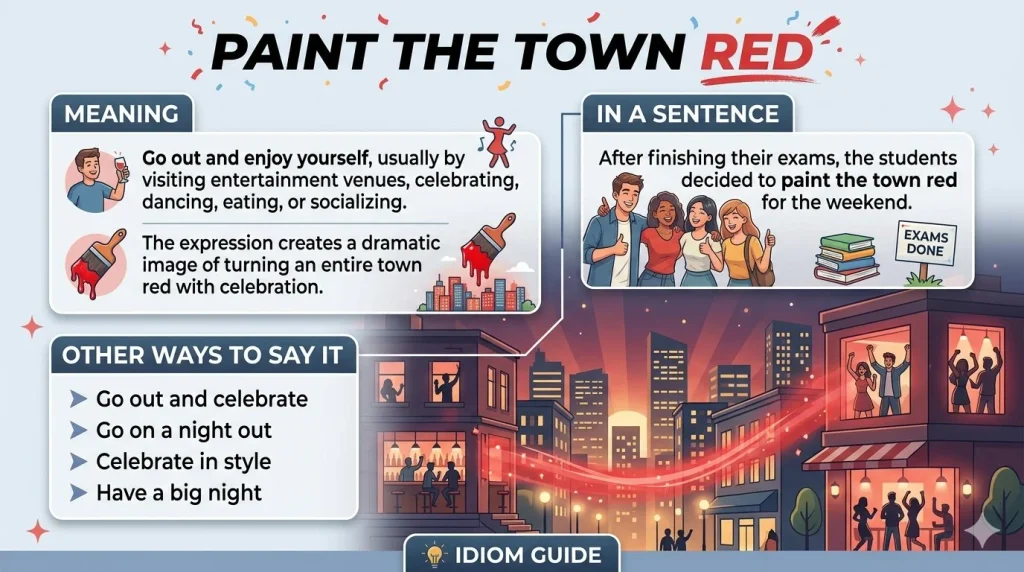
Paint the town red means to go out and enjoy yourself, usually by visiting entertainment venues, celebrating, dancing, eating, or socializing.
The expression creates a dramatic image of turning an entire town red with celebration.
In a Sentence
After finishing their exams, the students decided to paint the town red for the weekend.
Other Ways to Say It
- Go out and celebrate
- Go on a night out
- Celebrate in style
- Have a big night
Explanation
This is a colorful and slightly dramatic expression for going out to have fun. It often suggests an evening filled with social activities rather than simply relaxing at home.
The phrase is informal and can sound playful or adventurous.
Best Use
Best for: Conversations, stories, party invitations, social posts, and humorous writing.
Let Your Hair Down
Meaning
Let your hair down means to relax, stop worrying about rules or responsibilities for a while, and enjoy yourself freely.
The image comes from releasing your hair from a formal style and becoming more relaxed.
In a Sentence
After a stressful week at work, Maya decided to let her hair down and spend Saturday dancing with her friends.
Other Ways to Say It
- Relax and enjoy yourself
- Unwind
- Take it easy
- Forget your worries for a while
Explanation
This idiom focuses less on excitement and more on freedom from pressure. Someone who lets their hair down temporarily stops being overly serious or restrained.
It works particularly well when someone has been working hard and finally gets a chance to relax.
Best Use
Best for: Everyday conversation, personal writing, lifestyle content, and informal storytelling.
Kick Up Your Heels
Meaning
Kick up your heels means to celebrate, have fun, or enjoy yourself in a lively way. It often suggests dancing, celebration, or energetic enjoyment.
In a Sentence
Once the project was finished, the team went out for dinner to kick up their heels.
Other Ways to Say It
- Celebrate
- Have some fun
- Let loose
- Enjoy a night out
Explanation
The expression creates a playful image of someone literally kicking their heels while celebrating.
It has a cheerful, slightly old-fashioned flavor compared with some modern expressions, but it remains useful when you want your language to sound lively and colorful.
Best Use
Best for: Storytelling, playful conversation, creative writing, celebrations, and humorous descriptions.
Live It Up
Meaning
Live it up means to enjoy yourself fully, often by spending time on entertainment, travel, celebrations, or other pleasurable activities.
In a Sentence
They decided to live it up during their weekend in the city and try everything they had been planning.
Other Ways to Say It
- Enjoy yourself fully
- Make the most of it
- Treat yourself
- Have a great time
Explanation
This idiom suggests making the most of an enjoyable opportunity. It can carry a sense of indulgence, especially when someone is enjoying a special trip, holiday, or celebration.
Depending on context, it can sound carefree, playful, or slightly extravagant.
Best Use
Best for: Travel writing, conversations, captions, celebrations, and informal messages.
Cut Loose
Meaning
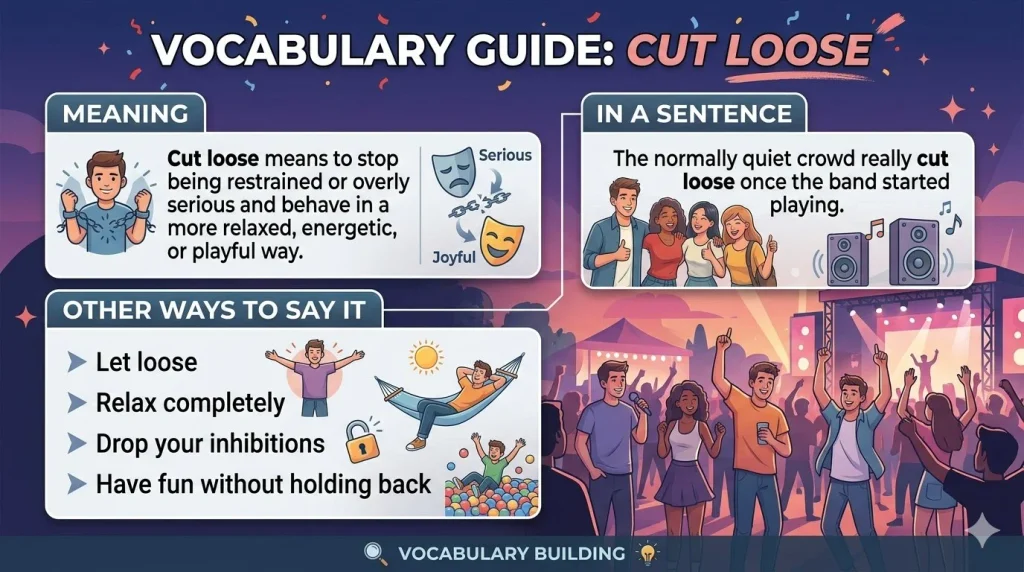
Cut loose means to stop being restrained or overly serious and behave in a more relaxed, energetic, or playful way.
In a Sentence
The normally quiet crowd really cut loose once the band started playing.
Other Ways to Say It
- Let loose
- Relax completely
- Drop your inhibitions
- Have fun without holding back
Explanation
The image behind this expression is one of breaking free from restraint. It is useful when people who are normally reserved suddenly become energetic and playful.
Because it suggests a noticeable change in behavior, it can be especially effective in storytelling.
Best Use
Best for: Conversations, stories, party descriptions, social media, and informal writing.
Go Out on the Town
Meaning
Go out on the town means to leave home and spend an evening enjoying entertainment, food, drinks, dancing, or social activities.
In a Sentence
We are going out on the town tonight to celebrate Dad’s birthday.
Other Ways to Say It
- Go out for the evening
- Have a night out
- Go out and celebrate
- Spend the evening socializing
Explanation
This expression emphasizes going somewhere for entertainment rather than simply having fun anywhere.
It is especially natural when talking about an evening involving restaurants, music, shows, dancing, or other activities outside the home.
Best Use
Best for: Everyday conversation, invitations, travel writing, personal messages, and storytelling.
Have a Whale of a Time
Meaning
Have a whale of a time means to have an extremely enjoyable or exciting time.
The phrase uses the enormous size of a whale to exaggerate the amount of enjoyment.
In a Sentence
We had a whale of a time at the family reunion, especially when everyone started sharing old stories.
Other Ways to Say It
- Have an amazing time
- Have tremendous fun
- Enjoy yourself enormously
- Have a fantastic time
Explanation
The unusual image makes this expression memorable. It is a playful exaggeration that communicates a lot of enjoyment without sounding overly serious.
It can feel slightly old-fashioned or folksy in some settings, but that can also give writing a charming character.
Best Use
Best for: Informal conversations, storytelling, playful writing, and humorous descriptions.
Be in Stitches
Meaning
Be in stitches means to laugh extremely hard. It describes a situation where something is so funny that people cannot stop laughing.
In a Sentence
His imitation of our old teacher had everyone in stitches.
Other Ways to Say It
- Laugh uncontrollably
- Be doubled over with laughter
- Laugh your head off
- Find something hilarious
Explanation
This idiom is particularly useful because it describes a specific kind of fun: shared laughter. It does not simply mean having a pleasant time.
The expression is excellent when you want to show that a joke, story, performance, or funny moment had a powerful effect on a group.
Best Use
Best for: Conversations, humorous stories, reviews, personal messages, and creative writing.
Trip the Light Fantastic
Meaning
Trip the light fantastic is a poetic idiom meaning to dance, especially in a graceful or lively way.
In a Sentence
The couple spent the evening tripping the light fantastic at the wedding reception.
Other Ways to Say It
- Dance the night away
- Take to the dance floor
- Dance gracefully
- Enjoy the music and dance
Explanation
This is one of the more poetic and unusual expressions on the list. Its imagery turns dancing into something almost magical.
It may sound too literary for an ordinary conversation, but it can add elegance and personality to creative writing.
Best Use
Best for: Poetry, creative writing, speeches, literary descriptions, and playful storytelling.
Join in the Fun
Meaning
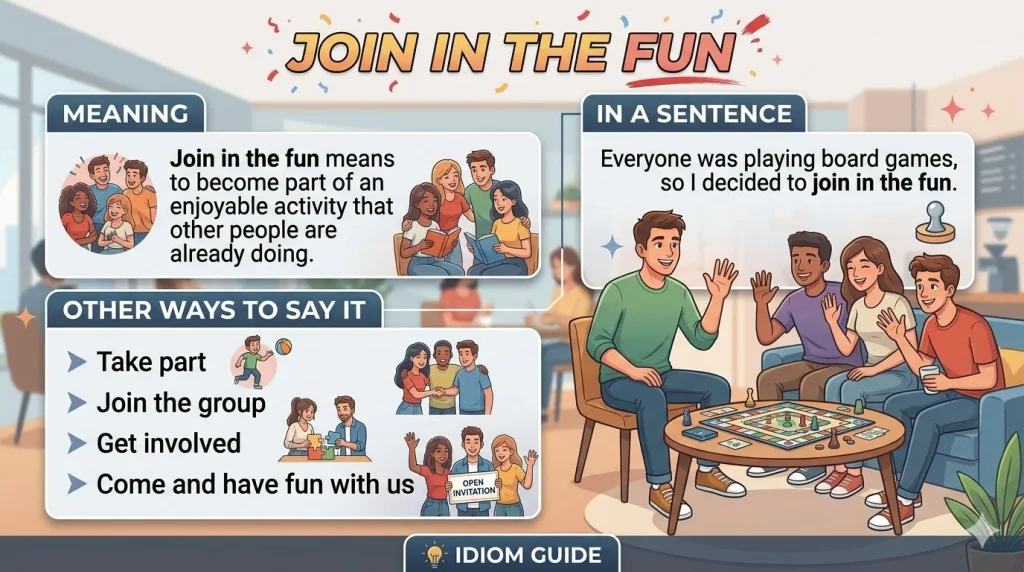
Join in the fun means to become part of an enjoyable activity that other people are already doing.
In a Sentence
Everyone was playing board games, so I decided to join in the fun.
Other Ways to Say It
- Take part
- Join the group
- Get involved
- Come and have fun with us
Explanation
Unlike idioms that describe intense excitement, this expression focuses on inclusion and participation.
It works particularly well when inviting someone who is watching others have a good time to become part of the activity.
Best Use
Best for: Conversations, invitations, community activities, family events, social posts, and friendly messages.
Make Merry
Meaning
Make merry means to celebrate, socialize, laugh, eat, drink, and generally enjoy a festive occasion.
In a Sentence
The whole village gathered in the square to make merry during the annual festival.
Other Ways to Say It
- Celebrate
- Enjoy the festivities
- Have a cheerful time
- Celebrate together
Explanation
This expression has a traditional and festive feel. It often brings to mind gatherings where people share food, conversation, music, and celebration.
It is less common in casual modern speech than “have fun,” but its distinctive tone can make storytelling more colorful.
Best Use
Best for: Holiday writing, storytelling, historical settings, festive descriptions, and creative prose.
Have a Ball
Meaning
Have a ball means to have a very enjoyable time. It often suggests that the experience is lively, exciting, and entertaining.
In a Sentence
We had a ball at the school reunion and stayed up talking until midnight.
Other Ways to Say It
- Have a great time
- Enjoy yourself
- Have lots of fun
- Have an amazing evening
Explanation
The word “ball” creates an association with celebration and social enjoyment, making the expression naturally cheerful.
It is casual and friendly, so it fits everyday speech particularly well.
Best Use
Best for: Conversations, texts, social media, party descriptions, and personal messages.
Roll Out the Red Carpet
Meaning
Roll out the red carpet literally refers to giving someone a grand, special welcome. Figuratively, it can describe making an occasion feel luxurious, important, or celebratory.
In a Sentence
For their parents’ anniversary, the family rolled out the red carpet and planned an unforgettable evening.
Other Ways to Say It
- Give someone a grand welcome
- Celebrate in style
- Make someone feel special
- Give VIP treatment
Explanation
This expression is slightly different from the others because it focuses on creating a special experience rather than simply enjoying yourself.
The red-carpet image suggests glamour, attention, and celebration. It works best when the occasion feels unusually important.
Best Use
Best for: Event descriptions, humorous writing, celebrations, hospitality contexts, speeches, and social media.
Dance the Night Away
Meaning
Dance the night away means to spend much of the night dancing and enjoying music.
In a Sentence
They danced the night away at the wedding and barely noticed how quickly the hours passed.
Other Ways to Say It
- Dance until late
- Keep dancing all night
- Spend the night dancing
- Dance until morning
Explanation
This expression creates a vivid image of losing track of time through enjoyment. It is particularly effective when music and dancing are central to the experience.
The tone is energetic, romantic, festive, and informal.
Best Use
Best for: Party descriptions, wedding stories, travel writing, captions, songs or poetry-inspired prose, and personal messages.
Party Like There’s No Tomorrow
Meaning
Party like there’s no tomorrow means to celebrate with great energy and enthusiasm, as though there were no reason to hold back.
In a Sentence
After months of hard work, the graduates decided to party like there was no tomorrow.
Other Ways to Say It
- Celebrate wildly
- Go all out
- Have an unforgettable celebration
- Celebrate without holding back
Explanation
This is a strong, dramatic expression. It emphasizes intensity and enthusiasm, rather than quiet enjoyment.
Because it can suggest excess, it is best used casually and with awareness of the context. It is more natural in humorous or exaggerated language than in formal writing.
Best Use
Best for: Casual conversation, humorous captions, party stories, and playful social media posts.
Throw Caution to the Wind
Meaning
Throw caution to the wind means to stop worrying about possible risks or consequences and act more freely than usual.
In a Sentence
For once, we threw caution to the wind and booked a spontaneous weekend road trip.
Other Ways to Say It
- Take a chance
- Be spontaneous
- Stop worrying about the risks
- Go for it
Explanation
The phrase creates an image of literally throwing caution away so that it cannot hold you back.
It does not always mean having fun, but it can describe spontaneous adventures and carefree decisions. The context matters because the expression can also apply to serious or risky choices.
Best Use
Best for: Adventure stories, travel writing, motivational messages, casual conversation, and creative writing.
Be on Cloud Nine
Meaning
Be on cloud nine means to feel extremely happy, delighted, or excited.
In a Sentence
After hearing that he had won the competition, Liam was on cloud nine.
Other Ways to Say It
- Be extremely happy
- Be overjoyed
- Be thrilled
- Be walking on air
Explanation
This idiom uses the image of being high above the ground on a cloud to express intense happiness.
It is broader than simply having fun, so it can describe happiness caused by success, good news, relationships, celebrations, or enjoyable experiences.
Best Use
Best for: Conversations, personal stories, messages, creative writing, and descriptions of emotional happiness.
In High Spirits
Meaning
In high spirits means feeling cheerful, enthusiastic, and full of positive energy.
In a Sentence
The children returned from the field trip in high spirits, excitedly telling their parents everything they had seen.
Other Ways to Say It
- Cheerful
- In a good mood
- Full of energy
- Feeling upbeat
Explanation
This expression focuses on a person’s mood and emotional energy rather than one specific activity.
It is useful when describing a group of people who are lively and happy. Compared with “have a blast,” it can sound a little more polished and works comfortably in both conversation and writing.
Best Use
Best for: Essays, storytelling, conversations, reports with a friendly tone, speeches, and descriptive writing.
Exercise: Practice Using Idioms
Choose the best answer for each question.
1. What does “have a blast” mean?
A. Experiencing something frightening
B. Having a very enjoyable time
C. Leaving an event before it ends
D. Making a very loud noise
2. Which idiom best describes someone relaxing after a stressful period and enjoying themselves freely?
A. Let your hair down
B. Be on cloud nine
C. Make merry
D. Go out on the town
3. What does “paint the town red” usually suggest?
A. Decorating a building
B. Working late
C. Going out to celebrate and have fun
D. Cleaning up after a party
4. Which expression specifically means laughing very hard?
A. Have a ball
B. Be in stitches
C. Live it up
D. Kick up your heels
5. What does “have the time of your life” communicate?
A. Having an exceptionally enjoyable experience
B. Spending time alone
C. Feeling tired after work
D. Finishing something quickly
6. Which idiom is most closely connected with dancing?
A. Throw caution to the wind
B. Join in the fun
C. Trip the light fantastic
D. Be on cloud nine
7. Someone who “cuts loose” is usually doing what?
A. Becoming more relaxed and uninhibited
B. Leaving a job
C. Ending a friendship
D. Becoming more formal
8. Which sentence uses “in high spirits” correctly?
A. The students were in high spirits after their enjoyable field trip.
B. The students were in high spirits because they had lost the game.
C. The teacher put the books in high spirits on the desk.
D. The restaurant served the meal in high spirits.
9. What does “go out on the town” usually involve?
A. Staying home all evening
B. Going somewhere for entertainment or social activities
C. Going to sleep early
D. Working on a difficult assignment
10. Which expression has a particularly traditional or festive tone?
A. Make merry
B. Cut loose
C. Have a blast
D. Have a ball
11. What does “throw caution to the wind” mean in a sentence about a spontaneous trip?
A. Planning every detail with great care
B. Choosing not to travel
C. Acting more freely without worrying about the risks
D. Calling off the trip
12. Which idiom best describes someone who feels extremely happy after receiving wonderful news?
A. Go out on the town
B. Be on cloud nine
C. Join in the fun
D. Paint the town red
13. Which expression is most suitable for describing people dancing throughout an evening?
A. Dance the night away
B. Roll out the red carpet
C. Be in stitches
D. Make merry
14. Which statement about “trip the light fantastic” is correct?
A. It means to travel very quickly.
B. It means to solve a difficult problem.
C. It is a poetic expression for dancing.
D. It means to become extremely tired.
15. Which idiom best emphasizes joining an activity that other people are already enjoying?
A. Live it up
B. Have a whale of a time
C. Join in the fun
D. Throw caution to the wind
Answers
- B — “Have a blast” means to have a very enjoyable or exciting time.
- A — “Let your hair down” means to relax and stop being overly restrained.
- C — “Paint the town red” describes going out and celebrating or enjoying entertainment.
- B — “Be in stitches” means to laugh very hard.
- A — “Have the time of your life” describes an exceptionally enjoyable and memorable experience.
- C — “Trip the light fantastic” is a poetic expression meaning to dance.
- A — “Cut loose” means to become more relaxed, energetic, or uninhibited.
- A — “In high spirits” describes someone who is cheerful and full of positive energy.
- B — “Go out on the town” means to go out for entertainment or social activities.
- A — “Make merry” has a traditional, cheerful, and festive tone.
- C — “Throw caution to the wind” means to stop worrying about risks and act more freely.
- B — “Be on cloud nine” means to feel extremely happy or delighted.
- A — “Dance the night away” describes spending much of the night dancing.
- C — “Trip the light fantastic” is a poetic way to say “dance.”
- C — “Join in the fun” means to participate in an activity others are enjoying.
FAQs
What is an idiom for having fun?
An idiom for having fun is a figurative expression used to describe enjoyment, excitement, celebration, laughter, or carefree behavior. Examples include “have a blast,” “have a ball,” and “let your hair down.”
How do I create my own idiom?
Start with a clear idea or emotion, then connect it to a strong image or comparison. For example, you might compare excitement to something energetic or happiness to something light and uplifting. A good expression should communicate an idea without becoming confusing.
What makes an idiom effective?
An effective idiom creates a clear mental picture while communicating a recognizable idea. It should fit the context, sound natural, and add something beyond a plain literal statement.
Can I use these idioms in everyday conversation?
Yes. Expressions such as “have a blast,” “have a ball,” “let your hair down,” and “go out on the town” are natural in informal conversation. More poetic expressions, such as “trip the light fantastic,” may be better suited to creative writing or playful storytelling.
What is the difference between an idiom and a simile?
An idiom has an established figurative meaning that may not be obvious from its individual words. A simile directly compares two things using words such as “like” or “as.” For example, “have a blast” is an idiom, while “the party was like a fireworks show” is a simile.
Conclusion
The English language offers many expressive ways to describe having fun, from the energetic feeling of “having a blast” to the relaxed freedom of “letting your hair down.” These idioms do more than replace the words “have fun.” They reveal different shades of enjoyment—laughter, celebration, spontaneity, happiness, dancing, and togetherness.
The best expression depends on the experience you want to describe. Use casual phrases in everyday conversations, playful expressions in social posts, and more poetic language when you want your writing to feel imaginative. Most importantly, choose an idiom that matches the emotion and situation rather than using one simply because it sounds colorful.
When the right words capture the right feeling, even a simple story about having fun can become much more vivid and memorable.

Margaret Saywell is an English author and editor who has spent more than fifteen years working with words teaching, proofreading, and writing about the quirks of the English language.
At Idiom Looms, Margaret gathers idioms from across the English-speaking world and weaves them into clear, practical guides. She loves digging into the history of a phrase and showing readers how a few well-chosen words can say far more than a long explanation.
She believes language should be enjoyed, not feared and that the best way to learn an idiom is to see it in action.
[…] Read more:20 Idioms for Having Fun With Real Examples […]