
Have you ever struggled to describe something that happened long ago without repeating the same words? The right expressions can make memories, experiences, and earlier events feel much more vivid. In this guide to 20 Idioms for The Past With Real Examples, you’ll discover natural phrases that help describe past experiences, forgotten moments, changing circumstances, and events that still influence the present. These idioms can also strengthen English usage, improve grammar awareness, and add personality to everyday communication.
Understanding idioms is useful far beyond casual conversation. They can help you communicate ideas naturally in business communication, formal writing, meetings, presentations, and storytelling. Even practical topics such as scheduling, calendar planning, time management, project management, online booking, and broadcasting often involve language that refers to previous events or completed actions. Learning the figurative meaning behind these expressions helps you recognize how fluent English speakers discuss time, memory, history, and change.
Throughout this article, each idiom is explained in clear language and supported by realistic examples. You’ll learn what each expression means, how it works in context, alternative ways to express the same idea, and when it sounds most appropriate. The examples also highlight differences between everyday speech and formal writing, helping you use these phrases with greater accuracy and consistency. By the end, you’ll have practical idioms that make conversations and writing about the past more expressive, precise, and natural.
What Is an Idiom?
An idiom is a common expression whose meaning is different from the literal meaning of its individual words. For example, “break the ice” does not mean physically breaking ice; it means helping people feel more comfortable in a new social situation.
Another example is “spill the beans,” which means to reveal a secret rather than literally dropping beans.
Idioms are a form of figurative language. They create mental pictures or associations that communicate an idea in a more colorful way than a literal statement.
Why Use Idioms for The Past?
Talking about the past is not always simply about dates and events. We may be describing memories, regrets, old relationships, childhood experiences, lessons, or changes.
Idioms can make those ideas easier to express. They can:
- Give emotional experiences a memorable image.
- Make personal stories more vivid.
- Express complicated feelings in a few words.
- Add personality to everyday conversations.
- Make essays and creative writing more engaging.
- Help readers understand whether you feel nostalgic, regretful, reflective, or ready to move forward.
The right expression can turn a plain statement such as “I still remember those days” into something much more expressive.
Quick List of 20 Idioms
- A blast from the past
- Back in the day
- Once upon a time
- Water under the bridge
- Let bygones be bygones
- Live in the past
- Dredge up the past
- Bury the hatchet
- Leave the past behind
- Put the past behind you
- A thing of the past
- Ancient history
- Old habits die hard
- History repeats itself
- Those were the days
- Go down memory lane
- Bring back memories
- Look back on
- Learn from your mistakes
- Sweep something under the rug
A Blast from the Past
Meaning
“A blast from the past” describes something from an earlier period that suddenly returns or reminds you strongly of another time. It often carries a fun, nostalgic, or pleasantly surprising feeling.
In a Sentence
Finding my old school notebook was a blast from the past.
Other Ways to Say It
- A nostalgic reminder
- A trip back in time
- A reminder of earlier days
- Something that brings back old memories
Explanation
The word “blast” makes the return of an old memory sound sudden and energetic. It works especially well when an old song, photograph, object, person, or fashion unexpectedly reminds someone of an earlier period.
Best Use
Best for casual conversations, social media, personal writing, and nostalgic storytelling. It is friendly rather than formal.
Back in the Day
Read more:20 Idioms for Mothers With Real Examples
Meaning
“Back in the day” means in an earlier period of someone’s life or in the past generally. It often suggests a time that feels noticeably different from today.
In a Sentence
Back in the day, our neighborhood had only one small grocery store.
Other Ways to Say It
- In those days
- Years ago
- When I was younger
- In earlier times
Explanation
This expression creates the feeling of looking backward at a familiar period. It can be nostalgic, humorous, or simply descriptive, depending on the context.
Best Use
It fits naturally in everyday conversation, storytelling, informal writing, and personal memories.
Once Upon a Time
Meaning
“Once upon a time” traditionally introduces a story set in the past. More broadly, it can refer to a former period that now feels distant or almost story-like.
In a Sentence
Once upon a time, this quiet town was a busy center of trade.
Other Ways to Say It
- Long ago
- In former times
- Many years ago
- In an earlier era
Explanation
The phrase immediately creates a storytelling atmosphere. It can make ordinary memories feel distant, magical, or emotionally significant.
Best Use
It is especially effective in stories, poetry, creative writing, speeches, and nostalgic posts. It can sound overly dramatic in formal everyday conversation.
Water Under the Bridge
Meaning
“Water under the bridge” refers to something unpleasant that happened in the past and should no longer be allowed to cause conflict or worry.
In a Sentence
We disagreed badly last year, but that’s water under the bridge now.
Other Ways to Say It
- It’s in the past now.
- Let it go.
- What’s done is done.
- There’s no point dwelling on it.
Explanation
The image comes from water flowing beneath a bridge and continuing downstream. The past event has already moved away, suggesting that holding onto it will not change what happened.
Best Use
This works well in conversations, personal messages, apologies, and discussions about forgiveness. It is usually calm and reassuring.
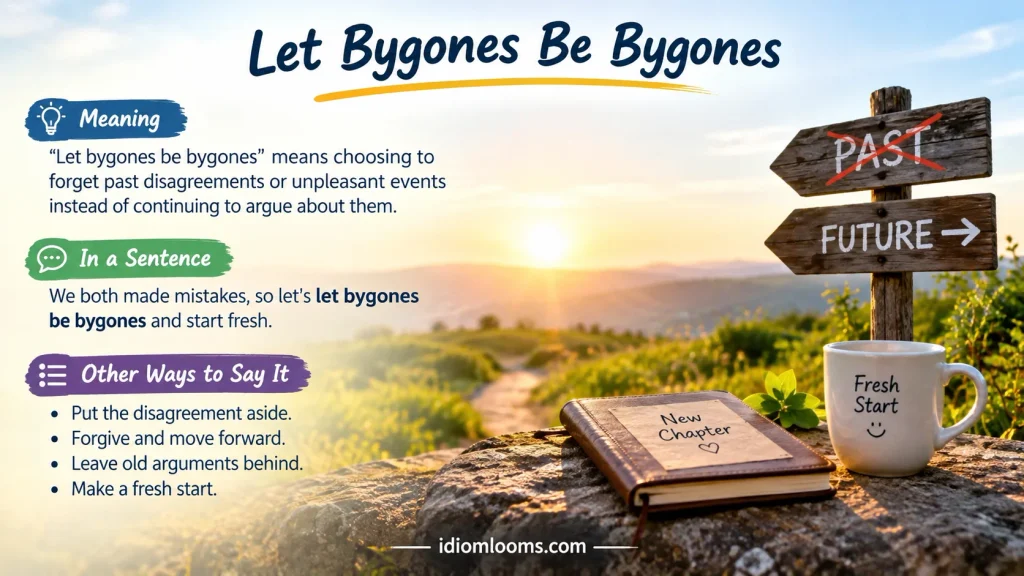
Let Bygones Be Bygones
Meaning
“Let bygones be bygones” means choosing to forget past disagreements or unpleasant events instead of continuing to argue about them.
In a Sentence
We both made mistakes, so let’s let bygones be bygones and start fresh.
Other Ways to Say It
- Put the disagreement aside.
- Forgive and move forward.
- Leave old arguments behind.
- Make a fresh start.
Explanation
“Bygones” means things that have happened and are finished. The expression encourages peace by focusing less on old conflicts and more on moving forward.
Best Use
It is useful in personal conversations, reconciliation, speeches, and reflective writing. It can sound somewhat traditional or formal.
Live in the Past
Meaning
To “live in the past” means to spend too much time thinking about earlier experiences instead of dealing with the present.
In a Sentence
He needs to stop living in the past and focus on what he can do today.
Other Ways to Say It
- Dwell on the past
- Remain stuck in old memories
- Keep looking backward
- Focus too much on former times
Explanation
The idiom treats the past as though it were a place where someone can remain. It often communicates frustration or concern about someone who has difficulty accepting change.
Best Use
Best for conversations, advice, essays, and reflective writing. It can sound critical, so use it thoughtfully when speaking about another person.
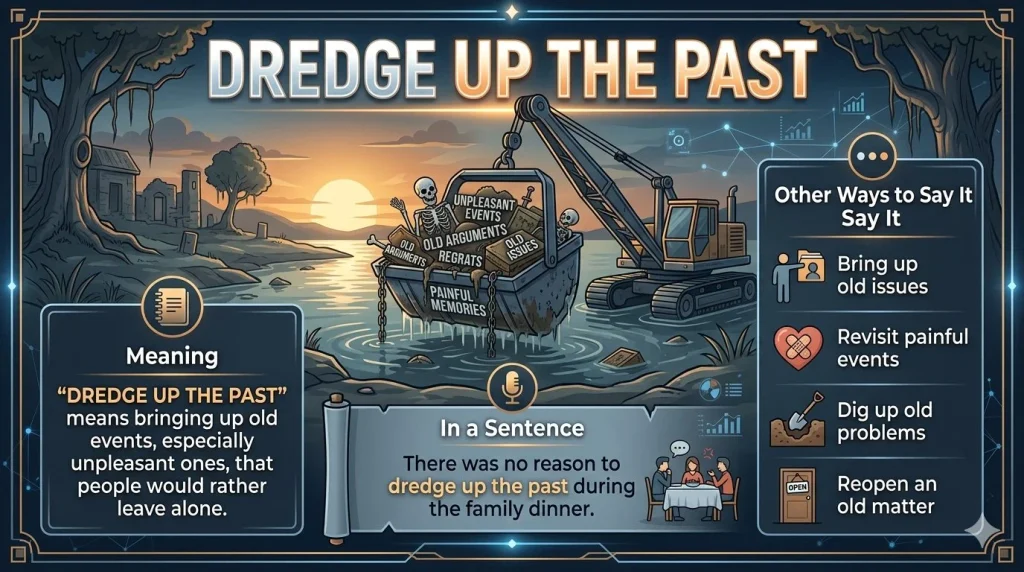
Dredge Up the Past
Meaning
“Dredge up the past” means bringing up old events, especially unpleasant ones, that people would rather leave alone.
In a Sentence
There was no reason to dredge up the past during the family dinner.
Other Ways to Say It
- Bring up old issues
- Revisit painful events
- Dig up old problems
- Reopen an old matter
Explanation
“Dredge” suggests pulling something unwanted from deep below the surface. The expression therefore gives the past a buried and uncomfortable quality.
Best Use
It works particularly well in serious conversations, relationship discussions, essays, and emotional storytelling.
Bury the Hatchet
Meaning
“Bury the hatchet” means to end a disagreement and make peace with someone after a conflict.
In a Sentence
After years of arguing, the two brothers finally buried the hatchet.
Other Ways to Say It
- Make peace
- End the conflict
- Reconcile
- Settle old differences
Explanation
The expression creates the image of putting a weapon safely into the ground. It represents the decision to stop fighting and leave an old conflict behind.
Best Use
Useful in conversations, storytelling, news-style writing, and speeches. It can sound slightly old-fashioned but remains widely understandable.
Leave the Past Behind
Meaning
“Leave the past behind” means deciding not to let earlier experiences control your present or future.
In a Sentence
After the difficult year, she decided to leave the past behind and begin again.
Other Ways to Say It
- Move forward
- Start fresh
- Let go of old experiences
- Turn the page
Explanation
The past is imagined as something physically behind us while the future lies ahead. The expression emphasizes growth, acceptance, and forward movement.
Best Use
It works well in motivational writing, personal messages, speeches, conversations, and reflective essays.
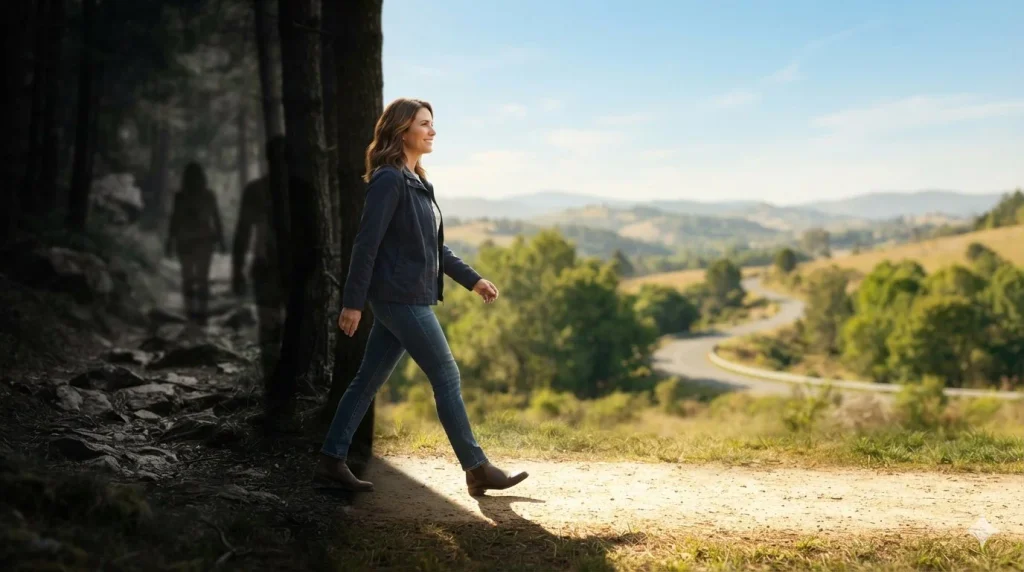
Put the Past Behind You
Meaning
To “put the past behind you” means to stop allowing earlier events to dominate your thoughts and to focus on the present or future.
In a Sentence
He made mistakes, learned from them, and eventually put the past behind him.
Other Ways to Say It
- Move on
- Let the past go
- Focus on the future
- Stop dwelling on what happened
Explanation
This expression uses physical direction to represent emotional progress. Something behind you is no longer directly in your path, making the phrase especially effective for discussing recovery and personal growth.
Best Use
Best for encouraging conversations, speeches, essays, and personal reflections.
A Thing of the Past
Meaning
“A thing of the past” describes something that used to exist or happen but is no longer common or relevant.
In a Sentence
With modern technology, handwritten business letters have become a thing of the past for many people.
Other Ways to Say It
- No longer common
- No longer relevant
- Something that has disappeared
- An outdated practice
Explanation
The expression places an old practice firmly in history. Unlike nostalgic idioms, it often focuses on change and disappearance rather than affection for earlier times.
Best Use
Suitable for essays, articles, conversations, presentations, and discussions about social or technological change.
Ancient History
Meaning
“Ancient history” can literally refer to the distant past, but informally it can mean an event that happened so long ago that it no longer matters much.
In a Sentence
Our argument from college is ancient history now.
Other Ways to Say It
- A distant memory
- Long forgotten
- A long time ago
- Something from years ago
Explanation
The phrase exaggerates the age of an event by comparing it with ancient history. It often makes the past sound distant, harmless, or irrelevant.
Best Use
It works well in casual conversation and personal storytelling. The informal meaning should not be confused with the academic study of ancient civilizations.
Old Habits Die Hard
Meaning
“Old habits die hard” means that behaviors developed over a long period can be difficult to change, even when someone wants to change them.
In a Sentence
I still check the clock before leaving the house early—old habits die hard.
Other Ways to Say It
- Habits are difficult to break.
- Familiar routines are hard to change.
- Old patterns can remain.
- Change takes time.
Explanation
The idiom connects the past with present behavior. It reminds us that repeated actions can leave a lasting mark, even after circumstances have changed.
Best Use
Best for everyday conversations, humorous observations, personal writing, and reflective essays.
History Repeats Itself
Meaning
“History repeats itself” expresses the idea that similar situations or mistakes can happen again when people fail to learn from earlier events.
In a Sentence
The company ignored the warning signs again; sometimes history repeats itself.
Other Ways to Say It
- The same pattern returns.
- Old mistakes can happen again.
- The past can repeat its patterns.
- We may repeat earlier errors.
Explanation
The phrase treats history as a cycle rather than a straight line. It is useful when comparing past and present situations or warning against repeating mistakes.
Best Use
It fits essays, speeches, discussions, storytelling, and serious conversations. It is a broad observation, so context matters.
Those Were the Days
Meaning
“Those were the days” expresses nostalgia for a past period that the speaker remembers fondly.
In a Sentence
We spent every summer playing outside until sunset—those were the days.
Other Ways to Say It
- I miss those times.
- Those were wonderful times.
- I remember those days fondly.
- Life felt different back then.
Explanation
The phrase is emotionally warm and often carries a gentle sense of longing. It works especially well when remembering childhood, friendships, family traditions, or simpler routines.
Best Use
Best for casual conversations, personal stories, social media captions, and nostalgic writing.
Go Down Memory Lane
Meaning
To “go down memory lane” means to spend time remembering people, places, and experiences from the past.
In a Sentence
Looking through our old photographs took us down memory lane.
Other Ways to Say It
- Revisit old memories
- Reminisce
- Look back at earlier times
- Take a nostalgic trip
Explanation
The past is imagined as a road filled with memories that we can mentally travel along. The expression usually has a warm, nostalgic, and reflective tone.
Best Use
Excellent for conversations, photo captions, personal blogs, storytelling, and informal writing.
Bring Back Memories
Meaning
“Bring back memories” describes something that causes you to remember experiences from an earlier time.
In a Sentence
That old song always brings back memories of our school days.
Other Ways to Say It
- Trigger memories
- Remind me of the past
- Make me remember old times
- Awaken old memories
Explanation
The expression focuses on the power of present-day sights, sounds, smells, or objects to reconnect us with earlier experiences. The memories can be happy, bittersweet, or even emotional.
Best Use
Useful in everyday conversation, personal writing, social media, and storytelling.
Look Back On
Meaning
To “look back on” something means to think about or reflect on a past experience from the perspective of the present.
In a Sentence
I look back on my first job as an important part of my growth.
Other Ways to Say It
- Reflect on
- Think back to
- Remember
- Reconsider past experiences
Explanation
Unlike expressions that simply describe old memories, this phrase often suggests reflection and perspective. It can be positive, neutral, or regretful depending on what follows it.
Best Use
It works particularly well in essays, memoir-style writing, speeches, conversations, and reflective posts.
Learn from Your Mistakes
Meaning
“Learn from your mistakes” means using past errors as lessons so that you can make better choices in the future.
In a Sentence
I made the same error twice, but I finally learned from my mistakes.
Other Ways to Say It
- Take the lesson from experience.
- Grow from your errors.
- Use mistakes as lessons.
- Do better next time.
Explanation
This expression does not encourage forgetting the past. Instead, it treats difficult experiences as sources of knowledge and personal growth.
Best Use
Best for advice, educational writing, speeches, personal reflections, and motivational conversations.
Sweep Something Under the Rug
Meaning
To “sweep something under the rug” means to hide, ignore, or avoid dealing with a problem instead of addressing it properly.
In a Sentence
The team kept sweeping the problem under the rug, and eventually it became impossible to ignore.
Other Ways to Say It
- Ignore the problem
- Avoid the issue
- Hide a difficult matter
- Pretend nothing happened
Explanation
The image is simple: something unwanted is pushed out of sight under a rug rather than cleaned up. When connected to the past, it warns that ignored problems may remain unresolved.
Best Use
Useful in conversations, workplace discussions, essays, storytelling, and critical writing. It is informal and can sound critical.
Exercise: Practice Using Idioms
Test your understanding of these expressions with the questions below.
What does “a blast from the past” usually describe?
A. A dangerous event from history
B. Something that unexpectedly reminds you of an earlier time
C. A plan for the future
D. A difficult current situation
Which idiom means to stop allowing an old conflict to cause problems?
A. Live in the past
B. Dredge up the past
C. Water under the bridge
D. Old habits die hard
Which expression is especially associated with fairy tales and storytelling?
A. Once upon a time
B. Ancient history
C. Back in the day
D. Look back on
If someone continually focuses on former achievements instead of the present, which idiom best describes them?
A. Bury the hatchet
B. Bring back memories
C. A thing of the past
D. Live in the past
What does “dredge up the past” suggest?
A. Celebrating a happy memory
B. Bringing up unpleasant old matters
C. Planning for tomorrow
D. Forgetting an experience
Which idiom means ending a disagreement and making peace?
A. Bury the hatchet
B. Sweep something under the rug
C. History repeats itself
D. A blast from the past
Someone decides not to let earlier difficulties control their future. Which expression fits best?
A. Ancient history
B. Old habits die hard
C. Leave the past behind
D. Back in the day
Which expression describes something that is no longer common or relevant?
A. Those were the days
B. A thing of the past
C. Go down memory lane
D. Bring back memories
What does “old habits die hard” mean?
A. Old routines can be difficult to change
B. Past events are impossible to remember
C. History is always negative
D. People should avoid memories
Which expression is most clearly nostalgic?
A. Sweep something under the rug
B. Dredge up the past
C. Those were the days
D. History repeats itself
What does “go down memory lane” mean?
A. Travel to a historical location
B. Spend time remembering earlier experiences
C. Forget an unpleasant event
D. Predict what will happen next
If an old photograph makes you remember your childhood, what expression fits best?
A. Bring back memories
B. Bury the hatchet
C. A thing of the past
D. Put the past behind you
Which expression emphasizes using past errors as lessons?
A. Once upon a time
B. Learn from your mistakes
C. Ancient history
D. Back in the day
Which idiom suggests that a person is avoiding a problem rather than solving it?
A. Look back on
B. Those were the days
C. Sweep something under the rug
D. Go down memory lane
Which sentence uses an idiom figuratively rather than literally?
A. The water flowed under the bridge after the storm.
B. She walked along the old bridge yesterday.
C. Their disagreement is now water under the bridge.
D. The bridge crosses the river.
Answers
- B — “A blast from the past” describes something that suddenly reminds someone of an earlier time.
- C — “Water under the bridge” suggests that an old problem should no longer affect the present.
- A — “Once upon a time” is strongly associated with traditional storytelling and fairy tales.
- D — “Live in the past” means focusing too much on earlier times instead of the present.
- B — “Dredge up the past” means bringing old, often unpleasant matters back into discussion.
- A — “Bury the hatchet” means to end a conflict and make peace.
- C — “Leave the past behind” emphasizes moving forward rather than remaining controlled by earlier experiences.
- B — “A thing of the past” describes something that is no longer common or relevant.
- A — “Old habits die hard” means established behaviors can be difficult to change.
- C — “Those were the days” commonly expresses warm or bittersweet nostalgia.
- B — “Go down memory lane” means to revisit memories mentally or through conversation.
- A — Something that “brings back memories” causes a person to remember earlier experiences.
- B — “Learn from your mistakes” means using past errors as lessons for future decisions.
- C — “Sweep something under the rug” means hiding or ignoring a problem rather than addressing it.
- C — The sentence uses “water under the bridge” figuratively to say that an old disagreement no longer matters.
FAQs
What is an idiom for The Past?
There are many useful idioms for the past, depending on the feeling you want to express. For nostalgia, “those were the days” works well and For moving forward, “leave the past behind” is appropriate. For old conflicts, “water under the bridge” can express acceptance.
How do I create my own idiom?
Start with an idea or emotion you want to express, then connect it to a clear and memorable image. A strong figurative expression should feel natural and communicate something beyond its literal meaning.
What makes an idiom effective?
An effective idiom creates a recognizable mental image while communicating an idea efficiently. It should also fit the tone and context of the conversation or writing.
Can I use these idioms in everyday conversation?
Yes. Expressions such as “back in the day,” “a blast from the past,” “water under the bridge,” and “those were the days” are natural in informal conversation. Some expressions, such as “once upon a time,” are more poetic or storytelling-oriented.
What is the difference between an idiom and a simile?
An idiom has an established figurative meaning, such as “bury the hatchet” meaning to make peace. A simile directly compares two things using words such as “like” or “as,” such as “the memory was like a faded photograph.”
Conclusion
The past can be remembered with happiness, regret, humor, gratitude, or sadness, and the right idiom can help express those feelings more clearly. Expressions such as “a blast from the past” and “those were the days” capture nostalgia, while “water under the bridge” and “bury the hatchet” suggest acceptance and reconciliation. Other phrases, including “learn from your mistakes” and “leave the past behind,” focus on growth and moving forward.
When choosing an idiom, think about the feeling you want your reader or listener to experience. A warm expression can make a memory feel precious, while a serious one can show regret or reflection. The strongest figurative language is not simply colorful it communicates the right emotion at the right moment. Sometimes, the best way to understand where we are going is to find the right words for where we have been.

Eleanor Prose is a writer and English teacher with a soft spot for the phrases that trip us up. She has spent years helping students and professionals use idioms with confidence not just memorizing them, but understanding the culture and humor behind each one.
Through Idiom Looms, Eleanor explores the threads that connect language, history, and everyday conversation. Her goal is simple: to make English idioms clear, memorable, and actually fun to use.
She writes from a quiet desk surrounded by notebooks, and firmly believes there’s an idiom for every situation usually more than one.